Question 1:
When parking on a public road, drivers should:
A
move as far away from traffic as possible.
B
always park on the left side of the roadway.
C
All of the above.
Under standard parking and curb regulations: move as far away from traffic as possible. Following parking distance clearances keeps roadways unobstructed and emergency lanes accessible.
Question 2:
What is the first thing to do when you make a three-point turn?
A
Signal with your left turn signal, then check carefully for traffic coming toward you.
B
Signal with your right turn signal, then pull over to the right and stop.
C
Turn left, go across the road so you come to a stop while you face the edge of the road.
The correct driving rule is: signal with your right turn signal, then pull over to the right and stop. Following standard DMV road rules and practicing defensive driving ensures safety for all road users.
Question 3:
Crashes in work zones are most commonly caused by:
A
loss of steering control.
B
hydroplaning.
C
brake failure.
D
carelessness.
The correct driving rule is: carelessness. Following standard DMV road rules and practicing defensive driving ensures safety for all road users.
Question 4:
Drivers should allow a larger space cushion when stopping:
A
at a stop sign.
B
on an up-hill.
C
at an intersection.
D
at a yield sign.
The correct driving rule is: on an up-hill. Following standard DMV road rules and practicing defensive driving ensures safety for all road users.
Question 5:
 This sign is a:
A
regulatory sign.
B
warning sign.
C
guide sign.
This traffic sign indicates: warning sign. Observing and obeying all roadway signs ensures safe traffic flow and legal driving.
Question 6:
You have stopped for a train at a railroad crossing. After the train passes, you must:
A
look to see if another train is coming, then cross the tracks if it is safe to do so.
B
watch for vehicles that must stop at railroad crossings (school buses, vehicles carrying hazardous materials, etc.).
C
All of the above.
All of the listed points are essential driving requirements: look to see if another train is coming, then cross the tracks if it is safe to do so; watch for vehicles that must stop at railroad crossings (school buses, vehicles carrying hazardous materials, etc.). Practicing each ensures compliance with DMV safety laws.
Question 7:
What should you do if another vehicle is aggressively tailgating you?
A
Slam on your brakes to scare them
B
Gradually slow down or move to the right lane to let them pass safely
C
Speed up and race ahead of them
D
Flash your hazard lights and honk constantly
Never brake check a tailgater. Safely change lanes or ease off the gas to encourage them to pass you.
Question 8:
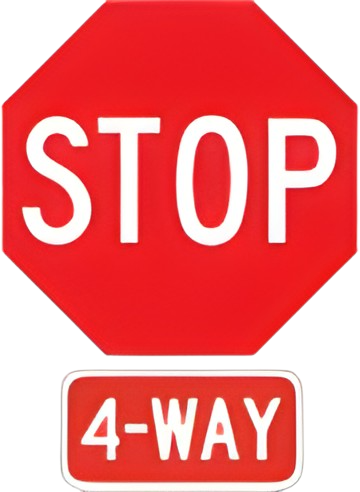 A 4-way stop sign means:
A
The first vehicle to reach the intersection should move forward first.
B
Traffic from all four directions must stop.
C
There are four stop signs at the intersection.
D
All of the above.
This sign alerts drivers to several mandatory requirements: The first vehicle to reach the intersection should move forward first, Traffic from all four directions must stop, There are four stop signs at the intersection. Obeying all posted traffic control instructions is required by law.
Question 9:
 This sign means:
A
You may make a U-turn.
B
Hairpin corner ahead.
C
You must make a U-turn.
This traffic sign indicates: you must make a U-turn. Observing and obeying all roadway signs ensures safe traffic flow and legal driving.
Question 10:
When you prepare to make a left turn from a one-way road into a two-way road, you must:
A
enter the two-way road to the left of its center line.
B
approach the turn in the right lane or from the right side of a single lane.
C
approach the turn in the left lane or from the left side of a single lane.
The correct driving rule is: approach the turn in the left lane or from the left side of a single lane. Following standard DMV road rules and practicing defensive driving ensures safety for all road users.
Question 11:
Green signs tell you about services along the roadway.
A
False
B
True
The correct driving rule is: False. Following standard DMV road rules and practicing defensive driving ensures safety for all road users.
Question 12:
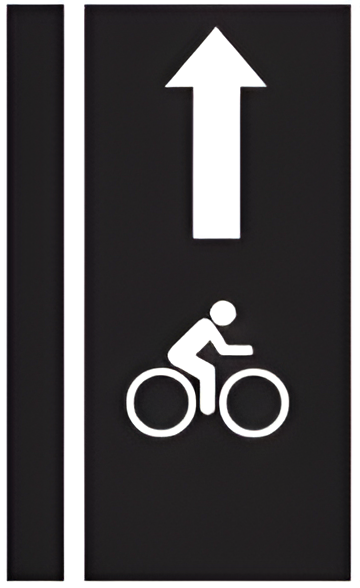 The picture shows:
A
a sign alerting drivers that bicycles may be ahead.
B
a bike lane.
C
a pavement marking telling bicyclists that they must go straight.
D
a motorcyle lane.
The correct driving rule is: a bike lane. Following standard DMV road rules and practicing defensive driving ensures safety for all road users.
Question 13:
Night driving can be more difficult because:
A
vehicle speed and distance are harder to judge.
B
there are more cars on the roads at night.
C
the speed limit is increased at night.
The correct driving rule is: vehicle speed and distance are harder to judge. Following standard DMV road rules and practicing defensive driving ensures safety for all road users.
Question 14:
When is it safe to pass another vehicle?
A
Whenever signs and/or markings permit passing other vehicles.
B
When you are entering a curve and there are no oncoming vehicles.
C
When you are driving through an intersection and there are no oncoming vehicles.
The correct driving rule is: Whenever signs and/or markings permit passing other vehicles. Following standard DMV road rules and practicing defensive driving ensures safety for all road users.
Question 15:
To be able to turn quickly, your hands should be:
A
placed outside of the steering wheel on opposite sides
B
next to each other on the top of the steering wheel.
C
on the steering wheel, so they are at the 6 and 12 o'clock positions.
The correct driving rule is: placed outside of the steering wheel on opposite sides. Following standard DMV road rules and practicing defensive driving ensures safety for all road users.
Question 16:
You are coming to an intersection and have a green light. Pedestrians are crossing against the red. You should:
A
claim your right-of-way and proceed with caution.
B
honk your horn.
C
speed up and pass in front of the pedestrians.
D
stop to let pedestrians cross safely.
Drivers must always yield the right-of-way to pedestrians crossing at intersections and crosswalks: stop to let pedestrians cross safely. Stop and allow them to clear the lane safely.
Question 17:
A diamond-shaped sign is a:
A
school zone sign.
B
warning sign.
C
regulatory sign.
The correct driving rule is: warning sign. Following standard DMV road rules and practicing defensive driving ensures safety for all road users.
Question 18:
When entering a traffic circle or roundabout, you must yield the right-of-way to:
A
Vehicles entering from your left
B
Vehicles already circulating inside the roundabout
C
Vehicles waiting on your right
D
Emergency vehicles parked outside
Traffic already inside a roundabout has the right-of-way. Vehicles entering must yield and wait for a safe gap.
Question 19:
In urban areas, drivers moving out of a private road need NOT come to a complete stop before entering the roadway if the roadway is clear of traffic.
A
True
B
False
The correct driving rule is: False. Following standard DMV road rules and practicing defensive driving ensures safety for all road users.
Question 20:
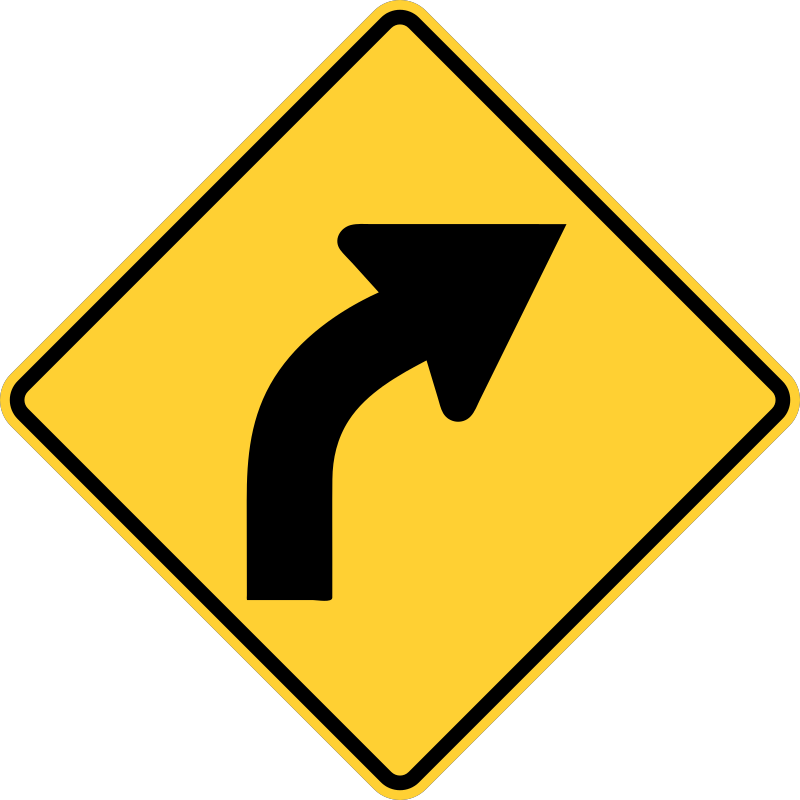 When they see this sign, drivers should:
A
increase their speed and keep well to the right.
B
slow down and keep well to the right.
C
slow down and keep well to the left.
This traffic sign indicates: slow down and keep well to the left. Observing and obeying all roadway signs ensures safe traffic flow and legal driving.
Question 21:
When a hazard is seen ahead, reaction distance:
A
is the sum of perception distance and braking distance.
B
equals total stopping distance minus perception distance.
C
is how far a vehicle will continue to travel, in ideal conditions, before the driver hits the brakes.
For safe speed and stopping control: is how far a vehicle will continue to travel, in ideal conditions, before the driver hits the brakes. Adjusting speed to match visibility and road traction prevents loss of steering grip.
Question 22:
 This sign warns drivers that:
A
the highway ahead is divided into two one-way roadways. Drivers should keep to the right.
B
there is a winding road ahead.
C
there is a double curve ahead.
This traffic sign indicates: there is a double curve ahead. Observing and obeying all roadway signs ensures safe traffic flow and legal driving.
Question 23:
If you see orange construction signs and cones on a freeway, you must:
A
be prepared for workers and equipment ahead.
B
make a U-turn because the lane ends ahead.
C
maintain your current speed while changing lanes.
Defensive driving guidelines state that: be prepared for workers and equipment ahead. Anticipating road hazards and communicating maneuvers keeps traffic predictable and safe.
Question 24:
When two vehicles enter an intersection from different highways at the same time, which vehicle must yield the right-of-way?
A
Either one.
B
The vehicle on the left.
C
The vehicle on the right.
According to standard right-of-way regulations: The vehicle on the left. Yielding appropriately prevents intersection collisions and maintains safe traffic flow.
Question 25:
The golden rule of driving is to:
A
treat others the way you want to be treated.
B
put on your emergency flashers when driving at night.
C
drive faster than the vehicle behind you.
The correct driving rule is: treat others the way you want to be treated. Following standard DMV road rules and practicing defensive driving ensures safety for all road users.
Question 26:
 This sign means:
A
divided highway ahead.
B
narrow bridge ahead.
C
road construction.
D
lane ends, merge left.
This traffic sign indicates: lane ends, merge left. Observing and obeying all roadway signs ensures safe traffic flow and legal driving.
Question 27:
 This road sign means:
A
Watch for vehicles entering from the side
B
When pavement is wet, reduce your speed
C
Winding road ahead
This traffic sign indicates: When pavement is wet, reduce your speed. Observing and obeying all roadway signs ensures safe traffic flow and legal driving.
Question 28:
You must stop when you see a:
A
flashing red light.
B
yellow arrow.
C
steady yellow light.
D
flashing yellow light.
The correct driving rule is: flashing red light. Following standard DMV road rules and practicing defensive driving ensures safety for all road users.
Question 29:
To keep your vehicle from rolling into traffic when parked on a hill, if you are facing uphill you should:
A
turn the front wheels away from the curb or edge of the road.
B
turn the back wheels towards the curb or edge of the road.
C
set the parking brake and keep the front wheels straight.
D
turn the front wheels towards the curb or edge of the road.
Under standard parking and curb regulations: turn the front wheels away from the curb or edge of the road. Following parking distance clearances keeps roadways unobstructed and emergency lanes accessible.
Question 30:
If an emergency vehicle with flashing lights is traveling in the area where you are driving, you must:
A
drive to the right side of the road and stop.
B
proceed slowly and let the vehicle pass.
C
keep driving in your lane.
When sharing the road with other vehicles: drive to the right side of the road and stop. Giving large vehicles and vulnerable users adequate clearance prevents dangerous accidents.
Question 31:
Regulation signs normally are:
A
white triangles.
B
green rectangles.
C
white rectangles.
The correct driving rule is: white rectangles. Following standard DMV road rules and practicing defensive driving ensures safety for all road users.
Question 32:
Who must wear safety belts in Illinois?
A
All drivers and front seat passengers ages 8 and older.
B
All drivers and passengers (front and back seat) ages 8 and older.
C
All drivers and front seat passengers.
The correct driving rule is: All drivers and passengers (front and back seat) ages 8 and older. Following standard DMV road rules and practicing defensive driving ensures safety for all road users.
Question 33:
As your speed increases it is most important to:
A
drive with both hands on steering wheel.
B
maintain a constant speed.
C
look farther ahead.
For safe speed and stopping control: look farther ahead. Adjusting speed to match visibility and road traction prevents loss of steering grip.
Question 34:
Regulation signs normally are ____ rectangles with ____ letters or symbols.
A
yellow; black
B
white; black
C
green; white
The correct driving rule is: white; black. Following standard DMV road rules and practicing defensive driving ensures safety for all road users.
Question 35:
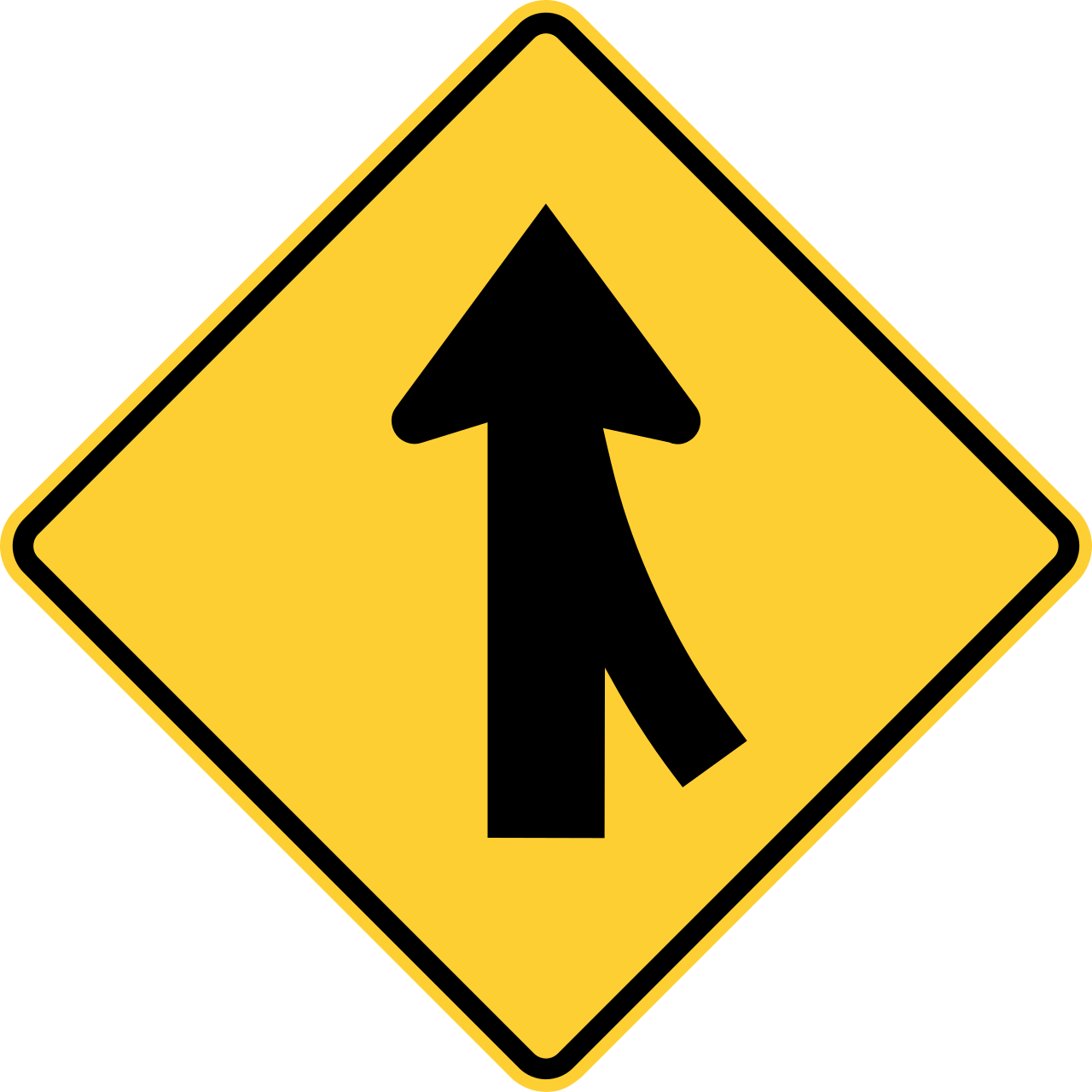 This road sign means:
A
Lane shifting
B
Traffic is entering from another road, drive with caution
C
Stop for other traffic
D
Yield right-of-way
This traffic sign indicates: traffic is entering from another road, drive with caution. Observing and obeying all roadway signs ensures safe traffic flow and legal driving.
Question 36:
If no reduced speed limit signs are clearly posted within a work zone, you should:
A
drive faster than the posted speed limit.
B
obey the normal posted speed limit.
C
drive slower than the posted speed limit.
For safe speed and stopping control: obey the normal posted speed limit. Adjusting speed to match visibility and road traction prevents loss of steering grip.
Question 37:
To avoid being struck from behind, you should:
A
drive faster than the flow of traffic to create a gap between you and the vehicle behind you.
B
pump your brakes often.
C
drive slower than the rest of the traffic to create a space cushion around you.
D
keep pace with the traffic.
The correct driving rule is: keep pace with the traffic. Following standard DMV road rules and practicing defensive driving ensures safety for all road users.
Question 38:
A driver can legally pass on the right of another vehicle:
A
that is preparing to turn left, if there is room to go by safely.
B
anytime.
C
None of the other answers is correct.
D
anytime, if the vehicle is a bicycle.
The correct driving rule is: that is preparing to turn left, if there is room to go by safely. Following standard DMV road rules and practicing defensive driving ensures safety for all road users.
Question 39:
Drivers who have been drinking are more likely to:
A
keep a safe following distance.
B
yield right-of-way to oncoming vehicles.
C
be less reactive.
The correct driving rule is: be less reactive. Following standard DMV road rules and practicing defensive driving ensures safety for all road users.
Question 40:
When driving on wet roads, you should:
A
drive the speed limit.
B
not be concerned about speed.
C
drive slightly faster than the speed limit.
D
drive 5 to 10 miles below the speed limit.
The correct driving rule is: drive 5 to 10 miles below the speed limit. Following standard DMV road rules and practicing defensive driving ensures safety for all road users.
Question 41:
Never make a U-turn from:
A
the lane you’re in.
B
the right lane.
C
the left part of the lane nearest to the centerline of the roadway.
According to standard right-of-way regulations: the right lane. Yielding appropriately prevents intersection collisions and maintains safe traffic flow.
Question 42:
Taking drugs and alcohol together:
A
helps you get rid of the effects of alcohol in your body.
B
has no effect on your general driving ability.
C
increase the risk of causing a crash.
D
is no more dangerous than alcohol by itself.
Under state DUI and traffic safety laws: increase the risk of causing a crash. Alcohol degrades judgment, slows reaction times, and distorts depth perception.
Question 43:
Service signs are ____ with ____ letters and symbols.
A
blue; white
B
white; black
C
green; white
The correct driving rule is: blue; white. Following standard DMV road rules and practicing defensive driving ensures safety for all road users.
Question 44:
 What does a flashing left yellow arrow mean?
A
Vehicles turning left must stop if they can. The light will soon be red.
B
Only right turns are allowed.
C
Left turns are allowed. Yield to oncoming traffic and pedestrians.
D
None of the above.
The correct driving rule is: Left turns are allowed. Yield to oncoming traffic and pedestrians. Following standard DMV road rules and practicing defensive driving ensures safety for all road users.
Question 45:
Where are yield signs usually placed?
A
At intersections, if there is no marked stop line.
B
Where auxiliary roads lead into major roads.
C
Where major roads lead into auxiliary roads.
The correct driving rule is: Where auxiliary roads lead into major roads. Following standard DMV road rules and practicing defensive driving ensures safety for all road users.
Question 46:
If you are found guilty of racing on the highway, your license must be:
A
revoked.
B
cancelled.
C
terminated.
D
suspended.
Defensive driving guidelines state that: revoked. Anticipating road hazards and communicating maneuvers keeps traffic predictable and safe.
Question 47:
Drivers should not sound their horn when:
A
near blind pedestrians.
B
visibility ahead is limited.
C
they may hit another vehicle.
The correct driving rule is: near blind pedestrians. Following standard DMV road rules and practicing defensive driving ensures safety for all road users.
Question 48:
When you back up:
A
always look through the rear window.
B
you should rely only on your rearview mirror.
C
do it as fast as possible.
The correct driving rule is: always look through the rear window. Following standard DMV road rules and practicing defensive driving ensures safety for all road users.
Question 49:
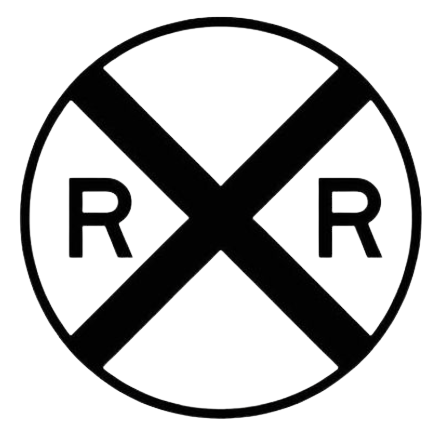 When you see this sign you:
A
should stop and wait for a flagger before crossing the railroad tracks.
B
should always stop at the upcoming railroad crossing.
C
are approaching a railroad crossing; be prepared to stop.
Circular signs with an 'X' and 'RR' designate a Railroad Advance Warning: are approaching a railroad crossing; be prepared to stop. Drivers must slow down, look both ways, listen for trains, and be prepared to stop.
Question 50:
This road sign means the road you're driving on:
A
turns sharply to the left and then right
B
turns to the right and then the left
C
turns only to the left
This traffic sign indicates: turns to the right and then the left. Observing and obeying all roadway signs ensures safe traffic flow and legal driving.