Question 1:
When you make a left turn from a one-way road into a two-way road, you must:
A
enter the two-way road to the left of its center line.
B
make a U-turn into the two-way road.
C
enter the two-way road to the right of its center line.
The correct driving rule is: enter the two-way road to the right of its center line. Following standard DMV road rules and practicing defensive driving ensures safety for all road users.
Question 2:
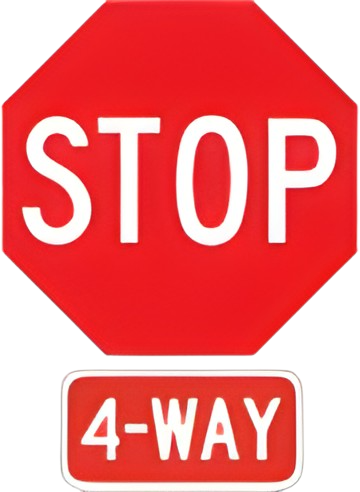 A 4-way stop sign means:
A
The first vehicle to reach the intersection should move forward first.
B
Traffic from all four directions must stop.
C
There are four stop signs at the intersection.
D
All of the above.
This sign alerts drivers to several mandatory requirements: The first vehicle to reach the intersection should move forward first, Traffic from all four directions must stop, There are four stop signs at the intersection. Obeying all posted traffic control instructions is required by law.
Question 3:
When is it safe to pass another vehicle?
A
Whenever signs and/or markings permit passing other vehicles.
B
When you are entering a curve and there are no oncoming vehicles.
C
When you are driving through an intersection and there are no oncoming vehicles.
The correct driving rule is: Whenever signs and/or markings permit passing other vehicles. Following standard DMV road rules and practicing defensive driving ensures safety for all road users.
Question 4:
 When they see this sign, drivers:
A
should be prepared to make sharp turns at a high speed.
B
need to be prepared to turn right and then left quickly.
C
should not speed up or brake quickly.
This traffic sign indicates: should not speed up or brake quickly. Observing and obeying all roadway signs ensures safe traffic flow and legal driving.
Question 5:
If your car becomes disabled on a highway, you should:
A
stop in the right lane.
B
park with all four wheels off the highway, if possible.
C
stop where you are.
Defensive driving guidelines state that: park with all four wheels off the highway, if possible. Anticipating road hazards and communicating maneuvers keeps traffic predictable and safe.
Question 6:
The yield sign is ___ and white, with ___ letters.
A
yellow; black
B
red; red
C
red; white
The correct driving rule is: red; red. Following standard DMV road rules and practicing defensive driving ensures safety for all road users.
Question 7:
The extra space in front of a large truck is needed for:
A
other drivers when merging onto a freeway.
B
the truck driver to stop the vehicle.
C
other drivers when they want to pass the truck.
When sharing the road with other vehicles: the truck driver to stop the vehicle. Giving large vehicles and vulnerable users adequate clearance prevents dangerous accidents.
Question 8:
If your brakes are wet, you can dry them by:
A
riding the pedal lightly.
B
pull over to the right and wait until it stops raining.
C
having them checked by a mechanic.
The correct driving rule is: riding the pedal lightly. Following standard DMV road rules and practicing defensive driving ensures safety for all road users.
Question 9:
Broken yellow lines:
A
separate lanes of traffic moving in opposite directions.
B
indicate you are in a no passing zone.
C
separate lanes of traffic moving in the same direction.
The correct driving rule is: separate lanes of traffic moving in opposite directions. Following standard DMV road rules and practicing defensive driving ensures safety for all road users.
Question 10:
Most signs used in street work areas are:
A
round.
B
diamond shaped.
C
rectangle shaped.
The correct driving rule is: diamond shaped. Following standard DMV road rules and practicing defensive driving ensures safety for all road users.
Question 11:
 Vertical rectangles tell drivers:
A
the law.
B
what is not allowed.
C
the direction they should travel.
The correct driving rule is: the law. Following standard DMV road rules and practicing defensive driving ensures safety for all road users.
Question 12:
 This road sign means the road you're driving on:
A
turns sharply to the left and then right
B
turns to the right and then the left
C
turns only to the left
This traffic sign indicates: turns to the right and then the left. Observing and obeying all roadway signs ensures safe traffic flow and legal driving.
Question 13:
 This road sign means:
A
Warning, crossroad ahead
B
All traffic must turn
C
Yield sign ahead
This traffic sign indicates: Warning, crossroad ahead. Observing and obeying all roadway signs ensures safe traffic flow and legal driving.
Question 14:
Driving at excessive speed:
A
improves your reaction time.
B
often leads to high-risk decision-making.
C
does not increase the chance of a crash.
For safe speed and stopping control: often leads to high-risk decision-making. Adjusting speed to match visibility and road traction prevents loss of steering grip.
Question 15:
Which shape is a railroad advance warning sign?
A
Crossbuck
B
Round
C
Pentagon
Circular signs with an 'X' and 'RR' designate a Railroad Advance Warning: Round. Drivers must slow down, look both ways, listen for trains, and be prepared to stop.
Question 16:
When children are close, what should you do before you back out of a driveway?
A
Rely on your mirrors.
B
Get out of the car and check behind the car.
C
Look through your back window for children.
The correct driving rule is: Get out of the car and check behind the car. Following standard DMV road rules and practicing defensive driving ensures safety for all road users.
Question 17:
 This sign means:
A
You may make a U-turn.
B
Hairpin corner ahead.
C
You must make a U-turn.
This traffic sign indicates: you must make a U-turn. Observing and obeying all roadway signs ensures safe traffic flow and legal driving.
Question 18:
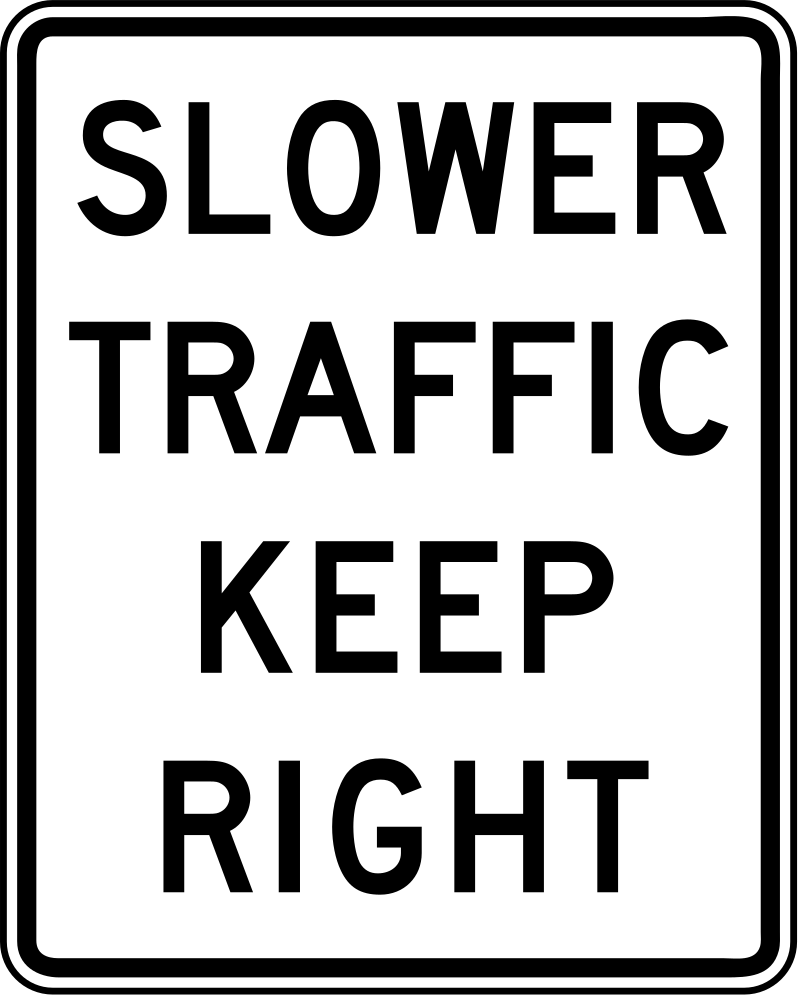 This regulatory road sign indicates that:
A
Vehicles must slow down and stay in the right lane.
B
The right hand lane is reserved for buses and car-pool vehicles.
C
Slower vehicles traveling on multiple lane highways must stay in the right hand lane.
This traffic sign indicates: Slower vehicles traveling on multiple lane highways must stay in the right hand lane. Observing and obeying all roadway signs ensures safe traffic flow and legal driving.
Question 19:
 This road sign means:
A
Lane reduction - the left lane ends soon
B
Highway entrance ramp ahead
C
Lane reduction - the right lane ends soon
This traffic sign indicates: Lane reduction - the right lane ends soon. Observing and obeying all roadway signs ensures safe traffic flow and legal driving.
Question 20:
When you are facing a green light and there are pedestrians in the intersection:
A
you must signal your intention to cross the intersection at least 100 feet before yielding the right-of-way.
B
you must yield the right-of-way to pedestrians.
C
you have the right-of-way over pedestrians.
Drivers must always yield the right-of-way to pedestrians crossing at intersections and crosswalks: you must yield the right-of-way to pedestrians. Stop and allow them to clear the lane safely.
Question 21:
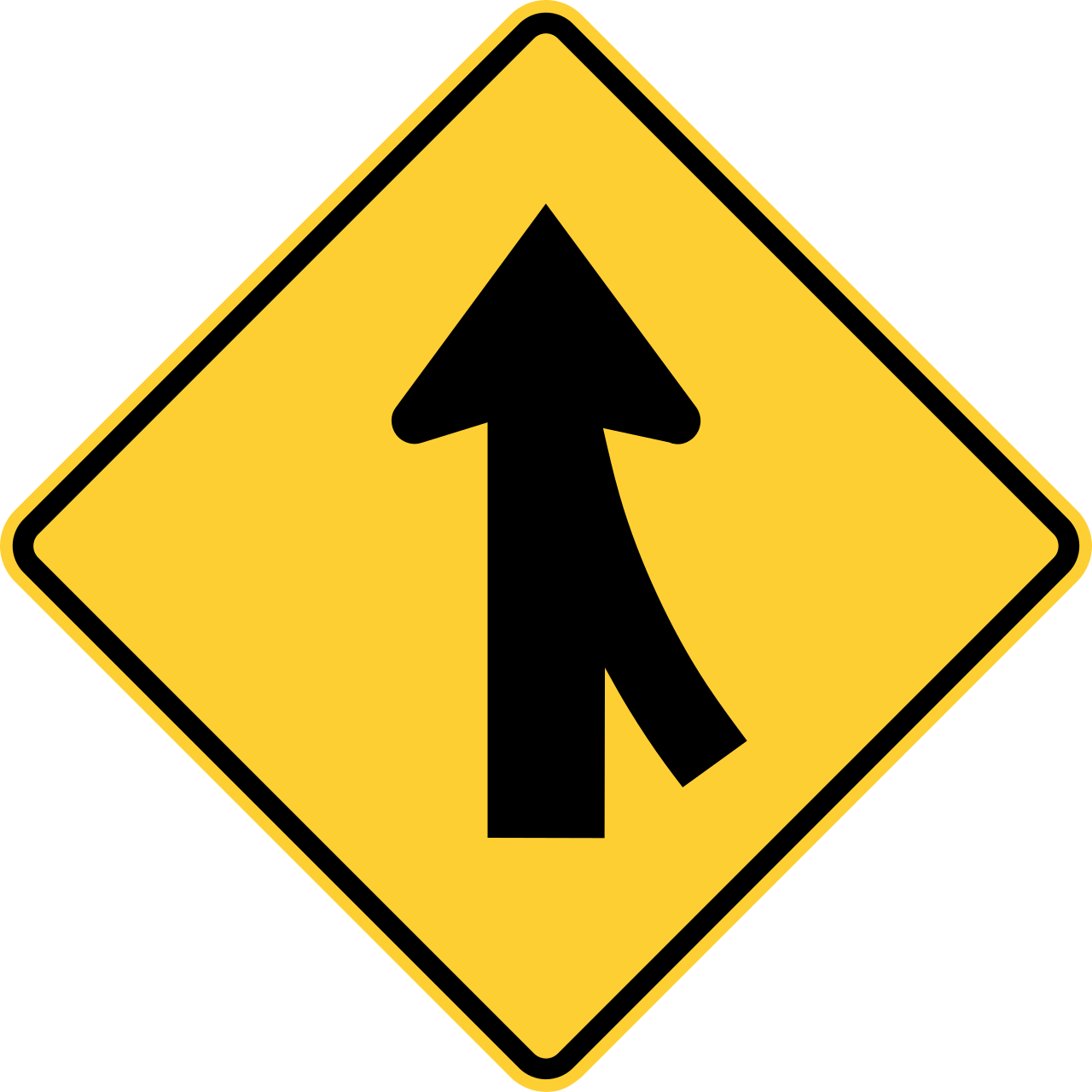 When you see this sign you should:
A
turn right.
B
merge left.
C
watch for traffic to the right.
This traffic sign indicates: watch for traffic to the right. Observing and obeying all roadway signs ensures safe traffic flow and legal driving.
Question 22:
A red traffic sign means?
A
Do not enter.
B
Stop.
C
All of the above.
This sign alerts drivers to several mandatory requirements: Do not enter, Stop. Obeying all posted traffic control instructions is required by law.
Question 23:
 The octagonal shape is used:
A
for stop signs and railroad advance warning signs.
B
exclusively for stop signs.
C
to warn drivers of existing or possible hazards on roadways.
An octagonal Stop sign requires a full and complete stop before the stop line or crosswalk: exclusively for stop signs. Proceed only after yielding to all cross traffic and pedestrians.
Question 24:
If weather requires you to have your lights on, you should use your:
A
low beams.
B
parking lights.
C
high beams.
The correct driving rule is: low beams. Following standard DMV road rules and practicing defensive driving ensures safety for all road users.
Question 25:
A flashing red light means:
A
The same as a STOP sign.
B
The light will soon change to steady red.
C
Drive with caution.
When an emergency vehicle approaches with flashing lights or sirens, you must safely pull over to the right curb and stop completely until it passes.
Question 26:
When driving in rainy weather, you should:
A
steer and brake smoothly.
B
drive in low gear.
C
steer off the road.
The correct driving rule is: steer and brake smoothly. Following standard DMV road rules and practicing defensive driving ensures safety for all road users.
Question 27:
Double solid lines on the roadway mean:
A
you cannot pass.
B
you can not go across the lines except to turn left to enter or leave the highway.
C
All of the above.
All of the listed points are essential driving requirements: you cannot pass; you can not go across the lines except to turn left to enter or leave the highway. Practicing each ensures compliance with DMV safety laws.
Question 28:
When driving in heavy rain, drivers should use:
A
parking lights.
B
low beam headlights.
C
high beam headlights.
For safe speed and stopping control: low beam headlights. Adjusting speed to match visibility and road traction prevents loss of steering grip.
Question 29:
A steady yellow light means:
A
Be prepared to stop for the red light.
B
Drive with caution.
C
Be prepared to go. The light will soon be green.
According to standard right-of-way regulations: Be prepared to stop for the red light. Yielding appropriately prevents intersection collisions and maintains safe traffic flow.
Question 30:
Directions given by traffic officers ___________ signs, signals or pavement markings.
A
take precedence over
B
are less important than
C
must obey
The correct driving rule is: take precedence over. Following standard DMV road rules and practicing defensive driving ensures safety for all road users.
Question 31:
A flashing yellow light means:
A
The light will soon change from green to red.
B
Drive with caution.
C
Yield the right-of-way to other traffic at the intersection.
According to standard right-of-way regulations: drive with caution. Yielding appropriately prevents intersection collisions and maintains safe traffic flow.
Question 32:
 This road sign means:
A
You have the right of way
B
No Passing Zone
C
Yield the right-of-way
A triangular Yield sign requires drivers to slow down and give right-of-way to other traffic: yield the right-of-way. Proceed only when there is a safe opening.
Question 33:
Destination signs are ______ with ____ letters and symbols.
A
green; white
B
blue; white
C
white; black
The correct driving rule is: green; white. Following standard DMV road rules and practicing defensive driving ensures safety for all road users.
Question 34:
 This sign warns drivers of:
A
low clearance.
B
a narrow bridge ahead.
C
a low place in the road.
This traffic sign indicates: a narrow bridge ahead. Observing and obeying all roadway signs ensures safe traffic flow and legal driving.
Question 35:
As your speed increases it is most important to:
A
drive with both hands on steering wheel.
B
maintain a constant speed.
C
look farther ahead.
For safe speed and stopping control: look farther ahead. Adjusting speed to match visibility and road traction prevents loss of steering grip.
Question 36:
When entering an expressway from the entrance ramp, you should:
A
go down to the bottom of the ramp and stop until it is safe to enter the expressway.
B
cross over to the traffic lane as soon as possible.
C
use the acceleration lane to blend into the traffic.
The correct driving rule is: use the acceleration lane to blend into the traffic. Following standard DMV road rules and practicing defensive driving ensures safety for all road users.
Question 37:
Construction zone signs are generally:
A
rectangular with white red coloring.
B
triangular with black and yellow coloring.
C
diamond or rectangular with orange and black coloring.
The correct driving rule is: diamond or rectangular with orange and black coloring. Following standard DMV road rules and practicing defensive driving ensures safety for all road users.
Question 38:
There is no crosswalk and a pedestrian is crossing your lane ahead. You should:
A
stop and let the pedestrian finish crossing the street.
B
slow down as you pass the pedestrian.
C
make eye contact and then pass the pedestrian.
Drivers must always yield the right-of-way to pedestrians crossing at intersections and crosswalks: stop and let the pedestrian finish crossing the street. Stop and allow them to clear the lane safely.
Question 39:
On roadways, bicyclists are considered:
A
a distraction.
B
defensive drivers.
C
vehicles.
The correct driving rule is: vehicles. Following standard DMV road rules and practicing defensive driving ensures safety for all road users.
Question 40:
To avoid traction loss from hydroplaning, drivers should:
A
keep a constant speed.
B
apply the brakes as soon as the car starts to skid.
C
slow down.
The correct driving rule is: slow down. Following standard DMV road rules and practicing defensive driving ensures safety for all road users.
Question 41:
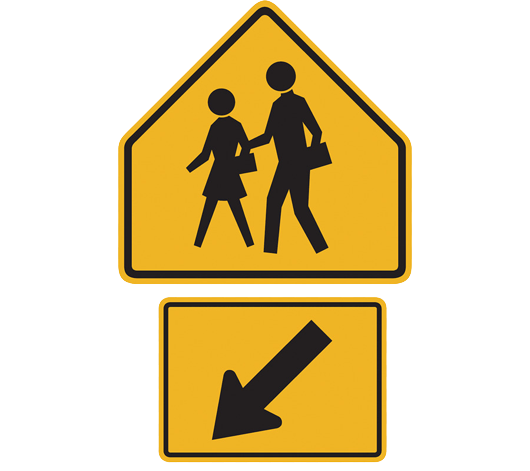 When you approach this sign, you must:
A
stop if necessary.
B
watch for workers crossing the road.
C
None of the above.
This traffic sign indicates: stop if necessary. Observing and obeying all roadway signs ensures safe traffic flow and legal driving.
Question 42:
When driving in fog, you should never use your high beams because:
A
the light will reflect back into your eyes.
B
vehicles behind you may follow too closely.
C
oncoming vehicles might not see you.
For safe speed and stopping control: the light will reflect back into your eyes. Adjusting speed to match visibility and road traction prevents loss of steering grip.
Question 43:
Service signs are ____ with ____ letters and symbols.
A
blue; white
B
white; black
C
green; white
The correct driving rule is: blue; white. Following standard DMV road rules and practicing defensive driving ensures safety for all road users.
Question 44:
The ‘Slower Traffic Keep Right’ sign is used:
A
at most intersections.
B
on multiple lane highways.
C
in school zones.
The correct driving rule is: on multiple lane highways. Following standard DMV road rules and practicing defensive driving ensures safety for all road users.
Question 45:
If you see orange construction signs and cones on a freeway, you must:
A
be prepared for workers and equipment ahead.
B
make a U-turn because the lane ends ahead.
C
maintain your current speed while changing lanes.
Defensive driving guidelines state that: be prepared for workers and equipment ahead. Anticipating road hazards and communicating maneuvers keeps traffic predictable and safe.
Question 46:
You can pass on the right:
A
when a vehicle ahead makes a right turn.
B
when a vehicle ahead makes a left turn.
C
when a vehicle that is approaching from the opposite direction is prepared to turn left.
The correct driving rule is: when a vehicle ahead makes a left turn. Following standard DMV road rules and practicing defensive driving ensures safety for all road users.
Question 47:
Does a vehicle prepared to enter a traffic circle or rotary have right-of-way over vehicles in the circle?
A
Yes, but only if they are entering the rotary from the right lane.
B
No. Vehicles already in the circle have the right-of-way.
C
Only if the light is green.
D
Yes.
Vehicles entering a roundabout must yield right-of-way to circulating traffic already inside: No. Vehicles already in the circle have the right-of-way. Wait for a safe gap before entering.
Question 48:
You are driving at night, and a vehicle comes toward you with their high beam headlights on. You should:
A
flash your headlights once quickly.
B
look in the direction of the vehicle.
C
keep your high beams on.
The correct driving rule is: flash your headlights once quickly. Following standard DMV road rules and practicing defensive driving ensures safety for all road users.
Question 49:
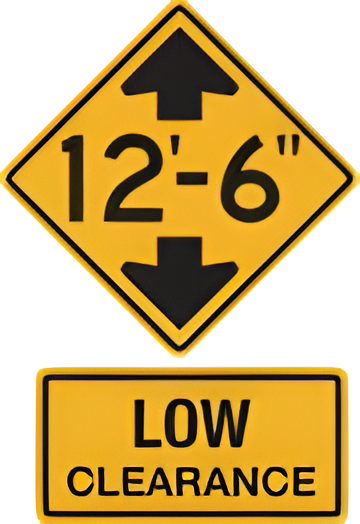 This road sign means:
A
Low clearance
B
Do not enter
C
A steep grade is ahead
This traffic sign indicates: Low clearance. Observing and obeying all roadway signs ensures safe traffic flow and legal driving.
Question 50:
When following another vehicle at night, drivers should use:
A
low beam headlights.
B
emergency flashers.
C
high beam headlights.
The correct driving rule is: low beam headlights. Following standard DMV road rules and practicing defensive driving ensures safety for all road users.