Question 1:
On a three-lane expressway, drivers should use the ____ lane for passing.
A
center
B
right or left
C
right
D
left
Defensive driving guidelines state that: left. Anticipating road hazards and communicating maneuvers keeps traffic predictable and safe.
Question 2:
Florida law requires that motorists give cyclists a minimum of ______ feet of clearance and reduce their speed.
A
nine
B
three
C
fifteen
D
ten
For safe speed and stopping control: three. Adjusting speed to match visibility and road traction prevents loss of steering grip.
Question 3:
When parallel parking between two vehicles, what is the recommended first step?
A
Pull forward into the space front-first
B
Pull up parallel alongside the vehicle in front of the space, about 2-3 feet away
C
Honk your horn and reverse at high speed
D
Turn your wheels hard left before moving
To parallel park safely, pull up even with the car parked ahead of the empty space, about 2-3 feet away, before reversing at a 45-degree angle.
Question 4:
A diamond-shaped marking on the left lane shows that:
A
the lane is reserved for car-pool vehicles.
B
the lane is reserved for state-owned vehicles.
C
the lane is reserved for trucks and heavy vehicles.
D
this is an emergency-only lane.
The correct driving rule is: the lane is reserved for car-pool vehicles. Following standard DMV road rules and practicing defensive driving ensures safety for all road users.
Question 5:
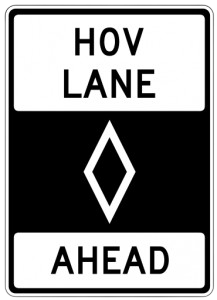 This road sign indicates that:
A
a lane is reserved for certain purposes or certain vehicles.
B
buses and car pools may not travel in the restricted lane.
C
vehicles cannot go straight ahead. Cars must turn either to the right or left.
This traffic sign indicates: a lane is reserved for certain purposes or certain vehicles. Observing and obeying all roadway signs ensures safe traffic flow and legal driving.
Question 6:
Parking is not allowed within __ feet of the entrance to a fire station
A
50
B
100
C
20
D
30
Under standard parking and curb regulations: 20. Following parking distance clearances keeps roadways unobstructed and emergency lanes accessible.
Question 7:
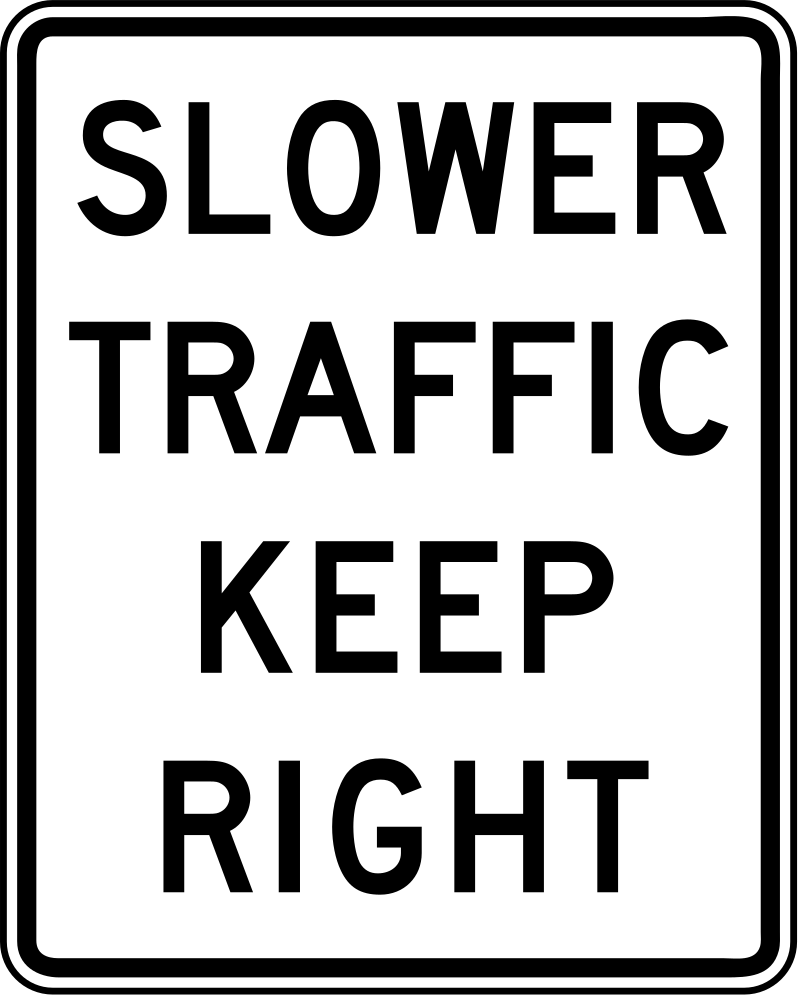 This road sign is:
A
a speed reduction sign.
B
a warning sign.
C
a regulatory sign.
This traffic sign indicates: a regulatory sign. Observing and obeying all roadway signs ensures safe traffic flow and legal driving.
Question 8:
What should you do if an oncoming vehicle crosses the centerline into your path?
A
Sound your horn, flash your lights, brake, and steer to the right shoulder
B
Steer left into oncoming traffic lanes
C
Close your eyes and brace for impact
D
Accelerate to try to pass them
Never steer left into oncoming traffic. Honk, flash lights, brake firmly, and steer right toward the shoulder to avoid a head-on collision.
Question 9:
A driver who approaches an intersection with a solid green light and wants to make a right turn must:
A
Yield to pedestrians and bicyclists crossing the street you are turning into
B
Turn immediately without checking crosswalks
C
Stop for 3 seconds before turning
D
Honk to warn pedestrians to stay on the sidewalk
Even with a green light, turning drivers must yield to pedestrians and cyclists crossing with the signal in the intersection.
Question 10:
What is the minimum required clearance a motorist must maintain from a cyclist?
A
30 feet
B
3 feet
C
15 feet
D
8 feet
State laws require motorists to provide a safe clearance buffer: 3 feet. Allow at least 3 feet of space when overtaking a bicyclist.
Question 11:
Which of the following is true about double yellow lines, one solid, one broken?
A
They prohibit vehicles moving in either direction from crossing the lines.
B
If the broken line is closer to the driver, he/she can cross the broken line only to pass another vehicle, if it is safe to do so.
C
They separate lanes of traffic moving in the same direction.
D
None of the above.
The correct driving rule is: If the broken line is closer to the driver, he/she can cross the broken line only to pass another vehicle, if it is safe to do so. Following standard DMV road rules and practicing defensive driving ensures safety for all road users.
Question 12:
 What does this ‘Soft Shoulder’ sign indicate?
A
The dirt on the side of the road is soft.
B
Drivers should leave the pavement immediately.
C
Drive on the shoulder if you have soft tyres.
D
None of the above.
The correct driving rule is: The dirt on the side of the road is soft. Following standard DMV road rules and practicing defensive driving ensures safety for all road users.
Question 13:
Stop lines, crosswalks and parking spaces are marked by:
A
white lines.
B
white broken lines.
C
yellow lines.
D
red lines.
Under standard parking and curb regulations: white lines. Following parking distance clearances keeps roadways unobstructed and emergency lanes accessible.
Question 14:
Any driver under the age of 18 who accumulates six or more points within a 12 month period is automatically restricted for one year to:
A
operating the motor vehicle only between 7:00 a.m. and 11:00 p.m.
B
driving for “Business Purposes ONLY”.
C
driving within 25 miles from home.
D
driving only during weekends.
The correct driving rule is: driving for “Business Purposes ONLY”. Following standard DMV road rules and practicing defensive driving ensures safety for all road users.
Question 15:
What is the penalty for a first-offense DUI conviction in most states?
A
A verbal warning
B
License suspension, substantial fines, mandatory alcohol education classes, and possible jail time
C
Automatic loss of license for 20 years
D
Community service without fines
First DUI convictions carry heavy financial penalties, license suspension (3 to 12 months), alcohol treatment courses, and potential jail time.
Question 16:
Which signs have black letters on a yellow or orange background?
A
Warning signs (diamond)
B
Regulatory signs (vertical rectangle)
C
Railroad advance warning signs (round)
The correct driving rule is: Warning signs (diamond). Following standard DMV road rules and practicing defensive driving ensures safety for all road users.
Question 17:
A traffic sign with a red circle around and a slash over a symbol means:
A
the maneuver shown by the symbol is not allowed.
B
Do not drive faster than the posted speed limit.
C
the maneuver shown on the sign should be executed with extreme caution.
This traffic sign indicates: the maneuver shown by the symbol is not allowed. Observing and obeying all roadway signs ensures safe traffic flow and legal driving.
Question 18:
 The driver in the picture is about to:
A
slow down or stop.
B
turn right.
C
pass another vehicle.
D
turn left.
The correct driving rule is: turn right. Following standard DMV road rules and practicing defensive driving ensures safety for all road users.
Question 19:
High beams are ___________ the fog.
A
reflected back off
B
perfect to completely remove
C
the best choice when driving in
D
better than low beams when driving in
For safe speed and stopping control: reflected back off. Adjusting speed to match visibility and road traction prevents loss of steering grip.
Question 20:
Before making a left or right turn, you should signal for at least:
A
500 feet.
B
100 feet.
C
50 feet.
D
150 feet.
State laws require signaling your intention: 100 feet. Signal at least 100 feet before making a turn or changing lanes.
Question 21:
What does a diamond-shaped traffic sign with a yellow or orange background indicate?
A
Regulatory law / mandatory command
B
General warning of upcoming roadway hazards or construction
C
Hospital and medical services
D
Public park and recreation area
Diamond-shaped signs warn drivers of potential hazards, road geometry changes, merging traffic, or highway work zones ahead.
Question 22:
In Florida, the bicycle is legally defined as:
A
a pedestrian.
B
a vehicle.
C
a motorcycle.
D
a cyclist.
State laws require motorists to provide a safe clearance buffer: a vehicle. Allow at least 3 feet of space when overtaking a bicyclist.
Question 23:
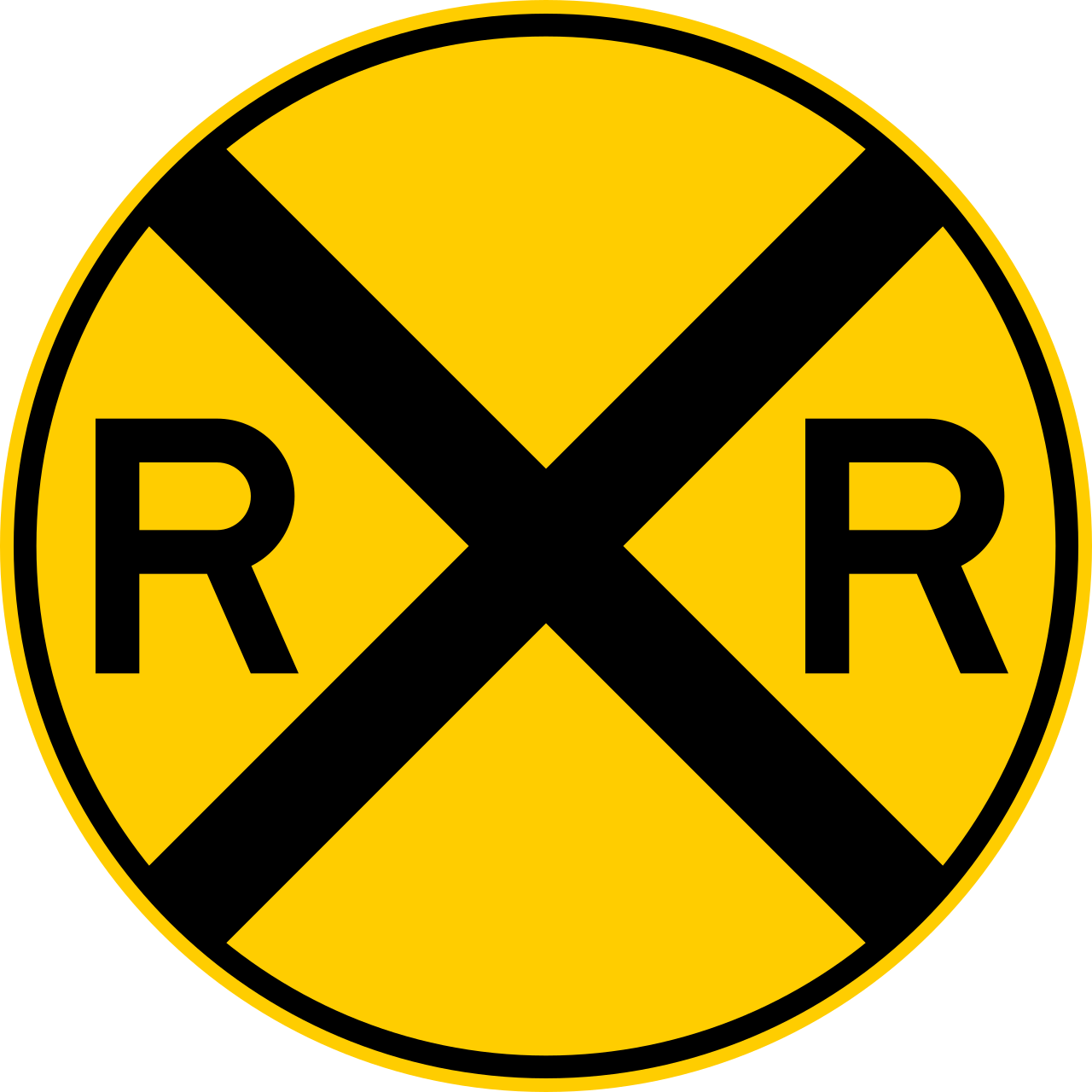 The picture shows:
A
a railroad advance warning sign.
B
a speeding fines doubled sign.
C
a reversible road sign.
The correct driving rule is: a railroad advance warning sign. Following standard DMV road rules and practicing defensive driving ensures safety for all road users.
Question 24:
Who must obey traffic signals?
A
Drivers and bicycle riders, but not pedestrians.
B
Only law enforcement officers.
C
Drivers, pedestrians, and bicycle riders.
D
Only drivers.
The correct driving rule is: Drivers, pedestrians, and bicycle riders. Following standard DMV road rules and practicing defensive driving ensures safety for all road users.
Question 25:
Parking is not allowed:
A
on the road side of a parked vehicle.
B
in a tunnel.
C
All of the above.
Under standard parking and curb regulations: All of the above. Following parking distance clearances keeps roadways unobstructed and emergency lanes accessible.
Question 26:
Your license can be cancelled if:
A
your license was issued in error.
B
you are found guilty of 2 cases of reckless driving within one year.
C
you are found guilty of racing on a highway.
D
you break a traffic law and fail to pay your fine.
The correct driving rule is: your license was issued in error. Following standard DMV road rules and practicing defensive driving ensures safety for all road users.
Question 27:
Your license must be revoked if you are found guilty of ___ cases of reckless driving within one year.
A
2
B
6
C
5
D
3
The correct driving rule is: 3. Following standard DMV road rules and practicing defensive driving ensures safety for all road users.
Question 28:
It is against the law to:
A
use hand signals.
B
make three-point turns.
C
use directional signals when changing lane.
D
use your directional signals to tell drivers behind you that they can pass.
The correct driving rule is: use your directional signals to tell drivers behind you that they can pass. Following standard DMV road rules and practicing defensive driving ensures safety for all road users.
Question 29:
What should you do when preparing to turn right on a roadway with a bike lane?
A
Check for and yield to bicyclists coming from the opposite direction.
B
Cross the bike lane and then yield to any bicyclist in the bike lane.
C
Signal your turn and yield to any bicyclist in the bike lane.
According to standard right-of-way regulations: signal your turn and yield to any bicyclist in the bike lane. Yielding appropriately prevents intersection collisions and maintains safe traffic flow.
Question 30:
You can be charged with DUI if you are found to be driving:
A
while under the influence of alcohol or controlled substances.
B
under the influence of heavy metal music (rage music).
C
while you are angry.
D
while texting.
Under state DUI and traffic safety laws: while under the influence of alcohol or controlled substances. Alcohol degrades judgment, slows reaction times, and distorts depth perception.
Question 31:
Before changing lanes, what is the correct defensive driving sequence (SMOG)?
A
Signal, Mirrors, Over-the-shoulder check, Go when safe
B
Speed up, Move over, Honk horn, Glance behind
C
Brake, Signal, Turn wheel, Accelerate
D
Look straight, Change lanes, Turn on signal
SMOG stands for: Signal intentions, check Mirrors, look Over shoulder for blind spots, and Go (glide smoothly) into the lane.
Question 32:
Where are yield signs usually placed?
A
At intersections, if there is no marked stop line.
B
Where auxiliary roads lead into major roads.
C
Where major roads lead into auxiliary roads.
The correct driving rule is: Where auxiliary roads lead into major roads. Following standard DMV road rules and practicing defensive driving ensures safety for all road users.
Question 33:
__________________ are required by law when changing lanes or overtaking a vehicle.
A
Turn signals
B
Four-way emergency flashers
C
Traffic signals
D
High beam headlights
Defensive driving guidelines state that: turn signals. Anticipating road hazards and communicating maneuvers keeps traffic predictable and safe.
Question 34:
What should you do in case of a brake failure?
A
Pull off the road into an open space, if available.
B
Apply the parking brake slowly.
C
All of the above.
All of the listed points are essential driving requirements: Pull off the road into an open space, if available; Apply the parking brake slowly. Practicing each ensures compliance with DMV safety laws.
Question 35:
If a driver triples the speed of a car, he/she increases its force of impact:
A
4 times.
B
6 times.
C
9 times
D
3 times.
For safe speed and stopping control: 9 times. Adjusting speed to match visibility and road traction prevents loss of steering grip.
Question 36:
When you see a cyclist approaching at night, you should NOT:
A
use low beam headlights.
B
be careful.
C
use high beam headlights.
D
avoid honking your horn.
State laws require motorists to provide a safe clearance buffer: use high beam headlights. Allow at least 3 feet of space when overtaking a bicyclist.
Question 37:
Gauging the speed of a motorcycle may be difficult because:
A
motorcycles take up less of your field of vision.
B
motorcycles often slow down by downshifting.
C
many motorcyclists do not activate the brake light.
For safe speed and stopping control: motorcycles take up less of your field of vision. Adjusting speed to match visibility and road traction prevents loss of steering grip.
Question 38:
How far from a railroad crossing must you stop or park your vehicle?
A
At least 50 feet
B
At least 10 feet
C
No closer than 100 feet
D
Directly between the tracks
Parking within 50 feet of the nearest rail of a railroad crossing is illegal in almost all states.
Question 39:
Which of the following is true when crossing a railroad track:
A
Do not move forward until it's safe to do so.
B
If there is more than one track, make sure all tracks are clear before starting to cross.
C
In heavy traffic, make sure there is room for their vehicle on the other side before crossing.
D
All of the above.
All of the listed points are essential driving requirements: Do not move forward until it's safe to do so; If there is more than one track, make sure all tracks are clear before starting to cross; In heavy traffic, make sure there is room for their vehicle on the other side before crossing. Practicing each ensures compliance with DMV safety laws.
Question 40:
Which shape is a warning sign?
A
Diamond
B
Triangle
C
Pennant
This traffic sign indicates: Diamond. Observing and obeying all roadway signs ensures safe traffic flow and legal driving.
Question 41:
What should drivers do when the red lights begin to flash?
A
Stop.
B
Yield.
C
Slow down.
The correct driving rule is: stop. Following standard DMV road rules and practicing defensive driving ensures safety for all road users.
Question 42:
If your vehicle's right wheels drop off the paved roadway onto a low dirt shoulder, you should:
A
Slam on the brakes and jerk the wheel hard to the left
B
Hold the steering wheel straight, ease off the accelerator, and steer gently back onto pavement when speed is reduced
C
Accelerate rapidly to jump the curb
D
Turn off the ignition immediately
Do not panic or yank the wheel. Keep wheels straight, ease off the gas, slow down gradually, and guide the car smoothly back onto the road.
Question 43:
Every car must have a white light that makes the license plate visible from how many feet away?
A
300
B
500
C
100
D
50
The correct driving rule is: 50. Following standard DMV road rules and practicing defensive driving ensures safety for all road users.
Question 44:
Which of the following is a possible sign of road rage?
A
Smiling to other drivers.
B
Getting out of the left lane for other fast moving vehicles.
C
Hand gestures.
D
Avoiding eye contact with other drivers.
The correct driving rule is: Hand gestures. Following standard DMV road rules and practicing defensive driving ensures safety for all road users.
Question 45:
At an open intersection, drivers have the right-of-way if:
A
they are driving faster than the other vehicles.
B
they are already in the intersection.
C
they enter a paved road from an unpaved road.
D
All of the above.
According to standard right-of-way regulations: they are already in the intersection. Yielding appropriately prevents intersection collisions and maintains safe traffic flow.
Question 46:
Low beam headlamps are only effective for speeds up to ___ MPH.
A
50-55
B
20-25
C
30-35
D
70-85
The correct driving rule is: 20-25. Following standard DMV road rules and practicing defensive driving ensures safety for all road users.
Question 47:
 When they see a yellow X signal, drivers should:
A
come to a complete stop at the marked stop line.
B
turn off the ignition.
C
prepare to leave the lane safely.
State laws require signaling your intention: prepare to leave the lane safely. Signal at least 100 feet before making a turn or changing lanes.
Question 48:
When driving in dense fog or heavy snow, which headlights should you use?
A
High-beam headlights for maximum range
B
Low-beam headlights or fog lights
C
Parking lights only
D
Hazard warning flashers while driving at highway speed
High beams reflect off water droplets or snowflakes back into your eyes, causing glare. Always use low-beam headlights.
Question 49:
Which way should you turn your wheels when parking facing uphill where there is a curb?
A
Turn wheels to right.
B
Any of the above.
C
Turn wheels to curb.
D
Turn wheels from curb.
When parking uphill with a curb: turn wheels from curb. Turn wheels away from the curb (left) so the back of the front tire catches the curb if brakes slip.
Question 50:
Sharrows:
A
indicate to bicyclists where to ride.
B
alert drivers that bicyclists may be on the road.
C
discourage bicycling in the wrong direction.
D
All of the above.
All of the listed points are essential driving requirements: indicate to bicyclists where to ride; alert drivers that bicyclists may be on the road; discourage bicycling in the wrong direction. Practicing each ensures compliance with DMV safety laws.