Question 1:
Stop, Do Not Enter and Wrong Way signs are:
A
orange
B
red
C
black and white
The correct driving rule is: black and white. Following standard DMV road rules and practicing defensive driving ensures safety for all road users.
Question 2:
An emergency vehicle that uses lights and a siren can be unpredictable. Why?
A
The driver can legally pass red lights.
B
Emergency vehicles must go faster than the posted speed limit when it is safe to do so.
C
Emergency vehicle drivers are not required to be careful.
When sharing the road with other vehicles: The driver can legally pass red lights. Giving large vehicles and vulnerable users adequate clearance prevents dangerous accidents.
Question 3:
A yellow sign with a black “X” and the letters “RR” means:
A
crossroad ahead.
B
a highway-railway crossing is ahead.
C
this lane signal is going to change to red.
The correct driving rule is: a highway-railway crossing is ahead. Following standard DMV road rules and practicing defensive driving ensures safety for all road users.
Question 4:
If you are pulled over by law enforcement, you should:
A
stay in the driver’s seat with both hands clearly in sight on the steering wheel.
B
unbuckle your seat belt and lower your window.
C
get out of your vehicle and walk toward the patrol car.
D
turn off on your interior light if stopped at night.
The correct driving rule is: stay in the driver’s seat with both hands clearly in sight on the steering wheel. Following standard DMV road rules and practicing defensive driving ensures safety for all road users.
Question 5:
If a driver follows you too closely, you should:
A
move to another lane if possible.
B
activate your stop lights.
C
brake suddenly.
The correct driving rule is: move to another lane if possible. Following standard DMV road rules and practicing defensive driving ensures safety for all road users.
Question 6:
When can you legally make a right turn on a red traffic light?
A
Never in any circumstance
B
After making a complete stop and yielding to traffic and pedestrians, unless a 'No Turn on Red' sign is posted
C
Without stopping if no vehicles are visible
D
Only between 6 AM and 6 PM
In most US jurisdictions, turning right on red is allowed after a complete stop and yielding, unless a sign specifically prohibits it.
Question 7:
 The yield sign means:
A
Go. The light will soon be red.
B
If the way is clear, you may move forward slowly without stopping.
C
Stop if you can.
A triangular Yield sign requires drivers to slow down and give right-of-way to other traffic: If the way is clear, you may move forward slowly without stopping. Proceed only when there is a safe opening.
Question 8:
Which of the following does alcohol affect?
A
Alertness.
B
Reaction time.
C
All of the above.
Alcohol and impairing substances degrade all critical driving functions: Alertness; Reaction time. Driving while impaired carries severe criminal and safety penalties.
Question 9:
A driver cuts off another vehicle, or threatens another motorist or a pedestrian. These are examples of:
A
excessive driving
B
road rage
C
defensive driving
Drivers must always yield the right-of-way to pedestrians crossing at intersections and crosswalks: road rage. Stop and allow them to clear the lane safely.
Question 10:
Signs providing directional and mileage information to specific destinations are:
A
red with white letters.
B
green with white letters.
C
black with white letters.
The correct driving rule is: green with white letters. Following standard DMV road rules and practicing defensive driving ensures safety for all road users.
Question 11:
 This road sign means:
A
Drive no less than 40 MPH around the curve ahead
B
The speed limit after the curve ahead is 40 MPH.
C
Curve ahead, the recommended speed is 40 MPH or less.
This traffic sign indicates: Curve ahead, the recommended speed is 40 MPH or less. Observing and obeying all roadway signs ensures safe traffic flow and legal driving.
Question 12:
When should you increase your following distance beyond 3 to 4 seconds?
A
During rain, snow, or icy conditions
B
When following large commercial trucks or motorcycles
C
When being tailgated by another vehicle
D
All of the above
Following distance should be increased to 5-8 seconds in bad weather, behind motorcycles/trucks, when following heavy vehicles, or when tailgated.
Question 13:
If a traffic officer signals you to drive through a red light:
A
you must do it.
B
you must wait for the red light to turn green.
C
you must not obey the officer. Signs and signals take precedence over directions given by traffic officers.
According to standard right-of-way regulations: you must do it. Yielding appropriately prevents intersection collisions and maintains safe traffic flow.
Question 14:
 This warning sign:
A
provides advance notice to upcoming speed limit change.
B
shows the current speed limit that all vehicles traveling in the direction of the arrow must not exceed.
C
indicates the suggested highest safe speed.
This traffic sign indicates: provides advance notice to upcoming speed limit change. Observing and obeying all roadway signs ensures safe traffic flow and legal driving.
Question 15:
What should you do if your headlights suddenly go out?
A
Brake immediately and activate your emergency lights.
B
Use your emergency lights, parking lights or directional signals.
C
Ease your foot off the gas pedal and brake gently.
The correct driving rule is: use your emergency lights, parking lights or directional signals. Following standard DMV road rules and practicing defensive driving ensures safety for all road users.
Question 16:
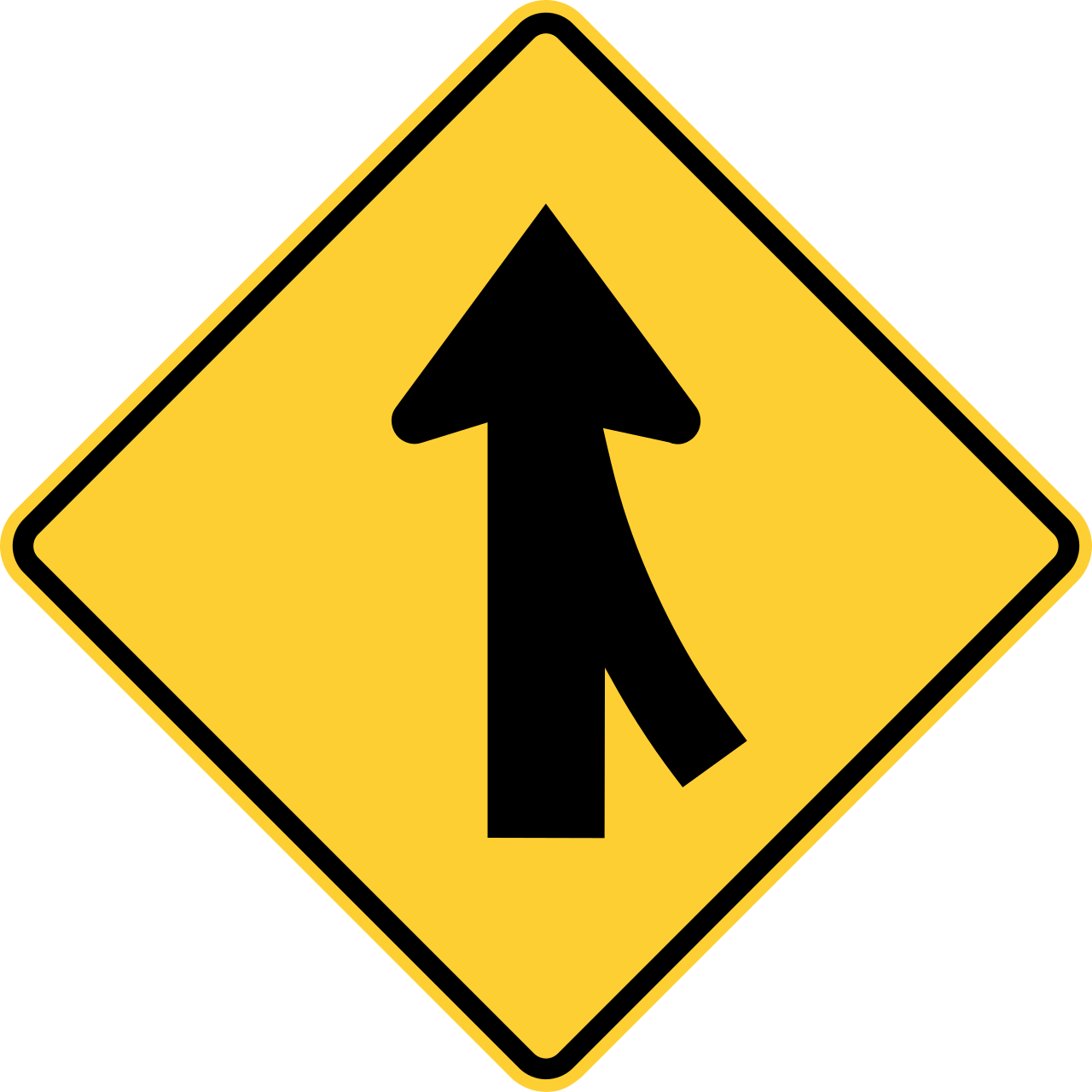 When you see this sign you should:
A
turn right.
B
merge left.
C
watch for traffic to the right.
This traffic sign indicates: watch for traffic to the right. Observing and obeying all roadway signs ensures safe traffic flow and legal driving.
Question 17:
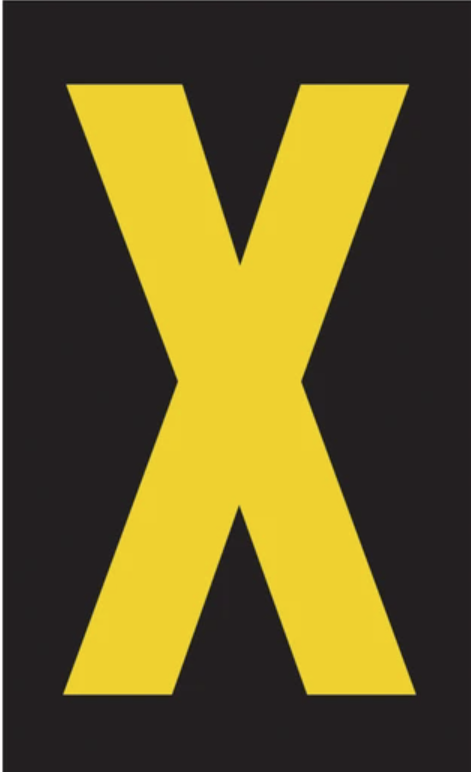 When they see a yellow X signal, drivers should:
A
come to a complete stop at the marked stop line.
B
turn off the ignition.
C
prepare to leave the lane safely.
State laws require signaling your intention: prepare to leave the lane safely. Signal at least 100 feet before making a turn or changing lanes.
Question 18:
 A flashing red light:
A
is used at dangerous intersections.
B
means the same thing as a stop sign.
C
All of the above.
Safe navigation at intersections requires following all established rules: is used at dangerous intersections; means the same thing as a stop sign. Always yield right-of-way properly to prevent collisions.
Question 19:
Destination signs are ______ with ____ letters and symbols.
A
green; white
B
blue; white
C
white; black
The correct driving rule is: green; white. Following standard DMV road rules and practicing defensive driving ensures safety for all road users.
Question 20:
A round, yellow traffic sign with a black 'X' and the letters 'RR' warns you of:
A
A rest area ahead
B
A highway interchange
C
A railroad crossing ahead
D
A roundabout entry
Circular yellow signs are exclusively used for advanced warnings of railroad crossings.
Question 21:
Under child safety seat laws in most states, infants and young toddlers must ride in a rear-facing car seat until at least:
A
Age 2 (or until reaching the car seat's height/weight limit)
B
6 months of age
C
Age 6
D
Age 10
Safety guidelines and state laws recommend or require keeping children in rear-facing child restraint seats until at least age 2.
Question 22:
You want to turn left at an intersection ahead. A car reaches the intersection from the opposite direction and moves straight ahead. You:
A
can turn left. You have the right of way.
B
must wait for the car to go through before you turn.
C
may not enter the intersection to prepare for your left turn if the light is green.
According to standard right-of-way regulations: must wait for the car to go through before you turn. Yielding appropriately prevents intersection collisions and maintains safe traffic flow.
Question 23:
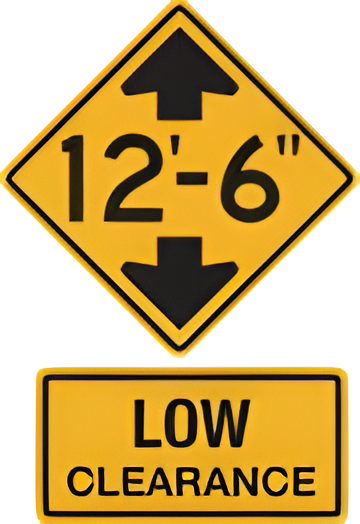 This sign means:
A
Narrow bridge ahead. Slow down and drive with caution.
B
Do not to enter if your vehicle is taller than the height listed on the sign.
C
No passing zone ahead.
This traffic sign indicates: Do not to enter if your vehicle is taller than the height listed on the sign. Observing and obeying all roadway signs ensures safe traffic flow and legal driving.
Question 24:
If a police officer pulls you over on suspicion of DUI, where should you place your hands while waiting for the officer?
A
In your pockets
B
Reaching into the glove compartment immediately
C
On the steering wheel in plain sight
D
Covering your face
Keep your hands visibly placed on the steering wheel so the officer can see them clearly. Do not reach for registration until requested.
Question 25:
If you intend to turn left onto a multilane one-way street, you must complete your turn in:
A
The furthest right lane
B
The nearest left lane
C
Any lane of your choice
D
The center lane only
When turning left onto a one-way street, you must turn into the lane nearest the left curb or edge of the roadway.
Question 26:
Double solid lines on the roadway mean:
A
you cannot pass.
B
you can not go across the lines except to turn left to enter or leave the highway.
C
All of the above.
All of the listed points are essential driving requirements: you cannot pass; you can not go across the lines except to turn left to enter or leave the highway. Practicing each ensures compliance with DMV safety laws.
Question 27:
What does a steady yellow traffic light mean?
A
Speed up to cross the intersection before it turns red
B
The signal is changing to red; stop safely if you can do so, or clear the intersection cautiously
C
You have the right-of-way over all vehicles
D
The intersection is closed
A yellow light warns that the red signal is imminent. You must stop if safe; if you are already inside the intersection, clear it safely.
Question 28:
A yellow arrow means:
A
Do not go in the direction of the arrow.
B
If you intend to turn in the direction of the arrow, be prepared to stop.
C
The same as a steady yellow light.
The correct driving rule is: If you intend to turn in the direction of the arrow, be prepared to stop. Following standard DMV road rules and practicing defensive driving ensures safety for all road users.
Question 29:
If an approaching driver does not dim the headlights, you should:
A
move your eyes to the left to help avoid the glare of approaching high beams.
B
move your eyes to the right and avoid looking directly at the bright lights.
C
flash your headlights to low beam for a second, then return to high beam.
The correct driving rule is: move your eyes to the right and avoid looking directly at the bright lights. Following standard DMV road rules and practicing defensive driving ensures safety for all road users.
Question 30:
When following a motorcycle, drivers must remember that motorcycles can ____________ than other vehicles.
A
accelerate much faster
B
stop much more quickly
C
stop much more slowly
Motorcycles can stop rapidly and are easily hidden in vehicle blind spots: stop much more quickly. Always allow an increased following distance of at least 3 to 4 seconds.
Question 31:
In case of skidding, drivers should NOT:
A
take their foot off the gas pedal.
B
pump the brakes gently if they are about to hit something.
C
tap the gas pedal with their foot.
The correct driving rule is: tap the gas pedal with their foot. Following standard DMV road rules and practicing defensive driving ensures safety for all road users.
Question 32:
BAC is expressed in:
A
percentage of alcohol to blood.
B
percentage of blood to alcohol.
C
ounces of alcohol in your blood.
Under state DUI and traffic safety laws: percentage of alcohol to blood. Alcohol degrades judgment, slows reaction times, and distorts depth perception.
Question 33:
A broken white line:
A
means passing or crossing is prohibited in that lane.
B
separates two lanes traveling in the same direction.
C
marks the right edge of the roadway.
The correct driving rule is: separates two lanes traveling in the same direction. Following standard DMV road rules and practicing defensive driving ensures safety for all road users.
Question 34:
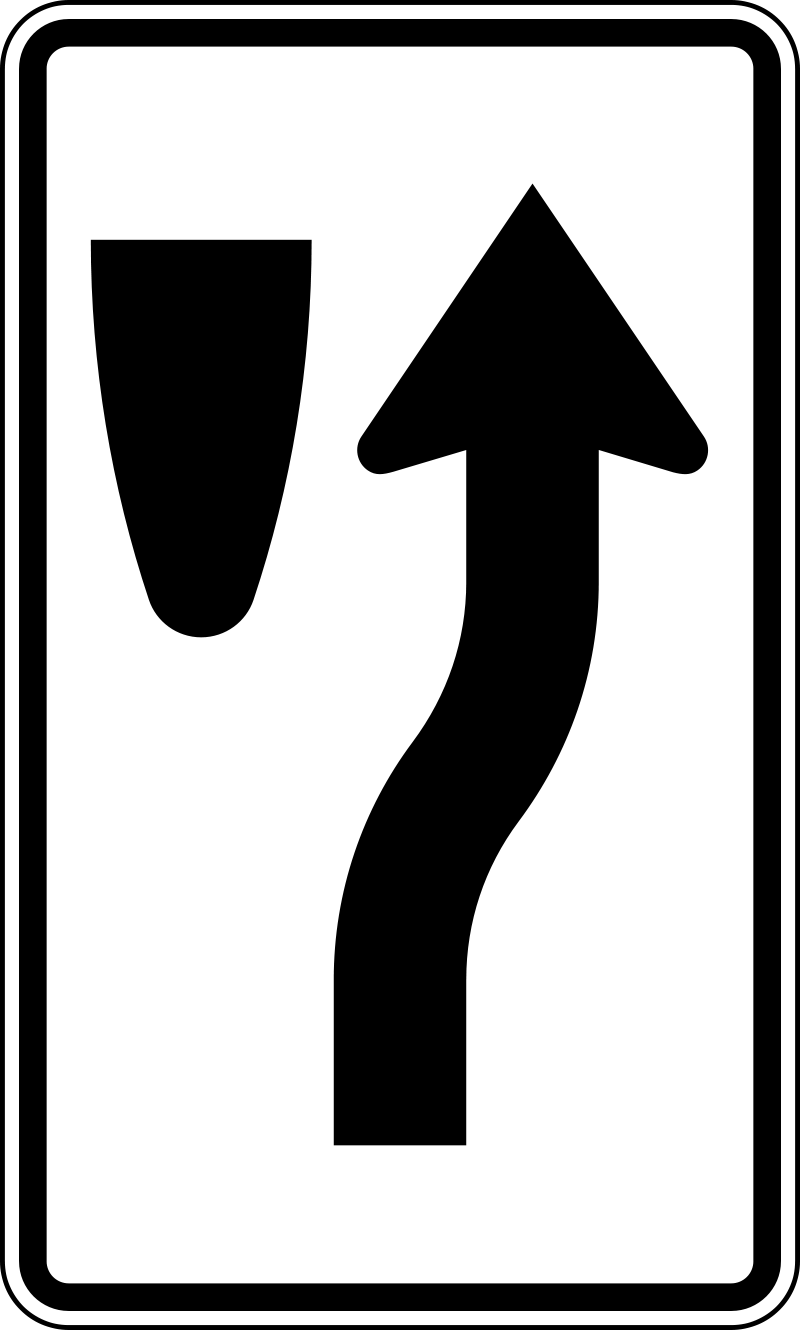 This sign tells drivers that:
A
there is a right turn ahead.
B
they must stay on the right side of the divider
C
a divided highway ends ahead.
This traffic sign indicates: they must stay on the right side of the divider. Observing and obeying all roadway signs ensures safe traffic flow and legal driving.
Question 35:
What should you do if you see smoke come from under the hood?
A
Call the fire department and then pull off the road and park your vehicle.
B
Pull off the road and park your vehicle. Turn off the ignition, get away from the car and call the fire department.
C
Try to fight the fire yourself.
The correct driving rule is: pull off the road and park your vehicle. Turn off the ignition, get away from the car and call the fire department. Following standard DMV road rules and practicing defensive driving ensures safety for all road users.
Question 36:
Where must you position your vehicle when you prepare to make a left turn from a two-way roadway into a one-way roadway?
A
As far to the right as possible.
B
On the right curb.
C
As close as possible to the center line.
The correct driving rule is: As close as possible to the center line. Following standard DMV road rules and practicing defensive driving ensures safety for all road users.
Question 37:
Before changing lanes, what is the correct defensive driving sequence (SMOG)?
A
Signal, Mirrors, Over-the-shoulder check, Go when safe
B
Speed up, Move over, Honk horn, Glance behind
C
Brake, Signal, Turn wheel, Accelerate
D
Look straight, Change lanes, Turn on signal
SMOG stands for: Signal intentions, check Mirrors, look Over shoulder for blind spots, and Go (glide smoothly) into the lane.
Question 38:
 From the center lane, drivers can:
A
make left turns.
B
make U-turns.
C
All of the above.
The correct driving rule is: make left turns. Following standard DMV road rules and practicing defensive driving ensures safety for all road users.
Question 39:
This sign indicates:
A
Winding road
B
Merging traffic
C
Divided highway ends
This traffic sign indicates: Merging traffic. Observing and obeying all roadway signs ensures safe traffic flow and legal driving.
Question 40:
When approaching a stop sign that is not marked by a crosswalk, drivers should stop their vehicles as close to the sign as possible.
A
False
B
True
Drivers must always yield the right-of-way to pedestrians crossing at intersections and crosswalks: True. Stop and allow them to clear the lane safely.
Question 41:
Passing on a two-lane, two-way road is not allowed:
A
on a hill where it is not possible to see oncoming vehicles.
B
if there is a solid yellow line on your side of the center of the road.
C
All of the above.
Defensive driving best practices include: on a hill where it is not possible to see oncoming vehicles; if there is a solid yellow line on your side of the center of the road. Staying alert and maintaining spacing prevents unexpected hazards.
Question 42:
You should use turn signals to indicate your intention with sufficient time to allow other drivers to see the signal:
A
if it’s raining.
B
AFTER you move.
C
BEFORE you move.
State laws require signaling your intention: BEFORE you move. Signal at least 100 feet before making a turn or changing lanes.
Question 43:
You are waiting in the intersection to complete a left turn. You should:
A
signal and keep your wheels straight.
B
signal and keep your wheels turned to the left.
C
not signal until you can complete your turn.
When turning left across traffic lanes: signal and keep your wheels straight. You must yield to all oncoming vehicles and crossing pedestrians before completing the turn.
Question 44:
What is the typical speed limit in a school zone when children are present, unless otherwise posted?
A
15 to 25 mph
B
35 to 45 mph
C
10 mph everywhere
D
Same as regular city streets
School zone speed limits typically range between 15 and 25 mph during school hours or when children are walking or playing nearby.
Question 45:
After being pulled over by law enforcement, a driver should immediately exit the vehicle and quickly approach the officer’s squad car.
A
True
B
False
Defensive driving guidelines state that: False. Anticipating road hazards and communicating maneuvers keeps traffic predictable and safe.
Question 46:
Combining alcohol with prescription drugs or other medications:
A
Cancels out the effects of both substances
B
Multiplies the impairing effects dramatically
C
Is safe as long as the medication was prescribed by a physician
D
Has no impact on motor skills
Mixing alcohol with other drugs creates a synergistic effect, multiplying the depressant impact on your central nervous system.
Question 47:
Before crossing any railroad tracks, you must:
A
look and listen for trains.
B
make sure there is room for your vehicle on the other side.
C
All of the above.
All of the listed points are essential driving requirements: look and listen for trains; make sure there is room for your vehicle on the other side. Practicing each ensures compliance with DMV safety laws.
Question 48:
When passing a truck, you should let the driver know you are passing by honking your horn.
A
False
B
True
When sharing the road with other vehicles: True. Giving large vehicles and vulnerable users adequate clearance prevents dangerous accidents.
Question 49:
Bicyclists are prohibited on limited-access highways.
A
False
B
True
The correct driving rule is: True. Following standard DMV road rules and practicing defensive driving ensures safety for all road users.
Question 50:
What is the primary rule when yielding to pedestrians in a crosswalk?
A
Pedestrians only have right-of-way at marked crosswalks with walk signals
B
Drivers must yield to pedestrians in marked and unmarked crosswalks
C
Pedestrians must always wait for vehicles to pass first
D
Drivers should wave pedestrians across only if the speed limit is under 25 mph
Pedestrians have the right-of-way in both marked crosswalks and unmarked crosswalks at intersections across all 50 states.