Question 1:
When drivers see the ‘Wrong Way’ sign:
A
they are going the wrong way on an expressway exit ramp.
B
they must drive past this sign and reach the next intersection.
C
they must not leave the pavement except in an emergency.
The correct driving rule is: they are going the wrong way on an expressway exit ramp. Following standard DMV road rules and practicing defensive driving ensures safety for all road users.
Question 2:
Drivers can not pass a vehicle on the left if:
A
they approach the top of a hill on a two-way road and can not see over it.
B
they can not safely return to the right lane before they reach a solid yellow center line for the right lane.
C
All of the above.
All of the listed points are essential driving requirements: they approach the top of a hill on a two-way road and can not see over it; they can not safely return to the right lane before they reach a solid yellow center line for the right lane. Practicing each ensures compliance with DMV safety laws.
Question 3:
To check your blind spot before changing lanes:
A
look into the right side mirror.
B
look into the rearview mirror.
C
look over your shoulder in the direction you plan to move.
D
look into the left side mirror.
Large commercial trucks have extensive blind spots on all four sides called the 'No-Zone': look over your shoulder in the direction you plan to move. If you cannot see the truck driver in their side mirrors, they cannot see you.
Question 4:
Drivers may pass another vehicle if the line dividing two lanes is a ________ line.
A
broken white
B
double solid yellow
C
solid yellow
D
solid white
The correct driving rule is: broken white. Following standard DMV road rules and practicing defensive driving ensures safety for all road users.
Question 5:
When you reach an intersection with a stop sign, you should:
A
follow the vehicle ahead of you.
B
stop, look right, then left, then right again.
C
stop, look left, then right, then left again.
D
check your rearview mirror, look left, then right, then proceed.
According to standard right-of-way regulations: stop, look left, then right, then left again. Yielding appropriately prevents intersection collisions and maintains safe traffic flow.
Question 6:
If a vehicle is approaching with high beams, drivers should look __________ until the vehicle passes.
A
to the right of the road
B
at the center of the road
C
to the left of the road
D
straight ahead
The correct driving rule is: to the right of the road. Following standard DMV road rules and practicing defensive driving ensures safety for all road users.
Question 7:
On average, how long does it take your body to remove the alcohol contained in 5 ounces of wine?
A
one hour.
B
30 minutes.
C
3 hours.
Under state DUI and traffic safety laws: one hour. Alcohol degrades judgment, slows reaction times, and distorts depth perception.
Question 8:
Defensive driving is a driving technique in which you as a driver:
A
identify dangerous driving situations and take action to avoid an accident.
B
defend against poor drivers by getting ahead of them in traffic.
C
defend against accidents by driving your vehicle fast enough to stay ahead of traffic congestion.
D
defend yourself against accidents by following close to the vehicle ahead.
The correct driving rule is: identify dangerous driving situations and take action to avoid an accident. Following standard DMV road rules and practicing defensive driving ensures safety for all road users.
Question 9:
 This road sign means:
A
Uncontrolled intersection ahead
B
Don’t park next to the traffic signal
C
The traffic signal ahead is out of order
D
Traffic signals ahead
This traffic sign indicates: traffic signals ahead. Observing and obeying all roadway signs ensures safe traffic flow and legal driving.
Question 10:
You can pass on the right:
A
when a vehicle ahead makes a right turn.
B
when a vehicle ahead makes a left turn.
C
when a vehicle that is approaching from the opposite direction is prepared to turn left.
The correct driving rule is: when a vehicle ahead makes a left turn. Following standard DMV road rules and practicing defensive driving ensures safety for all road users.
Question 11:
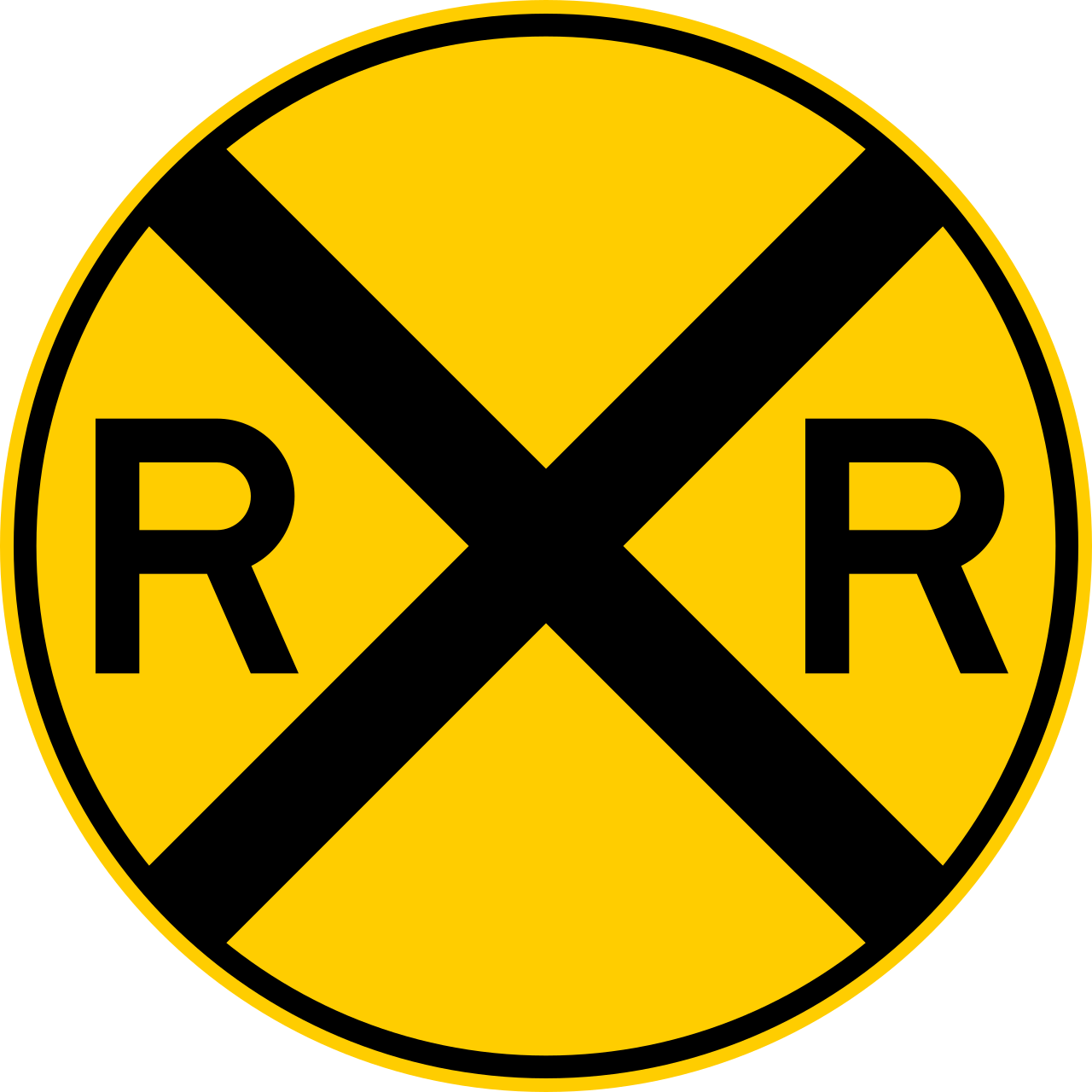 The picture shows:
A
a railroad advance warning sign.
B
a speeding fines doubled sign.
C
a reversible road sign.
The correct driving rule is: a railroad advance warning sign. Following standard DMV road rules and practicing defensive driving ensures safety for all road users.
Question 12:
The yield sign is ___ and white, with ___ letters.
A
yellow; black
B
red; red
C
red; white
The correct driving rule is: red; red. Following standard DMV road rules and practicing defensive driving ensures safety for all road users.
Question 13:
As long as you don’t leave the road, you may legally pass a vehicle on the right:
A
if you are on a two-lane, two-way road and the other vehicle is turning left.
B
when you are turning into a one-way street with no oncoming traffic.
C
Never.
D
Only during daylight hours.
The correct driving rule is: if you are on a two-lane, two-way road and the other vehicle is turning left. Following standard DMV road rules and practicing defensive driving ensures safety for all road users.
Question 14:
When you see an emergency vehicle with flashing lights, you must:
A
maintain your speed.
B
keep moving slowly, staying to the right side of the road.
C
drive to the right side of the road and stop.
D
stay in your lane, slow down, and let it pass.
When sharing the road with other vehicles: drive to the right side of the road and stop. Giving large vehicles and vulnerable users adequate clearance prevents dangerous accidents.
Question 15:
When an aggressive driver confronts you, you should:
A
Try to move away safely.
B
Remain calm and relaxed.
C
All of the above.
All of the listed points are essential driving requirements: Try to move away safely; Remain calm and relaxed. Practicing each ensures compliance with DMV safety laws.
Question 16:
What does a red arrow on a traffic light mean?
A
You may proceed slowly through the intersection.
B
You must stop and then proceed when the way is clear.
C
You may turn in the direction of the arrow.
D
You must stop. Do not go in the direction of the arrow until a green light or arrow light goes on.
The correct driving rule is: you must stop. Do not go in the direction of the arrow until a green light or arrow light goes on. Following standard DMV road rules and practicing defensive driving ensures safety for all road users.
Question 17:
When meeting a car with blinding headlights, you should:
A
look toward the right side of the road.
B
dim your lights, then speed up and pass quickly.
C
use your emergency flashers to warn the other driver.
D
look toward the left side of the road.
The correct driving rule is: look toward the right side of the road. Following standard DMV road rules and practicing defensive driving ensures safety for all road users.
Question 18:
When are you allowed to drink alcoholic beverages in a vehicle on a public highway?
A
As long as you don’t drive.
B
Only if you ride in the back seat.
C
Only if you ride in the back of a pick-up truck.
D
Never.
Defensive driving guidelines state that: Never. Anticipating road hazards and communicating maneuvers keeps traffic predictable and safe.
Question 19:
 This is the shape and color of a ________ sign.
A
yield
B
stop
C
do not enter
The correct driving rule is: yield. Following standard DMV road rules and practicing defensive driving ensures safety for all road users.
Question 20:
A pedestrian starts to cross in front of your vehicle. You should:
A
sound your horn and proceed with caution.
B
slow down.
C
speed up and pass in front of the pedestrian.
D
stop until the person is out of the crosswalk.
Drivers must always yield the right-of-way to pedestrians crossing at intersections and crosswalks: stop until the person is out of the crosswalk. Stop and allow them to clear the lane safely.
Question 21:
A work zone:
A
is marked with black and white signs.
B
might involve vehicles and moving workers.
C
does not require that the driver slow down and pay extra attention.
D
All of the above.
The correct driving rule is: might involve vehicles and moving workers. Following standard DMV road rules and practicing defensive driving ensures safety for all road users.
Question 22:
A road is likely to be most slippery:
A
when tire marks have been left by other vehicles.
B
in cold, dry weather.
C
when icy and the temperature is near freezing.
D
in spring.
For safe speed and stopping control: when icy and the temperature is near freezing. Adjusting speed to match visibility and road traction prevents loss of steering grip.
Question 23:
A vehicle that enters a road from a driveway:
A
has the right-of-way.
B
must yield to traffic approaching from the right, while it has the right-of-way over vehicles approaching from the left.
C
must stop and yield the right-of-way to traffic on the roadway and to pedestrians.
The correct driving rule is: must stop and yield the right-of-way to traffic on the roadway and to pedestrians. Following standard DMV road rules and practicing defensive driving ensures safety for all road users.
Question 24:
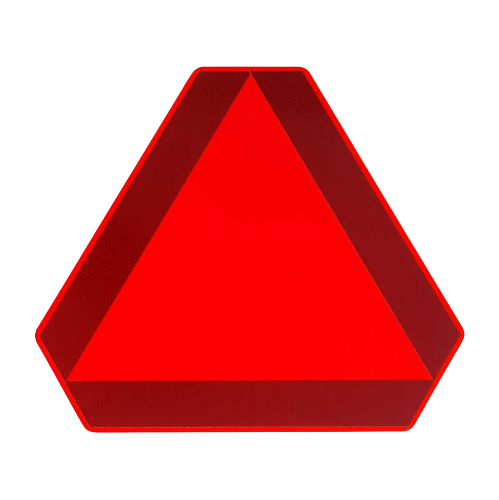 This sign indicates:
A
A slow-moving vehicle
B
A no-passing zone
C
Yield
This traffic sign indicates: A slow-moving vehicle. Observing and obeying all roadway signs ensures safe traffic flow and legal driving.
Question 25:
When other vehicles are approaching an uncontrolled intersection at approximately the same time, you should:
A
maintain your speed and proceed through the intersection.
B
come to a complete stop and wait until there are no vehicles at the intersection.
C
watch for vehicles coming from the right and yield the right-of-way, then proceed when safe.
D
increase your speed and get through the intersection.
At an uncontrolled intersection or 4-way stop where vehicles arrive at the same time: watch for vehicles coming from the right and yield the right-of-way, then proceed when safe. The driver on the left must always yield to the driver on the right.
Question 26:
What type of pavement marking shows you which lane you must use for a turn?
A
Edge line
B
Diamond
C
Crosswalk Lines
D
Arrows
This traffic sign indicates: Arrows. Observing and obeying all roadway signs ensures safe traffic flow and legal driving.
Question 27:
How many drinks of alcohol does the human body generally get rid of each hour?
A
2 drinks.
B
1 drink.
C
4 drinks.
D
3 drinks.
Under state DUI and traffic safety laws: 1 drink. Alcohol degrades judgment, slows reaction times, and distorts depth perception.
Question 28:
Keeping a space cushion between you and the other vehicles around you is important because it:
A
gives you time to react to situations.
B
prevents distractions from other vehicles.
C
keeps other drivers alert.
D
keeps traffic flowing at a safe pace.
The correct driving rule is: gives you time to react to situations. Following standard DMV road rules and practicing defensive driving ensures safety for all road users.
Question 29:
 This sign means:
A
The highway ahead is divided into two one-way roadways.
B
Roundabout ahead. Slow down.
C
The divided highway on which drivers are traveling ends ahead.
This traffic sign indicates: The highway ahead is divided into two one-way roadways. Observing and obeying all roadway signs ensures safe traffic flow and legal driving.
Question 30:
You reach an intersection that is not controlled at the same time as a driver on your right, and both of you prepare to go straight. Who has the right-of-way?
A
You.
B
No one.
C
The other driver.
According to standard right-of-way regulations: The other driver. Yielding appropriately prevents intersection collisions and maintains safe traffic flow.
Question 31:
To help relieve fatigue on a trip:
A
drink coffee frequently.
B
change feet on the gas pedal.
C
stretch your legs while driving.
D
stop for a rest every two hours.
Under state DUI and traffic safety laws: stop for a rest every two hours. Alcohol degrades judgment, slows reaction times, and distorts depth perception.
Question 32:
If you hear a thumping sound while driving, you should:
A
hook your shoe under the gas pedal and see if you can free it.
B
get off the road and check your tires.
C
try your emergency lights.
The correct driving rule is: get off the road and check your tires. Following standard DMV road rules and practicing defensive driving ensures safety for all road users.
Question 33:
Drivers must not drive at:
A
a speed that is greater than reasonable.
B
a speed that is not prudent for the circumstances.
C
a speed that is greater than the posted speed limit.
D
All of the above.
All of the listed points are essential driving requirements: a speed that is greater than reasonable; a speed that is not prudent for the circumstances; a speed that is greater than the posted speed limit. Practicing each ensures compliance with DMV safety laws.
Question 34:
 When they see this sign, drivers:
A
should be prepared to make sharp turns at a high speed.
B
need to be prepared to turn right and then left quickly.
C
should not speed up or brake quickly.
This traffic sign indicates: should not speed up or brake quickly. Observing and obeying all roadway signs ensures safe traffic flow and legal driving.
Question 35:
This sign means:
A
Railroad crossing
B
No Passing Zone
C
The road ends ahead
Circular signs with an 'X' and 'RR' designate a Railroad Advance Warning: Railroad crossing. Drivers must slow down, look both ways, listen for trains, and be prepared to stop.
Question 36:
As you drive on the expressway, make sure:
A
you cut off vehicles behind you when you change lanes.
B
to signal all lane changes.
C
your directional signal goes off before you change lanes.
The correct driving rule is: to signal all lane changes. Following standard DMV road rules and practicing defensive driving ensures safety for all road users.
Question 37:
Drive below the posted speed limit when:
A
anything makes conditions less than perfect.
B
you are on a four lane road.
C
entering a highway where there are other cars.
D
others drive below the speed limit.
For safe speed and stopping control: anything makes conditions less than perfect. Adjusting speed to match visibility and road traction prevents loss of steering grip.
Question 38:
 This sign warns drivers that:
A
the road will make a sharp turn to the right.
B
right turns are not allowed.
C
another road enters the highway from the direction shown.
This traffic sign indicates: the road will make a sharp turn to the right. Observing and obeying all roadway signs ensures safe traffic flow and legal driving.
Question 39:
 This road sign means:
A
Drive with caution and be ready to stop
B
Slow down or stop
C
You must come to a complete stop
An octagonal Stop sign requires a full and complete stop before the stop line or crosswalk: you must come to a complete stop. Proceed only after yielding to all cross traffic and pedestrians.
Question 40:
Alcohol:
A
makes you less aware of what is happening to your driving abilities.
B
makes it easier to make correct decisions.
C
improves your reaction time.
Under state DUI and traffic safety laws: makes you less aware of what is happening to your driving abilities. Alcohol degrades judgment, slows reaction times, and distorts depth perception.
Question 41:
 This road sign means:
A
Winding road ahead
B
Pedestrian crossing
C
Low ground railroad crossing
D
No-passing zone
Circular signs with an 'X' and 'RR' designate a Railroad Advance Warning: Low ground railroad crossing. Drivers must slow down, look both ways, listen for trains, and be prepared to stop.
Question 42:
You go with a group of friends to a social event, and you plan to have a few drinks. You should:
A
make alcohol the focus of the event.
B
avoid alternating between drinks with alcohol and drinks without any alcohol.
C
arrange to ride home with a friend who does not drink.
The correct driving rule is: arrange to ride home with a friend who does not drink. Following standard DMV road rules and practicing defensive driving ensures safety for all road users.
Question 43:
Directions given by traffic officers ___________ signs, signals or pavement markings.
A
take precedence over
B
are less important than
C
must obey
The correct driving rule is: take precedence over. Following standard DMV road rules and practicing defensive driving ensures safety for all road users.
Question 44:
If your vehicle starts to hydroplane you should:
A
apply the brakes firmly to prevent your vehicle from sliding.
B
slow down gradually and do not apply the brakes.
C
maintain your current speed to gain better traction.
D
All of the above.
The correct driving rule is: slow down gradually and do not apply the brakes. Following standard DMV road rules and practicing defensive driving ensures safety for all road users.
Question 45:
Before entering a traffic circle, drivers must slow down and yield to ___________ in the traffic circle.
A
pedestrians
B
vehicles
C
bicyclists
D
All of the above.
Safe navigation at intersections requires following all established rules: pedestrians; vehicles; bicyclists. Always yield right-of-way properly to prevent collisions.
Question 46:
 What should drivers do when they see this sign?
A
Make sure the bridge is clear of oncoming traffic before they cross.
B
Look to the left and right for other traffic.
C
Allow others to merge smoothly.
This traffic sign indicates: make sure the bridge is clear of oncoming traffic before they cross. Observing and obeying all roadway signs ensures safe traffic flow and legal driving.
Question 47:
Distractions that take your attention away from driving can be caused by ______ while driving.
A
changing the radio
B
eating or drinking
C
using your cell phone
D
All of the above.
All of the listed points are essential driving requirements: changing the radio; eating or drinking; using your cell phone. Practicing each ensures compliance with DMV safety laws.
Question 48:
This road sign means:
A
Traffic increases ahead
B
Steep grade ahead
C
Winding road ahead
D
Slippery road ahead
This traffic sign indicates: Slippery road ahead. Observing and obeying all roadway signs ensures safe traffic flow and legal driving.
Question 49:
 This road sign means:
A
Railroad Crossing
B
Side Road
C
Intersection
D
No Passing Zone
This traffic sign indicates: Intersection. Observing and obeying all roadway signs ensures safe traffic flow and legal driving.
Question 50:
If your vehicle’s right wheels leave the pavement, you should:
A
maintain your current speed to gain better traction.
B
build up brake pressure by pumping the brake pedal several times.
C
take your foot off the gas and when you are slowed down, ease back on the road when it is safe to do so.
D
immediately come to a complete stop.
The correct driving rule is: take your foot off the gas and when you are slowed down, ease back on the road when it is safe to do so. Following standard DMV road rules and practicing defensive driving ensures safety for all road users.