Question 1:
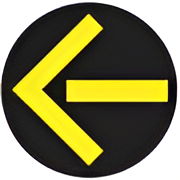 What does a yellow arrow signal mean?
A
The same as the yellow light, but applies only to movement in the direction of the arrow.
B
The same as a green light.
C
Vehicles moving in all directions must stop if they can. The light will soon be red.
State laws require signaling your intention: The same as the yellow light, but applies only to movement in the direction of the arrow. Signal at least 100 feet before making a turn or changing lanes.
Question 2:
What should drivers do in case of a brake failure?
A
Shift to a lower gear.
B
Tie a white cloth on the left door handle.
C
Brake lightly.
The correct driving rule is: shift to a lower gear. Following standard DMV road rules and practicing defensive driving ensures safety for all road users.
Question 3:
 A flashing red light:
A
is used at dangerous intersections.
B
means the same thing as a stop sign.
C
All of the above.
Safe navigation at intersections requires following all established rules: is used at dangerous intersections; means the same thing as a stop sign. Always yield right-of-way properly to prevent collisions.
Question 4:
 This road sign means:
A
Pavement ends
B
Winding road
C
Double curve ahead
This traffic sign indicates: Winding road. Observing and obeying all roadway signs ensures safe traffic flow and legal driving.
Question 5:
A yellow arrow means:
A
Do not go in the direction of the arrow.
B
If you intend to turn in the direction of the arrow, be prepared to stop.
C
The same as a steady yellow light.
The correct driving rule is: If you intend to turn in the direction of the arrow, be prepared to stop. Following standard DMV road rules and practicing defensive driving ensures safety for all road users.
Question 6:
Drivers may need more space in front of their vehicle:
A
when following motorcycles.
B
when carrying a heavy load or pulling a trailer.
C
All of the above.
All of the listed points are essential driving requirements: when following motorcycles; when carrying a heavy load or pulling a trailer. Practicing each ensures compliance with DMV safety laws.
Question 7:
When a hazard is seen ahead, reaction distance:
A
is the sum of perception distance and braking distance.
B
equals total stopping distance minus perception distance.
C
is how far a vehicle will continue to travel, in ideal conditions, before the driver hits the brakes.
For safe speed and stopping control: is how far a vehicle will continue to travel, in ideal conditions, before the driver hits the brakes. Adjusting speed to match visibility and road traction prevents loss of steering grip.
Question 8:
 This road sign means:
A
Crossroad
B
Hospital parking ahead
C
Merge
This traffic sign indicates: Crossroad. Observing and obeying all roadway signs ensures safe traffic flow and legal driving.
Question 9:
 This is the shape and color of a ________ sign.
A
yield
B
stop
C
do not enter
The correct driving rule is: yield. Following standard DMV road rules and practicing defensive driving ensures safety for all road users.
Question 10:
Destination signs are ______ with ____ letters and symbols.
A
green; white
B
blue; white
C
white; black
The correct driving rule is: green; white. Following standard DMV road rules and practicing defensive driving ensures safety for all road users.
Question 11:
To avoid becoming an aggressive driver, you should:
A
Adjust your schedule to drive during times with the most highway traffic.
B
Allow enough travel time to reach your destination on schedule.
C
Listen to heavy metal music.
The correct driving rule is: allow enough travel time to reach your destination on schedule. Following standard DMV road rules and practicing defensive driving ensures safety for all road users.
Question 12:
If the truck ahead swings right before making a left turn at an intersection, it is very dangerous to:
A
sound your horn at the truck driver.
B
yield the right-of-way to the truck driver.
C
stop behind the truck until it has completed the turn.
D
try to squeeze between the truck and curb to make a left turn.
When turning left across traffic lanes: try to squeeze between the truck and curb to make a left turn. You must yield to all oncoming vehicles and crossing pedestrians before completing the turn.
Question 13:
When driving in heavy traffic, you should:
A
drive with the flow of traffic.
B
maintain a constant speed.
C
drive faster than the flow of traffic.
D
drive slower than the flow of traffic.
The correct driving rule is: drive with the flow of traffic. Following standard DMV road rules and practicing defensive driving ensures safety for all road users.
Question 14:
 When drivers see this road sign:
A
they must come to a complete stop and call the police.
B
they must not drive past this sign.
C
they must turn around immediately.
This traffic sign indicates: they must turn around immediately. Observing and obeying all roadway signs ensures safe traffic flow and legal driving.
Question 15:
The law gives _______ the right of way at intersections.
A
drivers going straight
B
no one
C
drivers turning right
D
drivers turning left
According to standard right-of-way regulations: no one. Yielding appropriately prevents intersection collisions and maintains safe traffic flow.
Question 16:
You are entering a roadway from a private road, and you need to turn left. You have to yield to:
A
vehicles from the right.
B
vehicles from the left.
C
vehicles from both directions.
According to standard right-of-way regulations: vehicles from both directions. Yielding appropriately prevents intersection collisions and maintains safe traffic flow.
Question 17:
When traveling below 40 MPH on a limited access highway, you should:
A
sound your horn to warn others.
B
use your four-way flashers.
C
drive on the shoulder.
D
use your high beams.
Defensive driving guidelines state that: use your four-way flashers. Anticipating road hazards and communicating maneuvers keeps traffic predictable and safe.
Question 18:
You are approaching an intersection with a flashing red traffic light. You must:
A
Slow down and proceed with caution
B
Come to a complete stop and proceed only when it is safe
C
Stop only if other vehicles are present
D
Speed up before cross traffic arrives
A flashing red traffic light has the exact same meaning as a Stop sign. You must come to a full stop and yield to oncoming traffic and pedestrians.
Question 19:
Drivers may continue carefully through a yellow light if:
A
there are no pedestrians crossing.
B
they are turning right.
C
they already are within the intersection.
D
an emergency vehicle is crossing your lane.
According to standard right-of-way regulations: they already are within the intersection. Yielding appropriately prevents intersection collisions and maintains safe traffic flow.
Question 20:
What is the primary cause of rear-end motor vehicle collisions?
A
Following too closely (tailgating) and distracted driving
B
Defective brake light bulbs
C
Sudden wind gusts
D
Over-inflated tires
Following too closely (tailgating) combined with driver inattention is responsible for the vast majority of rear-end crashes nationwide.
Question 21:
Drivers may pass another vehicle if the line dividing two lanes is a ________ line.
A
broken white
B
double solid yellow
C
solid yellow
D
solid white
The correct driving rule is: broken white. Following standard DMV road rules and practicing defensive driving ensures safety for all road users.
Question 22:
 A sign with this shape means:
A
You must yield the right-of-way
B
No passing zone
C
Right curve ahead
D
Railroad crossing
The correct driving rule is: No passing zone. Following standard DMV road rules and practicing defensive driving ensures safety for all road users.
Question 23:
Drivers should allow a larger space cushion when stopping:
A
at a stop sign.
B
on an up-hill.
C
at an intersection.
D
at a yield sign.
The correct driving rule is: on an up-hill. Following standard DMV road rules and practicing defensive driving ensures safety for all road users.
Question 24:
When approaching a curve, remember to:
A
accelerate slightly before entering the curve.
B
drive at the posted speed limit throughout the curve.
C
slow down before entering the curve.
D
drive at the posted speed limit as you enter the curve, then slow down gradually.
The correct driving rule is: slow down before entering the curve. Following standard DMV road rules and practicing defensive driving ensures safety for all road users.
Question 25:
What type of pavement marking shows you which lane you must use for a turn?
A
Edge line
B
Diamond
C
Crosswalk Lines
D
Arrows
This traffic sign indicates: Arrows. Observing and obeying all roadway signs ensures safe traffic flow and legal driving.
Question 26:
A red traffic sign means?
A
Do not enter.
B
Stop.
C
All of the above.
This sign alerts drivers to several mandatory requirements: Do not enter, Stop. Obeying all posted traffic control instructions is required by law.
Question 27:
Your red traffic signal changes to green while a pedestrian is crossing in your traffic lane. The right of way should be given:
A
by the pedestrian, but only when vehicles are turning left.
B
by the pedestrian.
C
to the pedestrian.
Circular signs with an 'X' and 'RR' designate a Railroad Advance Warning: to the pedestrian. Drivers must slow down, look both ways, listen for trains, and be prepared to stop.
Question 28:
If you miss your freeway exit, what is the safest and legal action to take?
A
Stop and back up along the freeway shoulder
B
Make an immediate U-turn across the center median
C
Proceed to the next exit, safely exit, and navigate back
D
Cut across all traffic lanes to reach the ramp
Never stop, back up, or cross medians on a freeway. Continue to the next exit and turn around safely.
Question 29:
 This sign means:
A
Roundabout ahead.
B
270 degree turn ahead.
C
Wrong way; Turn around immediately.
This traffic sign indicates: 270 degree turn ahead. Observing and obeying all roadway signs ensures safe traffic flow and legal driving.
Question 30:
If you stop at a railroad crossing with more than one track:
A
proceed with caution until you see a train.
B
go through when one of the tracks is free.
C
go through as soon as the first train passes.
D
wait until you have a clear view of both tracks.
The correct driving rule is: wait until you have a clear view of both tracks. Following standard DMV road rules and practicing defensive driving ensures safety for all road users.
Question 31:
When making a right turn on a green light, drivers must:
A
yield to pedestrians.
B
stop and look for oncoming traffic.
C
maintain normal driving speed.
D
increase their speed.
According to standard right-of-way regulations: yield to pedestrians. Yielding appropriately prevents intersection collisions and maintains safe traffic flow.
Question 32:
 This road sign means:
A
No Passing Zone
B
You must turn right at the next intersection
C
Warning: the road ahead changes direction
D
Warning: traffic coming from the right
This traffic sign indicates: Warning: the road ahead changes direction. Observing and obeying all roadway signs ensures safe traffic flow and legal driving.
Question 33:
If you are pulled over by law enforcement, you should:
A
stay in the driver’s seat with both hands clearly in sight on the steering wheel.
B
unbuckle your seat belt and lower your window.
C
get out of your vehicle and walk toward the patrol car.
D
turn off on your interior light if stopped at night.
The correct driving rule is: stay in the driver’s seat with both hands clearly in sight on the steering wheel. Following standard DMV road rules and practicing defensive driving ensures safety for all road users.
Question 34:
What is an Ignition Interlock Device (IID)?
A
A breathalyzer connected to a vehicle's ignition that prevents starting if alcohol is detected
B
A remote tracking device for teenage drivers
C
A sensor that shuts off headlights in daylight
D
An automatic emergency braking sensor
An IID is a breath-testing device wired into the starter. The driver must blow a clean breath sample before the car will start.
Question 35:
 This sign warns drivers that:
A
the road will make a sharp turn to the right.
B
right turns are not allowed.
C
another road enters the highway from the direction shown.
This traffic sign indicates: the road will make a sharp turn to the right. Observing and obeying all roadway signs ensures safe traffic flow and legal driving.
Question 36:
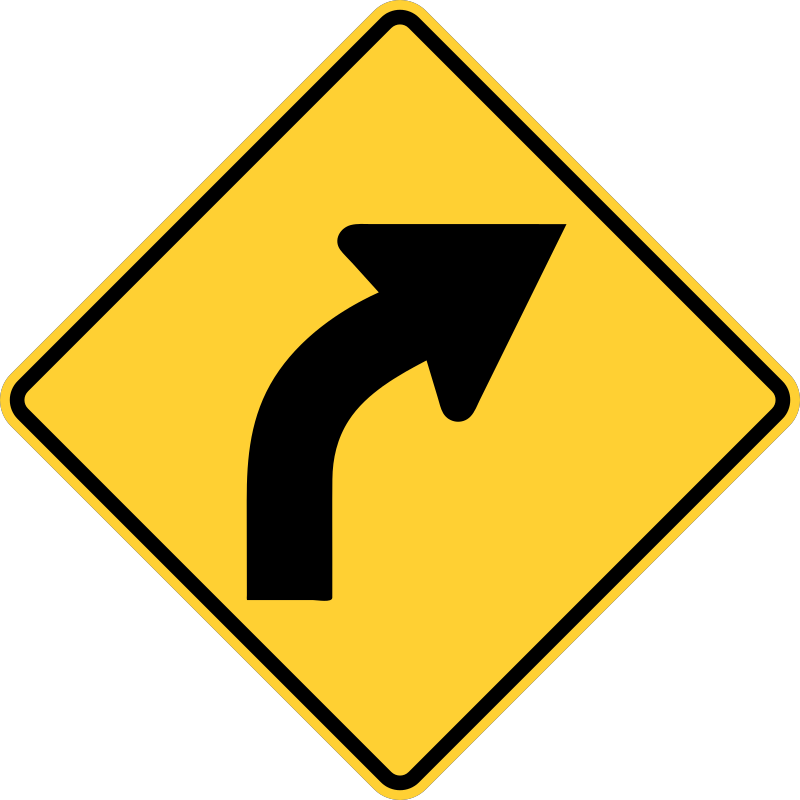 When they see this sign, drivers should:
A
increase their speed and keep well to the right.
B
slow down and keep well to the right.
C
slow down and keep well to the left.
This traffic sign indicates: slow down and keep well to the left. Observing and obeying all roadway signs ensures safe traffic flow and legal driving.
Question 37:
What happens if you refuse to take a chemical breath or blood test when lawfully requested by a police officer?
A
You will receive a verbal warning only
B
Your driver's license will be immediately suspended or revoked automatically
C
You are allowed to retake the written test instead
D
No action can be taken without a warrant
Refusing a chemical test results in mandatory immediate license suspension (often 6 months to 1 year for a first refusal) under Implied Consent laws.
Question 38:
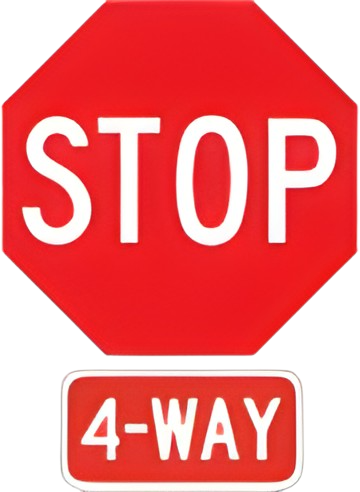 A 4-way stop sign means:
A
The first vehicle to reach the intersection should move forward first.
B
Traffic from all four directions must stop.
C
There are four stop signs at the intersection.
D
All of the above.
This sign alerts drivers to several mandatory requirements: The first vehicle to reach the intersection should move forward first, Traffic from all four directions must stop, There are four stop signs at the intersection. Obeying all posted traffic control instructions is required by law.
Question 39:
A vehicle that enters a road from a driveway:
A
has the right-of-way.
B
must yield to traffic approaching from the right, while it has the right-of-way over vehicles approaching from the left.
C
must stop and yield the right-of-way to traffic on the roadway and to pedestrians.
The correct driving rule is: must stop and yield the right-of-way to traffic on the roadway and to pedestrians. Following standard DMV road rules and practicing defensive driving ensures safety for all road users.
Question 40:
Driving at night is _______ than driving during the day.
A
easier on your eyes
B
more dangerous
C
no more of less dangerous
D
less dangerous
The correct driving rule is: more dangerous. Following standard DMV road rules and practicing defensive driving ensures safety for all road users.
Question 41:
Arrows on the roadway:
A
show which lanes you must use.
B
indicate reserved lanes.
C
indicate HOV lanes.
The correct driving rule is: show which lanes you must use. Following standard DMV road rules and practicing defensive driving ensures safety for all road users.
Question 42:
You should use turn signals to indicate your intention with sufficient time to allow other drivers to see the signal:
A
if it’s raining.
B
AFTER you move.
C
BEFORE you move.
State laws require signaling your intention: BEFORE you move. Signal at least 100 feet before making a turn or changing lanes.
Question 43:
When two vehicles arrive at an uncontrolled four-way intersection at the same time, who has the right-of-way?
A
The vehicle on the left
B
The vehicle on the right
C
The larger vehicle
D
The vehicle traveling faster
At an intersection without traffic signals or signs, drivers must yield the right-of-way to any vehicle approaching from the right.
Question 44:
Guide signs are:
A
red with white letters.
B
green with white letters.
C
blue with white letters.
D
orange with black letters.
The correct driving rule is: green with white letters. Following standard DMV road rules and practicing defensive driving ensures safety for all road users.
Question 45:
If another car is in danger of hitting you, you should:
A
flash your brake lights.
B
sound your horn.
C
use your emergency lights.
D
flash your headlights.
The correct driving rule is: sound your horn. Following standard DMV road rules and practicing defensive driving ensures safety for all road users.
Question 46:
If a police officer requires you to take a blood, breath, or urine test, you:
A
must sign a consent form before taking the test.
B
may refuse to take the test if you are 21 or older.
C
must take the test, or your license will be suspended.
D
may choose which test to take.
The correct driving rule is: must take the test, or your license will be suspended. Following standard DMV road rules and practicing defensive driving ensures safety for all road users.
Question 47:
The driver of an emergency vehicle that uses lights and a siren can legally:
A
pass red lights.
B
exceed the speed limit
C
All of the above.
Sharing the road safely requires mutual awareness and respect: pass red lights; exceed the speed limit. Maintaining safe space cushions protects all roadway users.
Question 48:
 This green arrow on a lane use control signal means that:
A
you may use this lane.
B
you must merge into this lane.
C
no traffic is allowed in this lane.
D
you have the right-of-way.
State laws require signaling your intention: you may use this lane. Signal at least 100 feet before making a turn or changing lanes.
Question 49:
 What does a flashing yellow light mean?
A
The same thing as a stop sign.
B
Drivers may move forward with caution.
C
All of the above.
According to standard right-of-way regulations: drivers may move forward with caution. Yielding appropriately prevents intersection collisions and maintains safe traffic flow.
Question 50:
What is the only effective method to reduce your BAC?
A
Eating before or while you drink.
B
Not drinking over a period of time.
C
Drinking coffee.
Under state DUI and traffic safety laws: Not drinking over a period of time. Alcohol degrades judgment, slows reaction times, and distorts depth perception.