Question 1:
You should use a three-point turn:
A
on a hill, if the road is clear.
B
on a curve, to turn your car around in a very small space.
C
when you miss an exit on a highway.
D
only if the road is too narrow for a U-turn and you can’t go around the block.
The correct driving rule is: only if the road is too narrow for a U-turn and you can’t go around the block. Following standard DMV road rules and practicing defensive driving ensures safety for all road users.
Question 2:
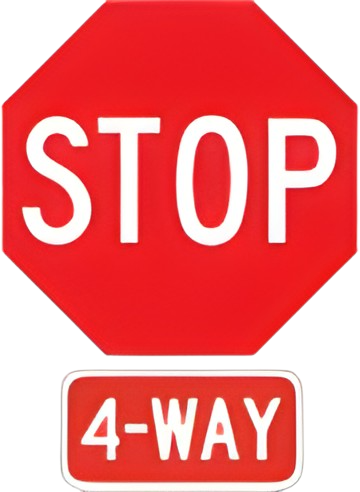 A 4-way stop sign means:
A
The first vehicle to reach the intersection should move forward first.
B
Traffic from all four directions must stop.
C
There are four stop signs at the intersection.
D
All of the above.
This sign alerts drivers to several mandatory requirements: The first vehicle to reach the intersection should move forward first, Traffic from all four directions must stop, There are four stop signs at the intersection. Obeying all posted traffic control instructions is required by law.
Question 3:
A flashing yellow light means:
A
Merging traffic ahead
B
Pedestrian crossing
C
Come to a full stop
D
Proceed with caution
According to standard right-of-way regulations: proceed with caution. Yielding appropriately prevents intersection collisions and maintains safe traffic flow.
Question 4:
If you miss your exit from an interstate expressway, you should:
A
go to the next exit and come back to the exit you missed.
B
use the right turn signal, check your mirrors and move to the right.
C
pull over to the right and back up with caution until you reach the exit ramp.
D
make a quick U-turn from your lane of travel.
Defensive driving guidelines state that: go to the next exit and come back to the exit you missed. Anticipating road hazards and communicating maneuvers keeps traffic predictable and safe.
Question 5:
Before passing another vehicle, you should signal:
A
early enough so other drivers know your intention.
B
after changing lanes.
C
at any time.
D
just before changing lanes.
State laws require signaling your intention: early enough so other drivers know your intention. Signal at least 100 feet before making a turn or changing lanes.
Question 6:
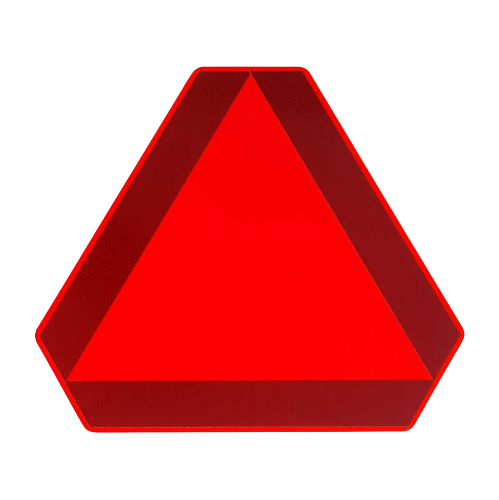 This sign indicates:
A
A slow-moving vehicle
B
A no-passing zone
C
Yield
This traffic sign indicates: A slow-moving vehicle. Observing and obeying all roadway signs ensures safe traffic flow and legal driving.
Question 7:
When you make a left turn from a one-way road into a two-way road, you must:
A
enter the two-way road to the left of its center line.
B
make a U-turn into the two-way road.
C
enter the two-way road to the right of its center line.
The correct driving rule is: enter the two-way road to the right of its center line. Following standard DMV road rules and practicing defensive driving ensures safety for all road users.
Question 8:
 This road sign means:
A
No left turn
B
No U-turn
C
Detour ahead
This traffic sign indicates: No U-turn. Observing and obeying all roadway signs ensures safe traffic flow and legal driving.
Question 9:
 This sign is a:
A
regulatory sign.
B
warning sign.
C
guide sign.
This traffic sign indicates: warning sign. Observing and obeying all roadway signs ensures safe traffic flow and legal driving.
Question 10:
 This road sign means:
A
School crossing
B
Mountain trail
C
Flagger ahead
D
Pedestrian cr
This traffic sign indicates: Pedestrian cr. Observing and obeying all roadway signs ensures safe traffic flow and legal driving.
Question 11:
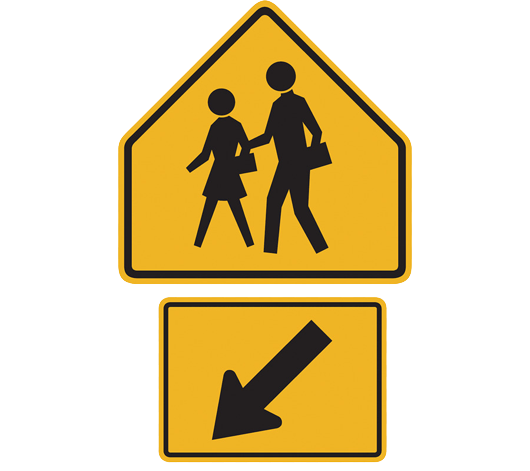 When you approach this sign, you must:
A
stop if necessary.
B
watch for workers crossing the road.
C
None of the above.
This traffic sign indicates: stop if necessary. Observing and obeying all roadway signs ensures safe traffic flow and legal driving.
Question 12:
When driving on wet roads, you should remember:
A
driving on wet roads can cause hydroplaning.
B
you should give yourself additional time to stop.
C
to stay farther behind the vehicle ahead of you.
D
All of the above.
All of the listed points are essential driving requirements: driving on wet roads can cause hydroplaning; you should give yourself additional time to stop; to stay farther behind the vehicle ahead of you. Practicing each ensures compliance with DMV safety laws.
Question 13:
What is the slow moving vehicle symbol?
A
A reflective yellow diamond
B
A reflective white triangle
C
A reflective orange triangle
The correct driving rule is: A reflective orange triangle. Following standard DMV road rules and practicing defensive driving ensures safety for all road users.
Question 14:
 This sign means:
A
Stay on the main highway if possible
B
The road to the right is for one-way traffic only
C
Detour to the right
D
Not enter
This traffic sign indicates: The road to the right is for one-way traffic only. Observing and obeying all roadway signs ensures safe traffic flow and legal driving.
Question 15:
Which shape is a yield sign?
A
Vertical rectangle
B
Upside-down triangle
C
Diamond
The correct driving rule is: Upside-down triangle. Following standard DMV road rules and practicing defensive driving ensures safety for all road users.
Question 16:
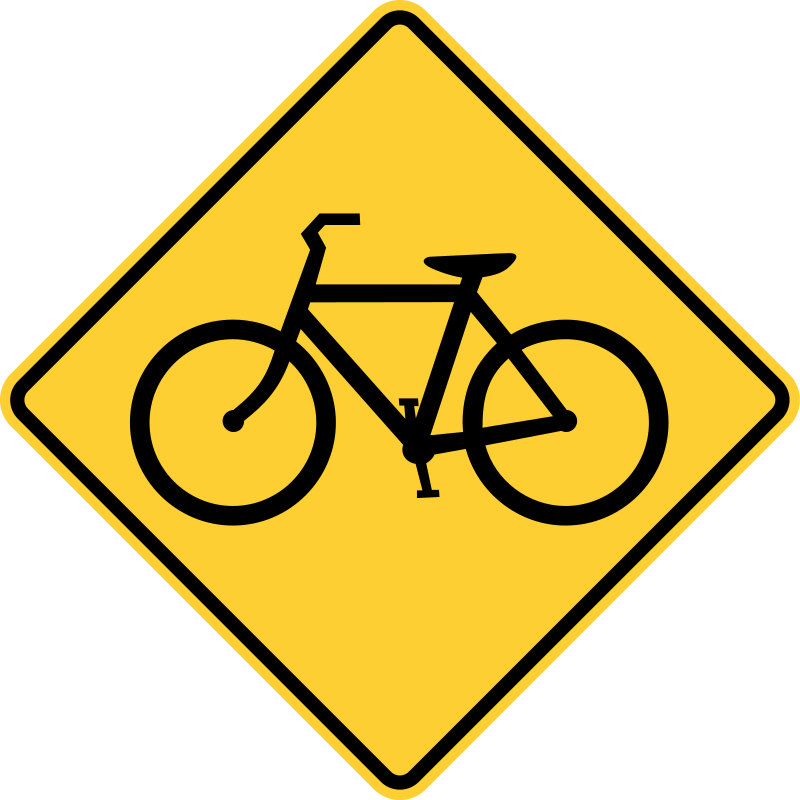 This road sign means:
A
Watch for bicycles
B
Bicycle parking ahead
C
Bicycles are not allowed in this area
This traffic sign indicates: watch for bicycles. Observing and obeying all roadway signs ensures safe traffic flow and legal driving.
Question 17:
 This sign warns ____________ ahead.
A
of two-way traffic
B
of a reduction of lanes
C
that a divided highway ends
This traffic sign indicates: of two-way traffic. Observing and obeying all roadway signs ensures safe traffic flow and legal driving.
Question 18:
For protection, motorcyclists are required to:
A
keep their headlights and taillights on at all times.
B
signal turns, lane changes and stops.
C
wear approved helmets.
The correct driving rule is: wear approved helmets. Following standard DMV road rules and practicing defensive driving ensures safety for all road users.
Question 19:
Which of the following must you obey over the others?
A
A flashing red light.
B
A stop sign.
C
A steady red light.
D
A police officer.
The correct driving rule is: A police officer. Following standard DMV road rules and practicing defensive driving ensures safety for all road users.
Question 20:
If an intersection has crosswalk lines but no STOP line, where must you stop for a red light?
A
Before the stop line.
B
On the crosswalk.
C
After the crosswalk.
D
Before the cr
Drivers must always yield the right-of-way to pedestrians crossing at intersections and crosswalks: Before the cr. Stop and allow them to clear the lane safely.
Question 21:
If you missed your exit on a freeway, you should:
A
use the right turn signal, check your mirrors and move to the right.
B
None of the above.
C
go to the next exit and come back to the exit you missed.
D
make a quick U-turn from your lane of travel.
Defensive driving guidelines state that: go to the next exit and come back to the exit you missed. Anticipating road hazards and communicating maneuvers keeps traffic predictable and safe.
Question 22:
What should you do if one of your tires blows out?
A
Hold the steering wheel tight and brake immediately to avoid the risk of skidding.
B
Leave the road immediately.
C
Hold the steering wheel tight and slowly take your foot off the gas pedal.
The correct driving rule is: Hold the steering wheel tight and slowly take your foot off the gas pedal. Following standard DMV road rules and practicing defensive driving ensures safety for all road users.
Question 23:
A speed restriction sign:
A
shows the recommended speed for a curve/turn.
B
is blue with white lettering.
C
must be ignored in snow conditions.
D
has a diamond shape.
For safe speed and stopping control: shows the recommended speed for a curve/turn. Adjusting speed to match visibility and road traction prevents loss of steering grip.
Question 24:
Your blind spot is the area of the road:
A
you see in your rearview mirror.
B
directly behind your vehicle.
C
you cannot see without moving your head.
D
you see in your side mirror.
Large commercial trucks have extensive blind spots on all four sides called the 'No-Zone': you cannot see without moving your head. If you cannot see the truck driver in their side mirrors, they cannot see you.
Question 25:
If your car starts to skid, turn your steering wheel:
A
in the direction you want to go.
B
in the opposite direction of the skid.
C
to keep the front wheels straight.
D
in any direction. It doesnt matter.
The correct driving rule is: in the direction you want to go. Following standard DMV road rules and practicing defensive driving ensures safety for all road users.