Question 1:
What is the purpose of minimum speed limits?
A
To keep a smooth traffic flow.
B
To halt the traffic flow.
C
To allow emergency vehicles with red flashing lights to safely pass other vehicles.
For safe speed and stopping control: To keep a smooth traffic flow. Adjusting speed to match visibility and road traction prevents loss of steering grip.
Question 2:
When you need to enter a freeway exit ramp:
A
don't slow down on the freeway itself. Wait until you are in the deceleration lane.
B
pass slower vehicles on the right.
C
slow down before entering the exit ramp.
D
don't slow down on the freeway itself, and maintain your speed once in the exit ramp.
Defensive driving guidelines state that: don't slow down on the freeway itself. Wait until you are in the deceleration lane. Anticipating road hazards and communicating maneuvers keeps traffic predictable and safe.
Question 3:
Does a vehicle prepared to enter a traffic circle or rotary have right-of-way over vehicles in the circle?
A
Yes, but only if they are entering the rotary from the right lane.
B
No. Vehicles already in the circle have the right-of-way.
C
Only if the light is green.
D
Yes.
Vehicles entering a roundabout must yield right-of-way to circulating traffic already inside: No. Vehicles already in the circle have the right-of-way. Wait for a safe gap before entering.
Question 4:
Before turning left, it is important to:
A
swing to the right side of your lane.
B
sound your horn to warn the other drivers.
C
yield to oncoming vehicles.
D
flash your headlights to alert the other drivers.
The correct driving rule is: yield to oncoming vehicles. Following standard DMV road rules and practicing defensive driving ensures safety for all road users.
Question 5:
 This sign indicates that:
A
the highest safe speed drivers should travel around the curve ahead is 25 MPH.
B
the safe speed around the curve ahead is at least 25 MPH.
C
drivers may not turn right if traveling at 25 MPH or less.
This traffic sign indicates: the highest safe speed drivers should travel around the curve ahead is 25 MPH. Observing and obeying all roadway signs ensures safe traffic flow and legal driving.
Question 6:
When you pass another vehicle, before you return to the right lane, you must:
A
look at your interior rear-view mirror.
B
signal.
C
All of the above.
All of the listed points are essential driving requirements: look at your interior rear-view mirror; signal. Practicing each ensures compliance with DMV safety laws.
Question 7:
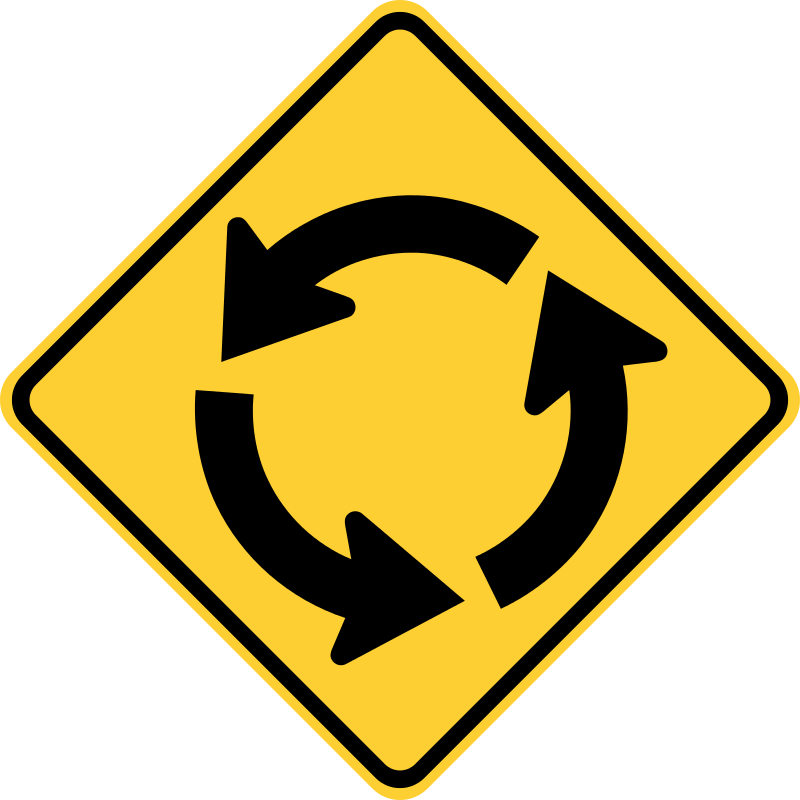 This road sign:
A
warns drivers of a sharp turn left. Drivers should slow their speed and keep to the left.
B
provides an advance notice of a roundabout.
C
warns drivers that U-turns are not permitted.
D
is a no-right-turns sign.
This traffic sign indicates: provides an advance notice of a roundabout. Observing and obeying all roadway signs ensures safe traffic flow and legal driving.
Question 8:
What is the only effective method to reduce your BAC?
A
Eating before or while you drink.
B
Not drinking over a period of time.
C
Drinking coffee.
Under state DUI and traffic safety laws: Not drinking over a period of time. Alcohol degrades judgment, slows reaction times, and distorts depth perception.
Question 9:
What is a likely effect when you take another drug while you drink alcohol?
A
The effects of the alcohol and the drug are enhanced.
B
There are no effects, unless the drug is prescription only.
C
If the drug is over-the-counter, there are no effects.
Under state DUI and traffic safety laws: The effects of the alcohol and the drug are enhanced. Alcohol degrades judgment, slows reaction times, and distorts depth perception.
Question 10:
What should you do in case of a steering failure?
A
Pump your gas pedal a few times to increase the pressure.
B
Don't panic. Turn on your emergency lights to let other drivers know you are having car problems. Move toward the side of the road and bring the car to a gradual stop.
C
Leave the road immediately.
The correct driving rule is: Don't panic. Turn on your emergency lights to let other drivers know you are having car problems. Move toward the side of the road and bring the car to a gradual stop. Following standard DMV road rules and practicing defensive driving ensures safety for all road users.
Question 11:
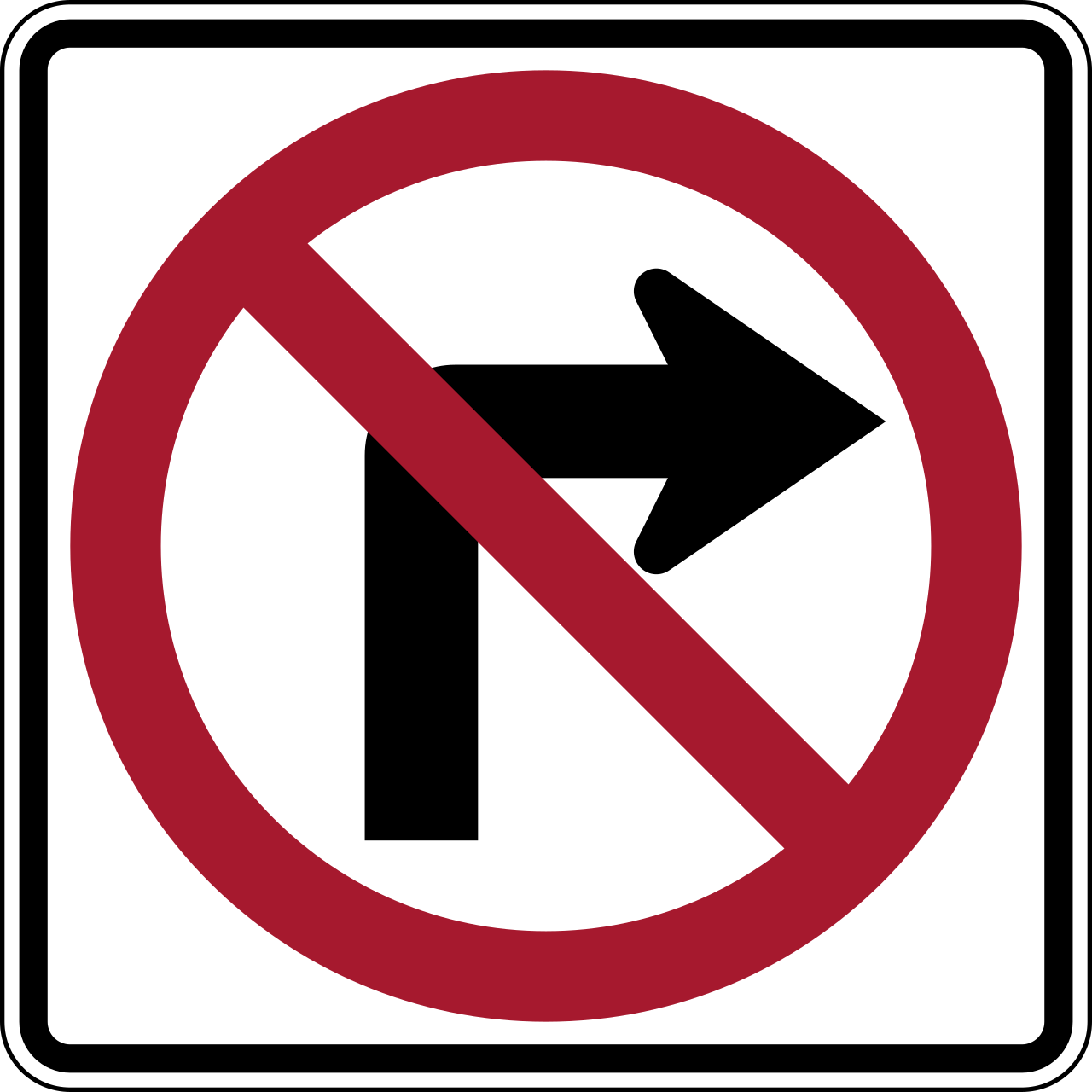 This road sign means:
A
No left turn
B
No right turn
C
No U-turns
This traffic sign indicates: No right turn. Observing and obeying all roadway signs ensures safe traffic flow and legal driving.
Question 12:
 This sign indicates:
A
a side road.
B
a cross road.
C
a church zone ahead.
This traffic sign indicates: a cross road. Observing and obeying all roadway signs ensures safe traffic flow and legal driving.
Question 13:
 This is the shape and color of a ________ sign.
A
yield
B
stop
C
do not enter
The correct driving rule is: yield. Following standard DMV road rules and practicing defensive driving ensures safety for all road users.
Question 14:
________ is the only effective way to reduce your Blood Alcohol Content (BAC).
A
Time
B
Drinking coffee
C
Taking a cold shower
D
Eating food
Under state DUI and traffic safety laws: Time. Alcohol degrades judgment, slows reaction times, and distorts depth perception.
Question 15:
When driving on major highways you should:
A
be ready to react to road hazards.
B
stay alert.
C
keep your eyes moving.
D
All of the above.
All of the listed points are essential driving requirements: be ready to react to road hazards; stay alert; keep your eyes moving. Practicing each ensures compliance with DMV safety laws.
Question 16:
Your red traffic signal changes to green while a pedestrian is crossing in your traffic lane. The right of way should be given:
A
by the pedestrian, but only when vehicles are turning left.
B
by the pedestrian.
C
to the pedestrian.
Circular signs with an 'X' and 'RR' designate a Railroad Advance Warning: to the pedestrian. Drivers must slow down, look both ways, listen for trains, and be prepared to stop.
Question 17:
 This road sign means:
A
Keep left
B
Divided highway begins
C
Lane ends
This traffic sign indicates: Divided highway begins. Observing and obeying all roadway signs ensures safe traffic flow and legal driving.
Question 18:
Examples of proper glass maintenance include:
A
Replacing worn wiper blades.
B
Keeping your windows clean and clear.
C
All of the above.
All of the listed points are essential driving requirements: Replacing worn wiper blades; Keeping your windows clean and clear. Practicing each ensures compliance with DMV safety laws.
Question 19:
What do pennant-shaped signs indicate?
A
A school crossing
B
Yield
C
A No Passing Zone
The correct driving rule is: A No Passing Zone. Following standard DMV road rules and practicing defensive driving ensures safety for all road users.
Question 20:
 This road sign means:
A
Slow down, slippery when wet
B
Detour ahead
C
Road curves ahead
This traffic sign indicates: slow down, slippery when wet. Observing and obeying all roadway signs ensures safe traffic flow and legal driving.
Question 21:
A speed limit is the __________ speed at which a vehicle may legally travel on the road under ideal conditions.
A
maximum
B
minimum
C
suggested
D
None of the above.
For safe speed and stopping control: maximum. Adjusting speed to match visibility and road traction prevents loss of steering grip.
Question 22:
This road sign means:
A
Winding road ahead
B
Warning, slippery when wet
C
Railroad Warning
D
Stop Sign Ahead
This traffic sign indicates: Warning, slippery when wet. Observing and obeying all roadway signs ensures safe traffic flow and legal driving.
Question 23:
When meeting a car with blinding headlights, you should:
A
look toward the right side of the road.
B
dim your lights, then speed up and pass quickly.
C
use your emergency flashers to warn the other driver.
D
look toward the left side of the road.
The correct driving rule is: look toward the right side of the road. Following standard DMV road rules and practicing defensive driving ensures safety for all road users.
Question 24:
BAC is expressed in:
A
percentage of alcohol to blood.
B
percentage of blood to alcohol.
C
ounces of alcohol in your blood.
Under state DUI and traffic safety laws: percentage of alcohol to blood. Alcohol degrades judgment, slows reaction times, and distorts depth perception.
Question 25:
This road sign means:
A
Divided highway ahead - stay to the right
B
Do not enter
C
Do not pass
This traffic sign indicates: Divided highway ahead - stay to the right. Observing and obeying all roadway signs ensures safe traffic flow and legal driving.