Question 1:
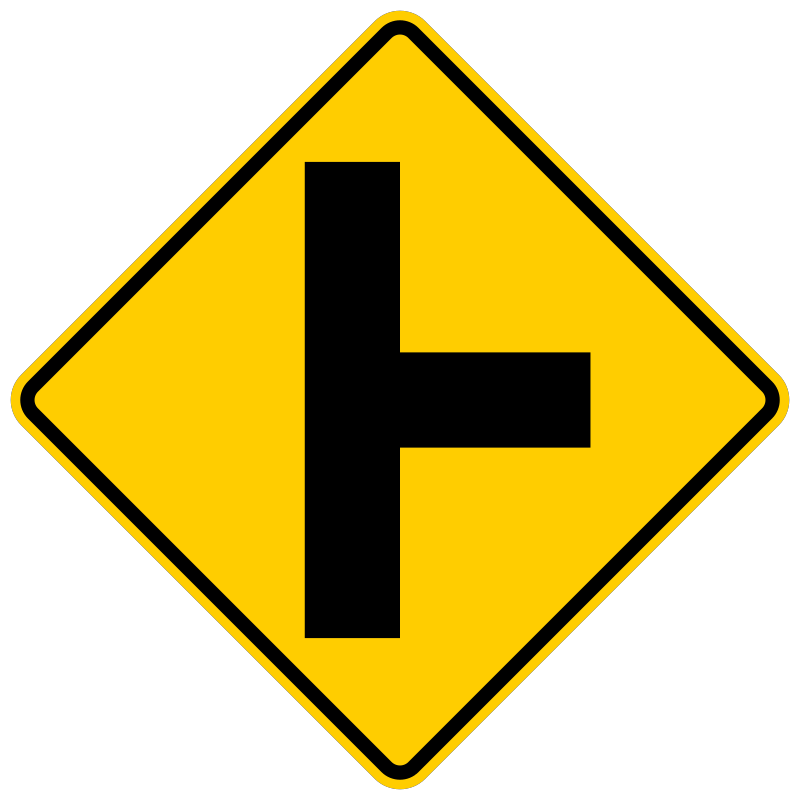 This road sign means:
A
Merge
B
Side Road
C
Merging Traffic
D
All traffic must go straight ahead
This traffic sign indicates: Side Road. Observing and obeying all roadway signs ensures safe traffic flow and legal driving.
Question 2:
To check your blind spot before changing lanes:
A
look into the right side mirror.
B
look into the rearview mirror.
C
look over your shoulder in the direction you plan to move.
D
look into the left side mirror.
Large commercial trucks have extensive blind spots on all four sides called the 'No-Zone': look over your shoulder in the direction you plan to move. If you cannot see the truck driver in their side mirrors, they cannot see you.
Question 3:
A broken white line:
A
means passing or crossing is prohibited in that lane.
B
separates two lanes traveling in the same direction.
C
marks the right edge of the roadway.
The correct driving rule is: separates two lanes traveling in the same direction. Following standard DMV road rules and practicing defensive driving ensures safety for all road users.
Question 4:
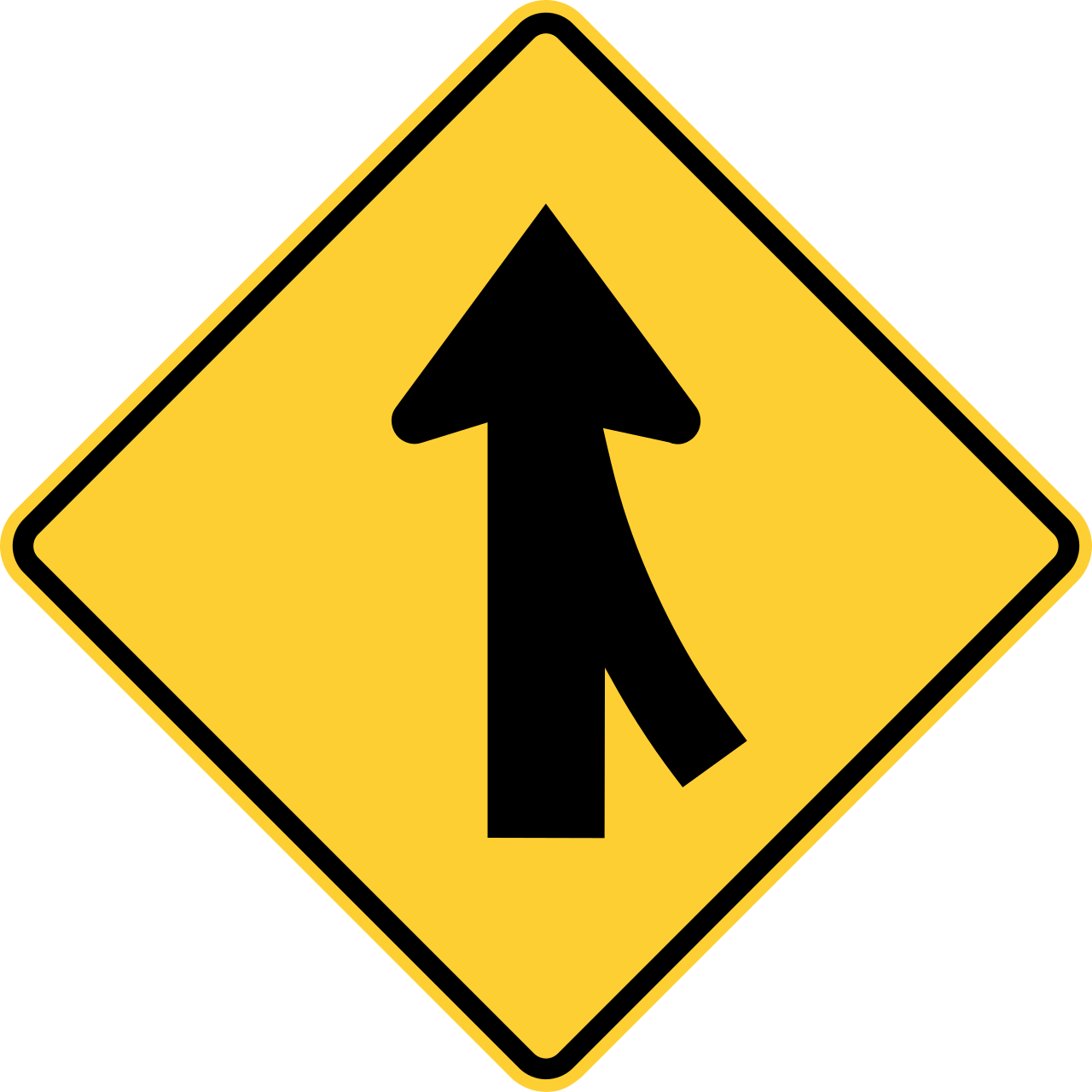 This road sign means:
A
Winding Road Ahead
B
Persons with Disabilities Parking
C
Merge
This traffic sign indicates: merge. Observing and obeying all roadway signs ensures safe traffic flow and legal driving.
Question 5:
When entering a highway from an entrance ramp, drivers should:
A
enter slowly to avoid other vehicles.
B
stop first, then gradually enter traffic.
C
accelerate to the speed of traffic.
D
drive above the speed of traffic to get ahead.
Defensive driving guidelines state that: accelerate to the speed of traffic. Anticipating road hazards and communicating maneuvers keeps traffic predictable and safe.
Question 6:
 This road sign means:
A
Crossroad
B
Hospital parking ahead
C
Merge
This traffic sign indicates: Crossroad. Observing and obeying all roadway signs ensures safe traffic flow and legal driving.
Question 7:
When you come to an intersection with a flashing red light, you must:
A
stop at the intersection, then proceed when safe and observe the right-of-way rules.
B
slow down and drive carefully through the intersection.
C
stop at the intersection and wait for a flashing green light.
D
stop only if cars are approaching the intersection.
When an emergency vehicle approaches with flashing lights or sirens, you must safely pull over to the right curb and stop completely until it passes.
Question 8:
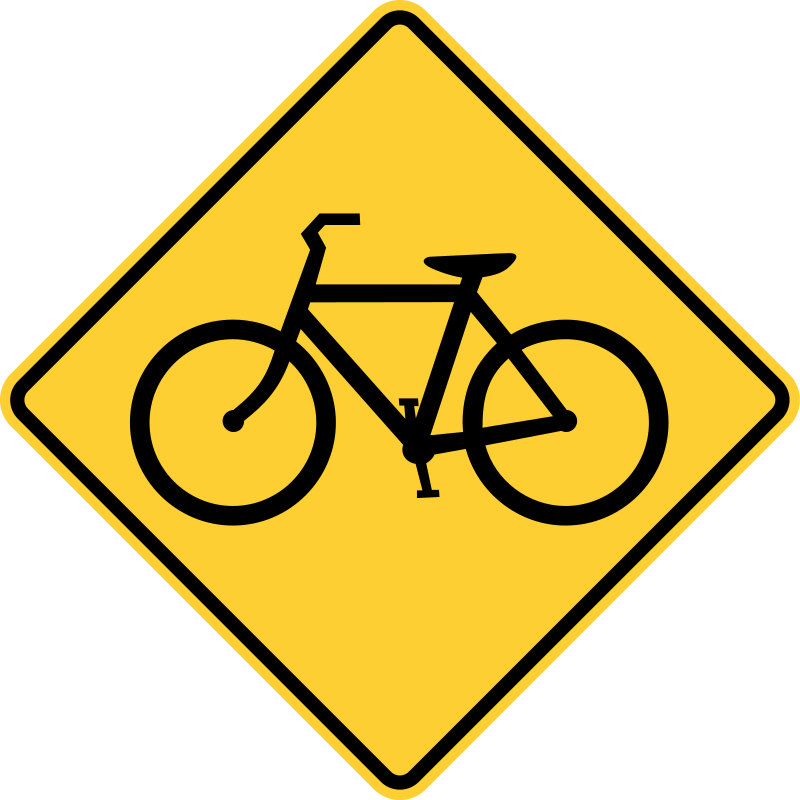 This road sign means:
A
Yield right-of-way to bicycles
B
Bicycles cross or ride beside traffic
C
Yield to motorcyles, but not to bicycles
D
Bicycles have the same rights as other vehicles
This traffic sign indicates: Bicycles cross or ride beside traffic. Observing and obeying all roadway signs ensures safe traffic flow and legal driving.
Question 9:
You are stopped at a stop sign and you are going to go straight through the intersection. A car on the cross road has stopped at a stop sign on your right and is going to go straight. Who has the right-of-way?
A
Whoever enters the intersection first.
B
You.
C
The car on your right.
According to standard right-of-way regulations: The car on your right. Yielding appropriately prevents intersection collisions and maintains safe traffic flow.
Question 10:
When driving in heavy traffic, you should:
A
drive with the flow of traffic.
B
maintain a constant speed.
C
drive faster than the flow of traffic.
D
drive slower than the flow of traffic.
The correct driving rule is: drive with the flow of traffic. Following standard DMV road rules and practicing defensive driving ensures safety for all road users.
Question 11:
 This sign warns drivers that:
A
they must turn either to the right or left.
B
there is a double curve ahead.
C
there is a winding road ahead.
This traffic sign indicates: there is a winding road ahead. Observing and obeying all roadway signs ensures safe traffic flow and legal driving.
Question 12:
When driving in fog, drivers should:
A
not use high beam headlights.
B
use low beam headlights to better illuminate the road ahead.
C
slow down and drive cautiously.
D
All of the above.
Hazardous road and weather conditions require extra caution: not use high beam headlights; use low beam headlights to better illuminate the road ahead; slow down and drive cautiously. Reducing speed and expanding following distance preserves control.
Question 13:
A driver cuts off another vehicle, or threatens another motorist or a pedestrian. These are examples of:
A
excessive driving
B
road rage
C
defensive driving
Drivers must always yield the right-of-way to pedestrians crossing at intersections and crosswalks: road rage. Stop and allow them to clear the lane safely.
Question 14:
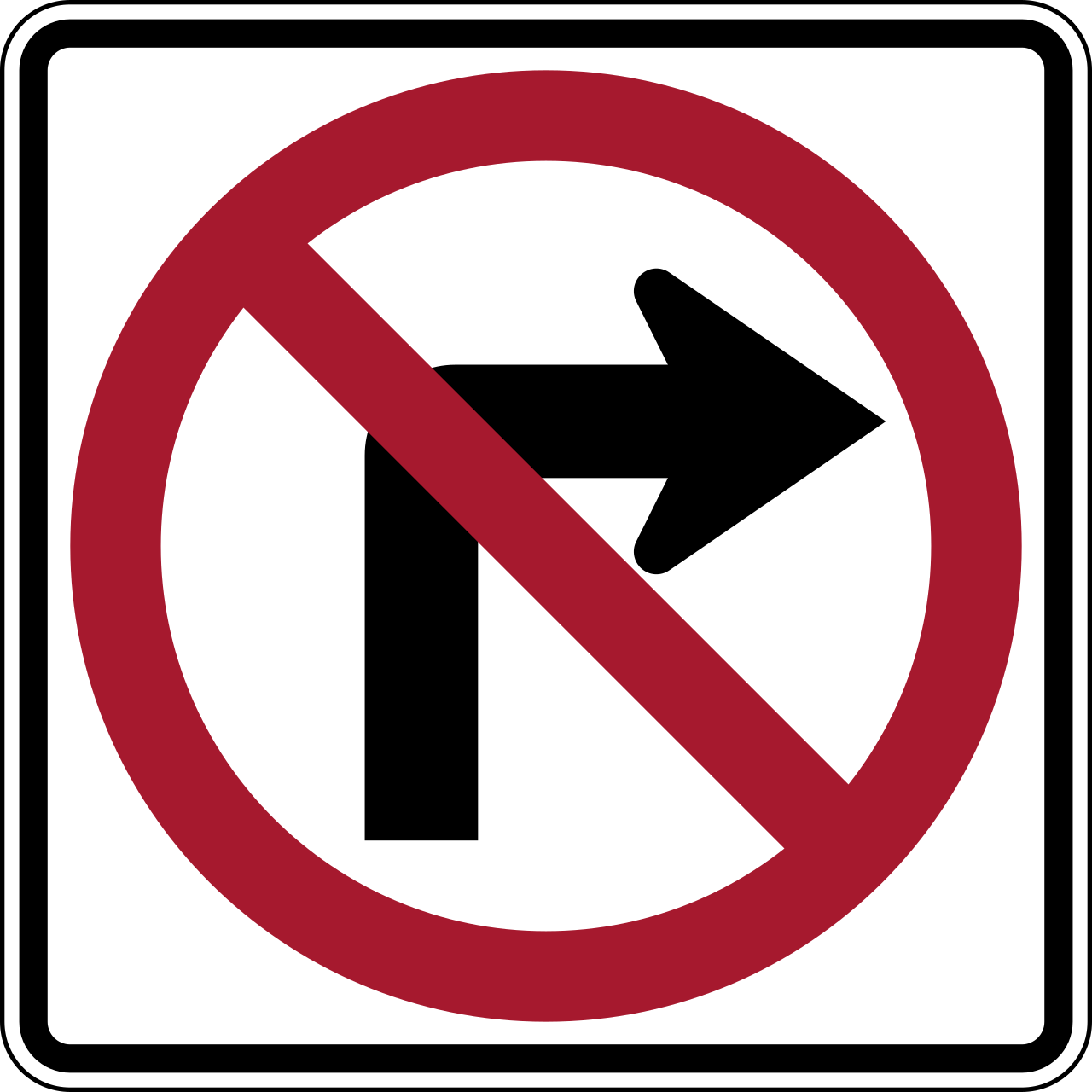 This sign tells drivers that:
A
they must make a left turn at the intersection.
B
U-turns are not allowed.
C
they must not make a right turn.
D
None of the above.
This traffic sign indicates: they must not make a right turn. Observing and obeying all roadway signs ensures safe traffic flow and legal driving.
Question 15:
When you reach an intersection with a stop sign, you should:
A
follow the vehicle ahead of you.
B
stop, look right, then left, then right again.
C
stop, look left, then right, then left again.
D
check your rearview mirror, look left, then right, then proceed.
According to standard right-of-way regulations: stop, look left, then right, then left again. Yielding appropriately prevents intersection collisions and maintains safe traffic flow.
Question 16:
When driving in heavy rain, drivers should use:
A
parking lights.
B
low beam headlights.
C
high beam headlights.
For safe speed and stopping control: low beam headlights. Adjusting speed to match visibility and road traction prevents loss of steering grip.
Question 17:
When driving, it is important to keep a space cushion _______ of your vehicle.
A
only on the left and right side
B
only in back
C
on all sides
D
only in front
The correct driving rule is: on all sides. Following standard DMV road rules and practicing defensive driving ensures safety for all road users.
Question 18:
 This sign means:
A
You must yield the right-of-way ahead
B
Traffic signals ahead
C
You must stop ahead
D
Speeding is not allowed
This traffic sign indicates: traffic signals ahead. Observing and obeying all roadway signs ensures safe traffic flow and legal driving.
Question 19:
An orange-colored sign means:
A
Railroad crossing ahead
B
School zone ahead
C
Construction zone ahead
D
You must change lanes ahead
This traffic sign indicates: Construction zone ahead. Observing and obeying all roadway signs ensures safe traffic flow and legal driving.
Question 20:
When you drive near parks and playgrounds, you should expect children:
A
not to cross unless they are with an adult.
B
to know when it is safe to cross.
C
to stop at the curb before crossing the street.
D
to suddenly run into the street.
The correct driving rule is: to suddenly run into the street. Following standard DMV road rules and practicing defensive driving ensures safety for all road users.
Question 21:
Are bicyclists required to obey traffic laws and signs?
A
No, bicyclists are considered pedestrians when it comes to the rules of the road.
B
Yes.
C
Yes, but only if they are riding in a bicycle lane.
The correct driving rule is: Yes. Following standard DMV road rules and practicing defensive driving ensures safety for all road users.
Question 22:
 This sign warns drivers of:
A
low clearance.
B
a narrow bridge ahead.
C
a low place in the road.
This traffic sign indicates: a narrow bridge ahead. Observing and obeying all roadway signs ensures safe traffic flow and legal driving.
Question 23:
A flashing yellow traffic signal means:
A
Slow down and be alert at the upcoming intersection.
B
The same thing as a stop sign.
C
Stop and proceed when a green light appears.
D
No right turn.
This traffic sign indicates: slow down and be alert at the upcoming intersection. Observing and obeying all roadway signs ensures safe traffic flow and legal driving.
Question 24:
When driving near light rail vehicles, drivers should:
A
never drive around lowered crossing gates.
B
expect trains on any track at any time.
C
always obey signs and traffic signals.
D
All of the above.
All of the listed points are essential driving requirements: never drive around lowered crossing gates; expect trains on any track at any time; always obey signs and traffic signals. Practicing each ensures compliance with DMV safety laws.
Question 25:
Which shape is a stop sign?
A
Diamond
B
Octagon
C
Upside-down triangle
The correct driving rule is: Octagon. Following standard DMV road rules and practicing defensive driving ensures safety for all road users.