Question 1:
Broken white lines can be crossed over:
A
when it is safe to change lanes.
B
only when passing another car.
C
at any time.
D
only in passing zones.
The correct driving rule is: when it is safe to change lanes. Following standard DMV road rules and practicing defensive driving ensures safety for all road users.
Question 2:
Which shape is a yield sign?
A
Vertical rectangle
B
Upside-down triangle
C
Diamond
The correct driving rule is: Upside-down triangle. Following standard DMV road rules and practicing defensive driving ensures safety for all road users.
Question 3:
A flashing red light means:
A
The same as a STOP sign.
B
The light will soon change to steady red.
C
Drive with caution.
When an emergency vehicle approaches with flashing lights or sirens, you must safely pull over to the right curb and stop completely until it passes.
Question 4:
When passing another vehicle:
A
pass the vehicle as safely and as quickly as possible.
B
honk your horn repeatedly to warn the other driver.
C
there is no need to signal.
D
you can exceed the posted speed limit.
Defensive driving guidelines state that: pass the vehicle as safely and as quickly as possible. Anticipating road hazards and communicating maneuvers keeps traffic predictable and safe.
Question 5:
When you get in a car to drive, the first thing you should do is:
A
check your rear view mirror.
B
adjust the steering wheel.
C
adjust your seat belt.
D
adjust your seat.
The correct driving rule is: adjust your seat. Following standard DMV road rules and practicing defensive driving ensures safety for all road users.
Question 6:
Anything that requires you to _______ could cause you to crash.
A
take your hands off the wheel
B
take your attention away from driving
C
take your eyes off the road
D
All of the above.
All of the listed points are essential driving requirements: take your hands off the wheel; take your attention away from driving; take your eyes off the road. Practicing each ensures compliance with DMV safety laws.
Question 7:
 This sign warns drivers of:
A
low clearance.
B
a narrow bridge ahead.
C
a low place in the road.
This traffic sign indicates: a narrow bridge ahead. Observing and obeying all roadway signs ensures safe traffic flow and legal driving.
Question 8:
When the driver behind you wants to pass, you should:
A
change lanes.
B
speed up.
C
use your brake lights.
D
slow down to allow room for the other driver to complete the pass safely.
The correct driving rule is: slow down to allow room for the other driver to complete the pass safely. Following standard DMV road rules and practicing defensive driving ensures safety for all road users.
Question 9:
When there is a _______ at an intersection, you should come to a complete stop, yield to cross traffic/pedestrians, and then proceed when clear.
A
a solid green light
B
a solid red light
C
a flashing red light
D
a flashing yellow light
Drivers must always yield the right-of-way to pedestrians crossing at intersections and crosswalks: a flashing red light. Stop and allow them to clear the lane safely.
Question 10:
If you miss your exit from an interstate expressway, you should:
A
go to the next exit and come back to the exit you missed.
B
use the right turn signal, check your mirrors and move to the right.
C
pull over to the right and back up with caution until you reach the exit ramp.
D
make a quick U-turn from your lane of travel.
Defensive driving guidelines state that: go to the next exit and come back to the exit you missed. Anticipating road hazards and communicating maneuvers keeps traffic predictable and safe.
Question 11:
When driving on wet roads, you should remember:
A
driving on wet roads can cause hydroplaning.
B
you should give yourself additional time to stop.
C
to stay farther behind the vehicle ahead of you.
D
All of the above.
All of the listed points are essential driving requirements: driving on wet roads can cause hydroplaning; you should give yourself additional time to stop; to stay farther behind the vehicle ahead of you. Practicing each ensures compliance with DMV safety laws.
Question 12:
Drivers do not have to stop for a school bus if:
A
they are traveling in the opposite direction on roadways with a total of four or more lanes (two or more lanes in each direction).
B
the speed limit in the area is under 25 MPH.
C
they are traveling in a residential area and the road has a large shoulder on each side.
D
they are traveling in the same direction as the bus on a four-lane highway with two lanes going in the opposite direction.
When a school bus displays flashing red lights and extended stop sign: they are traveling in the opposite direction on roadways with a total of four or more lanes (two or more lanes in each direction). Traffic in both directions must come to a full stop on undivided roads until children are clear.
Question 13:
If your car starts to skid, turn your steering wheel:
A
in the direction you want to go.
B
in the opposite direction of the skid.
C
to keep the front wheels straight.
D
in any direction. It doesnt matter.
The correct driving rule is: in the direction you want to go. Following standard DMV road rules and practicing defensive driving ensures safety for all road users.
Question 14:
You are entering a roadway from a private road, and you need to turn left. You have to yield to:
A
vehicles from the right.
B
vehicles from the left.
C
vehicles from both directions.
According to standard right-of-way regulations: vehicles from both directions. Yielding appropriately prevents intersection collisions and maintains safe traffic flow.
Question 15:
 This sign means:
A
narrow road ahead.
B
no turns are allowed on this road.
C
series of curves ahead.
D
the road may be slippery when wet.
This traffic sign indicates: series of curves ahead. Observing and obeying all roadway signs ensures safe traffic flow and legal driving.
Question 16:
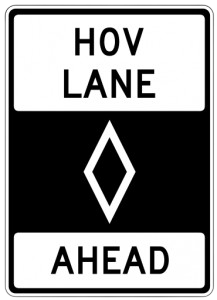 This road sign indicates that:
A
a lane is reserved for certain purposes or certain vehicles.
B
buses and car pools may not travel in the restricted lane.
C
vehicles cannot go straight ahead. Cars must turn either to the right or left.
This traffic sign indicates: a lane is reserved for certain purposes or certain vehicles. Observing and obeying all roadway signs ensures safe traffic flow and legal driving.
Question 17:
The traffic light is green and you want to drive straight through an intersection. If a car is already in the intersection and is making a turn, you must:
A
enter the intersection and then stop.
B
drive through the intersection. You have the right-of-way.
C
let that car complete its turn before you enter the intersection.
According to standard right-of-way regulations: let that car complete its turn before you enter the intersection. Yielding appropriately prevents intersection collisions and maintains safe traffic flow.
Question 18:
If the entrance lane is too short to allow acceleration to highway speed, you should:
A
go to the next entrance ramp.
B
stop and wait for a large gap in traffic, then enter the highway and accelerate quickly.
C
merge into highway traffic as soon as possible.
For safe speed and stopping control: stop and wait for a large gap in traffic, then enter the highway and accelerate quickly. Adjusting speed to match visibility and road traction prevents loss of steering grip.
Question 19:
 When they see this sign, drivers should:
A
increase their speed and keep well to the right.
B
slow down and keep well to the right.
C
slow down and keep well to the left.
This traffic sign indicates: slow down and keep well to the left. Observing and obeying all roadway signs ensures safe traffic flow and legal driving.
Question 20:
Your red traffic signal changes to green while a pedestrian is crossing in your traffic lane. The right of way should be given:
A
by the pedestrian, but only when vehicles are turning left.
B
by the pedestrian.
C
to the pedestrian.
Circular signs with an 'X' and 'RR' designate a Railroad Advance Warning: to the pedestrian. Drivers must slow down, look both ways, listen for trains, and be prepared to stop.
Question 21:
It is illegal to drive below the speed limit:
A
when the pavement is wet.
B
only in residential areas.
C
when driving slowly disrupts the normal flow of traffic.
D
only in rural areas.
For safe speed and stopping control: when driving slowly disrupts the normal flow of traffic. Adjusting speed to match visibility and road traction prevents loss of steering grip.
Question 22:
 This sign indicates that the road ahead:
A
turns sharply right, then left.
B
is a divided highway.
C
curves right, then left.
D
curves right.
This traffic sign indicates: curves right, then left. Observing and obeying all roadway signs ensures safe traffic flow and legal driving.
Question 23:
When driving on slick roads, drivers should:
A
accelerate quickly.
B
take turns more slowly.
C
use alternate routes.
D
drive as they would on dry roads.
The correct driving rule is: take turns more slowly. Following standard DMV road rules and practicing defensive driving ensures safety for all road users.
Question 24:
After parking, are you allowed to open a door on the road side of your vehicle?
A
Yes, always.
B
Yes, but only if it does not interfere with bicyclists and other traffic.
C
No, never.
Under standard parking and curb regulations: Yes, but only if it does not interfere with bicyclists and other traffic. Following parking distance clearances keeps roadways unobstructed and emergency lanes accessible.
Question 25:
 This road sign tells drivers that:
A
they must change lane immediately.
B
they must turn either to the right or left.
C
the one-way street or roadway ahead ends.
D
None of the above.
This traffic sign indicates: they must turn either to the right or left. Observing and obeying all roadway signs ensures safe traffic flow and legal driving.
Question 26:
 This road sign means:
A
Traffic flows only in the direction of the arrow
B
Turn right or left
C
No right turn
D
Sharp curve ahead
This traffic sign indicates: traffic flows only in the direction of the arrow. Observing and obeying all roadway signs ensures safe traffic flow and legal driving.
Question 27:
Which shape is a speed limit sign?
A
Round
B
Pentagon
C
Vertical rectangle
For safe speed and stopping control: Vertical rectangle. Adjusting speed to match visibility and road traction prevents loss of steering grip.
Question 28:
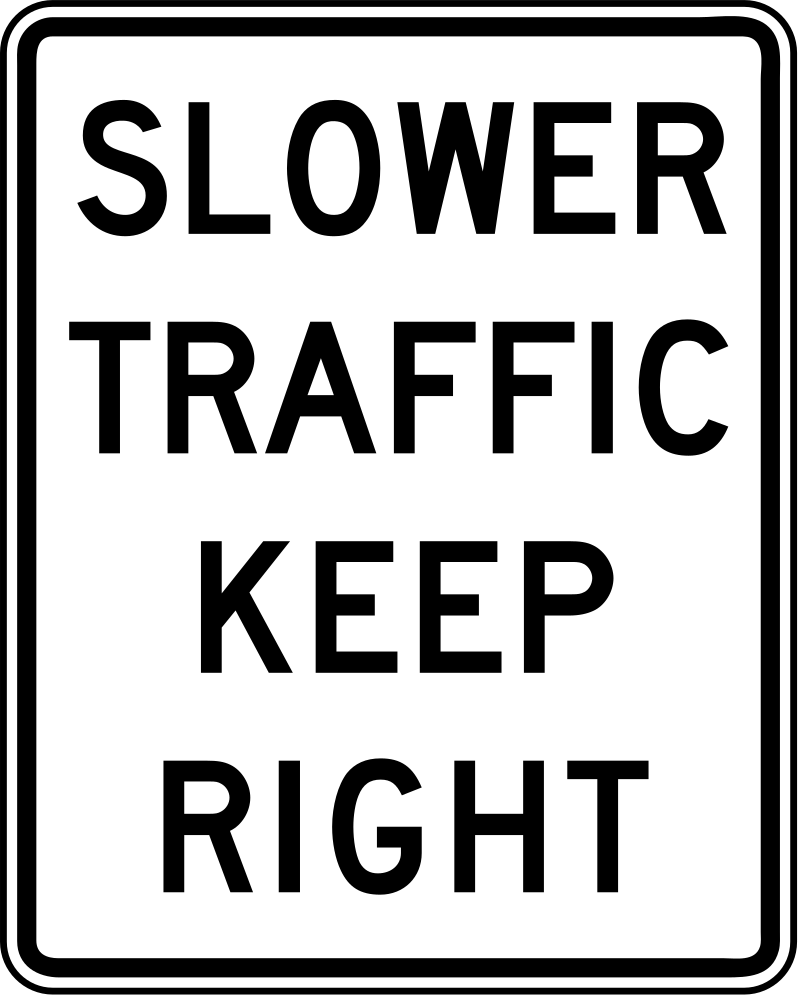 This road sign is:
A
a speed reduction sign.
B
a warning sign.
C
a regulatory sign.
This traffic sign indicates: a regulatory sign. Observing and obeying all roadway signs ensures safe traffic flow and legal driving.
Question 29:
You can reduce the chance of a collision with a large vehicle if you:
A
delay near it.
B
cut abruptly in front of it.
C
pay close attention to the turn signals.
The correct driving rule is: pay close attention to the turn signals. Following standard DMV road rules and practicing defensive driving ensures safety for all road users.
Question 30:
Are drivers allowed to exceed the speed limit to pass other vehicles?
A
Yes, but only by 10 MPH or less.
B
No.
C
Yes, but only if they drive with caution.
For safe speed and stopping control: No. Adjusting speed to match visibility and road traction prevents loss of steering grip.
Question 31:
 When they see this sign, drivers:
A
should be prepared to make sharp turns at a high speed.
B
need to be prepared to turn right and then left quickly.
C
should not speed up or brake quickly.
This traffic sign indicates: should not speed up or brake quickly. Observing and obeying all roadway signs ensures safe traffic flow and legal driving.
Question 32:
Your BAC depends on:
A
how fit you are.
B
the type of beverage you drink.
C
the amount of alcohol you drink.
Under state DUI and traffic safety laws: the amount of alcohol you drink. Alcohol degrades judgment, slows reaction times, and distorts depth perception.
Question 33:
On slippery roads, drivers should:
A
slow down.
B
increase their speed to avoid hydroplaning.
C
not drive faster than 25 MPH.
D
go faster.
For safe speed and stopping control: slow down. Adjusting speed to match visibility and road traction prevents loss of steering grip.
Question 34:
 This road sign means:
A
Pedestrians must not cross
B
School zone ahead
C
Pedestrian crossing ahead
This traffic sign indicates.
Question 35:
When parking on a public road, drivers should:
A
move as far away from traffic as possible.
B
always park on the left side of the roadway.
C
All of the above.
Under standard parking and curb regulations: move as far away from traffic as possible. Following parking distance clearances keeps roadways unobstructed and emergency lanes accessible.
Question 36:
 This road sign means:
A
Divided highway ahead - stay to the right
B
Do not enter
C
Do not pass
This traffic sign indicates: Divided highway ahead - stay to the right. Observing and obeying all roadway signs ensures safe traffic flow and legal driving.
Question 37:
You must yield to other drivers:
A
when it helps to prevent collisions.
B
when they are driving a truck.
C
when the other drivers are on your left and you have reached an unmarked intersection at the same time.
D
when your traffic signal is a green.
The correct driving rule is: when it helps to prevent collisions. Following standard DMV road rules and practicing defensive driving ensures safety for all road users.
Question 38:
Your car stalls on the tracks at a railroad crossing, and a collision with a train is imminent. After getting yourself and your passengers out of the car, you should:
A
run toward the train but stay off the tracks.
B
signal the train to stop.
C
cross the tracks.
The correct driving rule is: run toward the train but stay off the tracks. Following standard DMV road rules and practicing defensive driving ensures safety for all road users.
Question 39:
When following motorcycles, drivers should:
A
reduce the minimum following distance.
B
try to pass them as they have different braking capabilities than other motor vehicles.
C
keep more space in front of their vehicle.
The correct driving rule is: keep more space in front of their vehicle. Following standard DMV road rules and practicing defensive driving ensures safety for all road users.
Question 40:
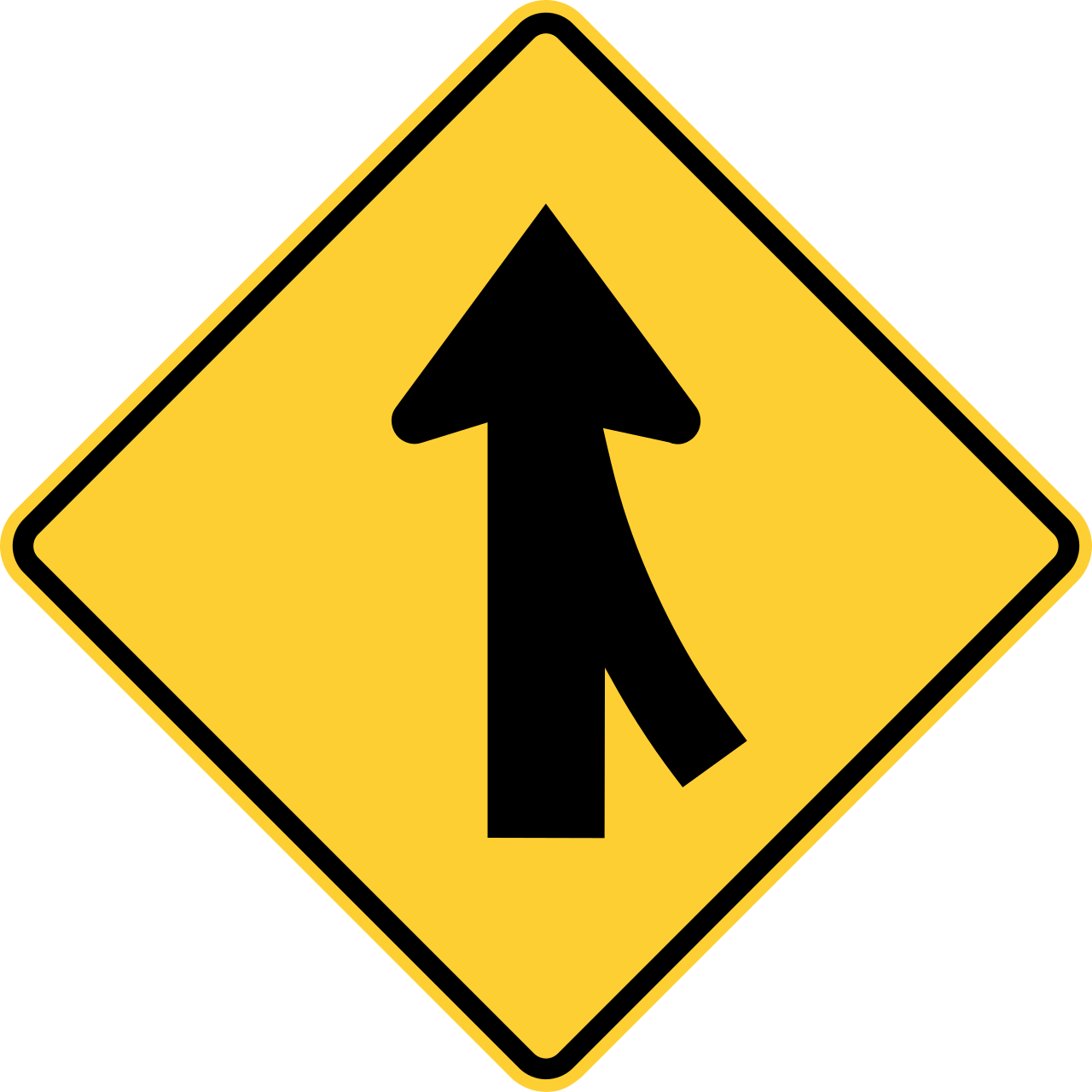 This road sign means:
A
Cars in right lane must slow down
B
Merging traffic ahead
C
Pass only in the right lane
D
No left turn
This traffic sign indicates: Merging traffic ahead. Observing and obeying all roadway signs ensures safe traffic flow and legal driving.