Question 1:
A driver cuts off another vehicle, or threatens another motorist or a pedestrian. These are examples of:
A
excessive driving
B
road rage
C
defensive driving
Drivers must always yield the right-of-way to pedestrians crossing at intersections and crosswalks: road rage. Stop and allow them to clear the lane safely.
Question 2:
 This road sign means:
A
Stop before turning right
B
4-way stop ahead
C
Lane closed for traffic
D
There is a traffic signal ahead
This traffic sign indicates: There is a traffic signal ahead. Observing and obeying all roadway signs ensures safe traffic flow and legal driving.
Question 3:
When a ‘Road Closed’ sign is displayed, drivers must:
A
make a U-turn.
B
look for a detour or another route.
C
come to a complete stop and wait for the lights to turn green.
The correct driving rule is: look for a detour or another route. Following standard DMV road rules and practicing defensive driving ensures safety for all road users.
Question 4:
 This road sign means:
A
The road ends ahead
B
A road joins from the right
C
A four-way intersection is ahead
D
'Y' intersection ahead
This traffic sign indicates: 'Y' intersection ahead. Observing and obeying all roadway signs ensures safe traffic flow and legal driving.
Question 5:
If a vehicle is approaching with high beams, drivers should look __________ until the vehicle passes.
A
to the right of the road
B
at the center of the road
C
to the left of the road
D
straight ahead
The correct driving rule is: to the right of the road. Following standard DMV road rules and practicing defensive driving ensures safety for all road users.
Question 6:
Parking is not allowed:
A
on the road side of a parked vehicle.
B
in a tunnel.
C
All of the above.
Under standard parking and curb regulations: All of the above. Following parking distance clearances keeps roadways unobstructed and emergency lanes accessible.
Question 7:
You are approaching an intersection with a yellow flashing light. You should:
A
stop and wait for the light to change.
B
speed up to beat the red light.
C
prepare to stop; the light is about to turn red.
D
proceed with caution through the intersection.
This traffic sign indicates: proceed with caution through the intersection. Observing and obeying all roadway signs ensures safe traffic flow and legal driving.
Question 8:
 The ‘One Way’ sign means that:
A
only vehicles turning left may travel in the direction of the arrow.
B
there is only one road that turns left at the intersection.
C
drivers may travel only in the direction of the arrow.
This traffic sign indicates: drivers may travel only in the direction of the arrow. Observing and obeying all roadway signs ensures safe traffic flow and legal driving.
Question 9:
When you are in a line of traffic that is crossing a railroad track that has no signals or gates:
A
you may pass slower drivers crossing the track.
B
before you start to cross, you need to make sure there is space to get all the way across the tracks without stopping.
C
you have the right of way and do not need to check for trains.
D
All of the above.
The correct driving rule is: before you start to cross, you need to make sure there is space to get all the way across the tracks without stopping. Following standard DMV road rules and practicing defensive driving ensures safety for all road users.
Question 10:
You must yield to other drivers:
A
when they are coming out of an alley or driveway.
B
only when a yield sign is present.
C
when entering a street from an alley.
D
All of the above.
The correct driving rule is: when entering a street from an alley. Following standard DMV road rules and practicing defensive driving ensures safety for all road users.
Question 11:
In heavy rain, tires can begin to ride on the water that is on top of the road pavement. This is called:
A
rideplaning.
B
hydroplaning.
C
pavement-planing.
D
waterplaning.
When hydroplaning on water: hydroplaning. Gently ease off the accelerator and hold the steering wheel straight without sudden braking.
Question 12:
 This road sign means:
A
Winding road
B
Side road ahead
C
Slippery when wet
This traffic sign indicates: Slippery when wet. Observing and obeying all roadway signs ensures safe traffic flow and legal driving.
Question 13:
When approaching a highway-rail intersection, the first sign drivers see is usually:
A
an RXR round sign on a yellow background.
B
a stop sign.
C
a yield sign.
According to standard right-of-way regulations: an RXR round sign on a yellow background. Yielding appropriately prevents intersection collisions and maintains safe traffic flow.
Question 14:
 A flashing yellow light:
A
warns drivers to proceed with caution.
B
is used at dangerous intersections.
C
All of the above.
Safe navigation at intersections requires following all established rules: warns drivers to proceed with caution; is used at dangerous intersections. Always yield right-of-way properly to prevent collisions.
Question 15:
Who is most at risk?
A
Drivers who have overslept.
B
Drivers who are driving long distances without rest breaks.
C
Experienced drivers.
The correct driving rule is: drivers who are driving long distances without rest breaks. Following standard DMV road rules and practicing defensive driving ensures safety for all road users.
Question 16:
What are some telltale signs of a drunk driver?
A
Sudden stops.
B
Weaving between lanes.
C
Driving slower than the normal flow of traffic.
D
All of the above.
Alcohol and impairing substances degrade all critical driving functions: Sudden stops; Weaving between lanes; Driving slower than the normal flow of traffic. Driving while impaired carries severe criminal and safety penalties.
Question 17:
A steady yellow light means that a ______ light will soon appear.
A
steady green
B
steady red
C
flashing yellow
D
flashing green
According to standard right-of-way regulations: steady red. Yielding appropriately prevents intersection collisions and maintains safe traffic flow.
Question 18:
You go with a group of friends to a social event, and you plan to have a few drinks. You should:
A
make alcohol the focus of the event.
B
avoid alternating between drinks with alcohol and drinks without any alcohol.
C
arrange to ride home with a friend who does not drink.
The correct driving rule is: arrange to ride home with a friend who does not drink. Following standard DMV road rules and practicing defensive driving ensures safety for all road users.
Question 19:
When driving in icy or snowy conditions, to avoid crashes drivers should:
A
get off the highway as quickly as possible.
B
reduce speed and increase following distance.
C
add extra weight to the vehicle to improve traction.
D
engage 4 wheel drive on the vehicle.
The correct driving rule is: reduce speed and increase following distance. Following standard DMV road rules and practicing defensive driving ensures safety for all road users.
Question 20:
For protection, motorcyclists are required to:
A
keep their headlights and taillights on at all times.
B
signal turns, lane changes and stops.
C
wear approved helmets.
The correct driving rule is: wear approved helmets. Following standard DMV road rules and practicing defensive driving ensures safety for all road users.
Question 21:
In Idaho, bicyclists:
A
All of the above.
B
do not need to come to a complete stop at stop signs.
C
must yield the right-of-way to vehicles in or already at the intersection.
D
do not need to come to a complete stop when turning right on a red light.
All of the listed points are essential driving requirements: do not need to come to a complete stop at stop signs; must yield the right-of-way to vehicles in or already at the intersection; do not need to come to a complete stop when turning right on a red light. Practicing each ensures compliance with DMV safety laws.
Question 22:
If you suddenly have no control of the steering wheel, you should:
A
turn on your emergency flashers and pull off the road.
B
ease your foot off the gas pedal. Turn on your emergency flashers and allow your vehicle to come to a slow stop.
C
pump your brake pedal to build pressure.
D
react as you would with a blowout.
The correct driving rule is: ease your foot off the gas pedal. Turn on your emergency flashers and allow your vehicle to come to a slow stop. Following standard DMV road rules and practicing defensive driving ensures safety for all road users.
Question 23:
 What does a flashing left yellow arrow mean?
A
Vehicles turning left must stop if they can. The light will soon be red.
B
Only right turns are allowed.
C
Left turns are allowed. Yield to oncoming traffic and pedestrians.
D
None of the above.
The correct driving rule is: Left turns are allowed. Yield to oncoming traffic and pedestrians. Following standard DMV road rules and practicing defensive driving ensures safety for all road users.
Question 24:
If the traffic lights are out of service when you approach an intersection, you:
A
must continue according to the rules of right-of-way.
B
must slow down and yield to oncoming traffic and pedestrians.
C
must come to a stop as you would for a stop sign.
D
must proceed with caution.
According to standard right-of-way regulations: must come to a stop as you would for a stop sign. Yielding appropriately prevents intersection collisions and maintains safe traffic flow.
Question 25:
 This road sign means:
A
You must come to a complete stop
B
Do not enter
C
Slow down, stop if necessary and yield the right-of-way
D
Merging traffic
A triangular Yield sign requires drivers to slow down and give right-of-way to other traffic: slow down, stop if necessary and yield the right-of-way. Proceed only when there is a safe opening.
Question 26:
Alcohol causes:
A
poor judgment.
B
loss of concentration.
C
reduced perception.
D
All of the above.
Alcohol and impairing substances degrade all critical driving functions: poor judgment; loss of concentration; reduced perception. Driving while impaired carries severe criminal and safety penalties.
Question 27:
Which of the following must you obey over the others?
A
Red light
B
Stop sign
C
Police officer
The correct driving rule is: Police officer. Following standard DMV road rules and practicing defensive driving ensures safety for all road users.
Question 28:
You may park or stop along the shoulder of the freeway:
A
if you need to check your smartphone for directions.
B
only if you have an emergency.
C
if no part of your vehicle is on the road.
D
as long as you turn on your emergency flashers.
Under standard parking and curb regulations: only if you have an emergency. Following parking distance clearances keeps roadways unobstructed and emergency lanes accessible.
Question 29:
When you prepare to make a left turn from a one-way road into a two-way road, you must:
A
enter the two-way road to the left of its center line.
B
approach the turn in the right lane or from the right side of a single lane.
C
approach the turn in the left lane or from the left side of a single lane.
The correct driving rule is: approach the turn in the left lane or from the left side of a single lane. Following standard DMV road rules and practicing defensive driving ensures safety for all road users.
Question 30:
If your turn signals fail, you should use _____ to indicate your intention to turn.
A
your emergency flashers
B
your horn
C
your high beams
D
hand signals
The correct driving rule is: hand signals. Following standard DMV road rules and practicing defensive driving ensures safety for all road users.
Question 31:
ABS is the acronym for:
A
Anti-Braking System
B
Average-Beam System
C
Anti-Locking Brake System
The correct driving rule is: Anti-Locking Brake System. Following standard DMV road rules and practicing defensive driving ensures safety for all road users.
Question 32:
Before turning, you should:
A
increase your speed.
B
sound your horn to alert the other drivers.
C
give the proper turn signal.
D
change lanes.
The correct driving rule is: give the proper turn signal. Following standard DMV road rules and practicing defensive driving ensures safety for all road users.
Question 33:
 What should drivers do when they see this sign?
A
Make sure the bridge is clear of oncoming traffic before they cross.
B
Look to the left and right for other traffic.
C
Allow others to merge smoothly.
This traffic sign indicates: make sure the bridge is clear of oncoming traffic before they cross. Observing and obeying all roadway signs ensures safe traffic flow and legal driving.
Question 34:
When meeting a car with blinding headlights, you should:
A
look toward the right side of the road.
B
dim your lights, then speed up and pass quickly.
C
use your emergency flashers to warn the other driver.
D
look toward the left side of the road.
The correct driving rule is: look toward the right side of the road. Following standard DMV road rules and practicing defensive driving ensures safety for all road users.
Question 35:
At intersections where two or more drivers stop at STOP signs at the same time and they are at right angles:
A
the driver on the left must yield to the driver on the right.
B
the driver who is late for work has the right-of-way.
C
the driver on the right must yield to the driver on the left.
The correct driving rule is: the driver on the left must yield to the driver on the right. Following standard DMV road rules and practicing defensive driving ensures safety for all road users.
Question 36:
You should never depend on your mirrors when you prepare to change lanes. Why?
A
You should look over your shoulder instead.
B
Mirrors are useless.
C
Mirrors need to be adjusted.
D
Mirrors leave 'blind spots' behind both sides of vehicles.
The correct driving rule is: Mirrors leave 'blind spots' behind both sides of vehicles. Following standard DMV road rules and practicing defensive driving ensures safety for all road users.
Question 37:
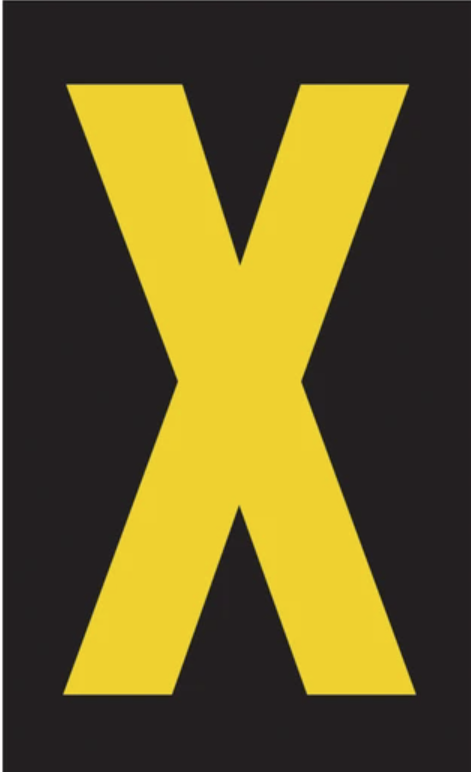 When they see a yellow X signal, drivers should:
A
come to a complete stop at the marked stop line.
B
turn off the ignition.
C
prepare to leave the lane safely.
State laws require signaling your intention: prepare to leave the lane safely. Signal at least 100 feet before making a turn or changing lanes.
Question 38:
You hear a siren close by but can not see where the emergency vehicle is. What do you do?
A
Keep driving until you are sure the emergency vehicle is headed toward you.
B
Stop immediately and activate your emergency flashers.
C
Pull over to the right side of the road and stop until you are sure the emergency vehicle is not headed toward you.
When sharing the road with other vehicles: pull over to the right side of the road and stop until you are sure the emergency vehicle is not headed toward you. Giving large vehicles and vulnerable users adequate clearance prevents dangerous accidents.
Question 39:
If you see a 'lane closed ahead' sign you should:
A
make a U-turn. You are on the wrong side of the road.
B
merge into the correct lane when it is safe.
C
speed to the end of the closed lane and try to get into the other lane.
D
None of the above.
The correct driving rule is: merge into the correct lane when it is safe. Following standard DMV road rules and practicing defensive driving ensures safety for all road users.
Question 40:
This road sign means:
A
Slow down and yield to traffic on main road when merging
B
Always come to a complete stop
C
Lane reduction ahead
D
You must come to a complete stop and yield right-of-way
A triangular Yield sign requires drivers to slow down and give right-of-way to other traffic: slow down and yield to traffic on main road when merging. Proceed only when there is a safe opening.