Question 1:
 What does this road sign indicate?
A
Hospital service
B
Area reserved for people with disabilities
C
Interstate highway
This traffic sign indicates: Hospital service. Observing and obeying all roadway signs ensures safe traffic flow and legal driving.
Question 2:
At a stop sign there is no stop line or crosswalk. You must stop:
A
before you enter the intersection.
B
at the next crosswalk.
C
after you enter the intersection, if you have a clear view of traffic on the intersecting roadway.
Drivers must always yield the right-of-way to pedestrians crossing at intersections and crosswalks: before you enter the intersection. Stop and allow them to clear the lane safely.
Question 3:
The following symptoms are associated with drowsy driving:
A
You continue to yawn.
B
You don’t remember driving the last few miles.
C
All of the above.
Alcohol and impairing substances degrade all critical driving functions: You continue to yawn; You don’t remember driving the last few miles. Driving while impaired carries severe criminal and safety penalties.
Question 4:
When approaching a railroad crossing drivers should:
A
slow down.
B
be ready to stop.
C
look for a train.
D
All of the above.
All of the listed points are essential driving requirements: slow down; be ready to stop; look for a train. Practicing each ensures compliance with DMV safety laws.
Question 5:
When changing lanes, you should:
A
check your mirrors, signal and change lanes.
B
signal, change lanes and check your mirrors.
C
signal, check your mirrors and blind spot in the direction you plan to move, then change lanes.
D
signal and change lanes.
The correct driving rule is: signal, check your mirrors and blind spot in the direction you plan to move, then change lanes. Following standard DMV road rules and practicing defensive driving ensures safety for all road users.
Question 6:
When you are in a line of traffic that is crossing a railroad track that has no signals or gates:
A
you may pass slower drivers crossing the track.
B
before you start to cross, you need to make sure there is space to get all the way across the tracks without stopping.
C
you have the right of way and do not need to check for trains.
D
All of the above.
The correct driving rule is: before you start to cross, you need to make sure there is space to get all the way across the tracks without stopping. Following standard DMV road rules and practicing defensive driving ensures safety for all road users.
Question 7:
Before turning left, it is important to:
A
swing to the right side of your lane.
B
sound your horn to warn the other drivers.
C
yield to oncoming vehicles.
D
flash your headlights to alert the other drivers.
The correct driving rule is: yield to oncoming vehicles. Following standard DMV road rules and practicing defensive driving ensures safety for all road users.
Question 8:
A flashing red light means:
A
The same as a STOP sign.
B
The light will soon change to steady red.
C
Drive with caution.
When an emergency vehicle approaches with flashing lights or sirens, you must safely pull over to the right curb and stop completely until it passes.
Question 9:
When a driver is turning and a pedestrian is crossing without a traffic light, __________ must yield the right-of-way.
A
the pedestrian
B
the driver
C
both
D
whoever is slower
Drivers must always yield the right-of-way to pedestrians crossing at intersections and crosswalks: the driver. Stop and allow them to clear the lane safely.
Question 10:
If your car goes into water, you should:
A
wait for water to rush in and let it out in small breaths through your nose.
B
call the fire department immediately.
C
remove yourself before it starts to sink.
The correct driving rule is: remove yourself before it starts to sink. Following standard DMV road rules and practicing defensive driving ensures safety for all road users.
Question 11:
Unlike passenger cars, trucks have blind spots:
A
on the right.
B
directly behind them.
C
on the front.
The correct driving rule is: directly behind them. Following standard DMV road rules and practicing defensive driving ensures safety for all road users.
Question 12:
Drive below the posted speed limit when:
A
anything makes conditions less than perfect.
B
you are on a four lane road.
C
entering a highway where there are other cars.
D
others drive below the speed limit.
For safe speed and stopping control: anything makes conditions less than perfect. Adjusting speed to match visibility and road traction prevents loss of steering grip.
Question 13:
 This road sign means:
A
School zone ahead
B
Side road
C
Construction zone ahead
D
Sharp turn, slow down
This traffic sign indicates: Sharp turn, slow down. Observing and obeying all roadway signs ensures safe traffic flow and legal driving.
Question 14:
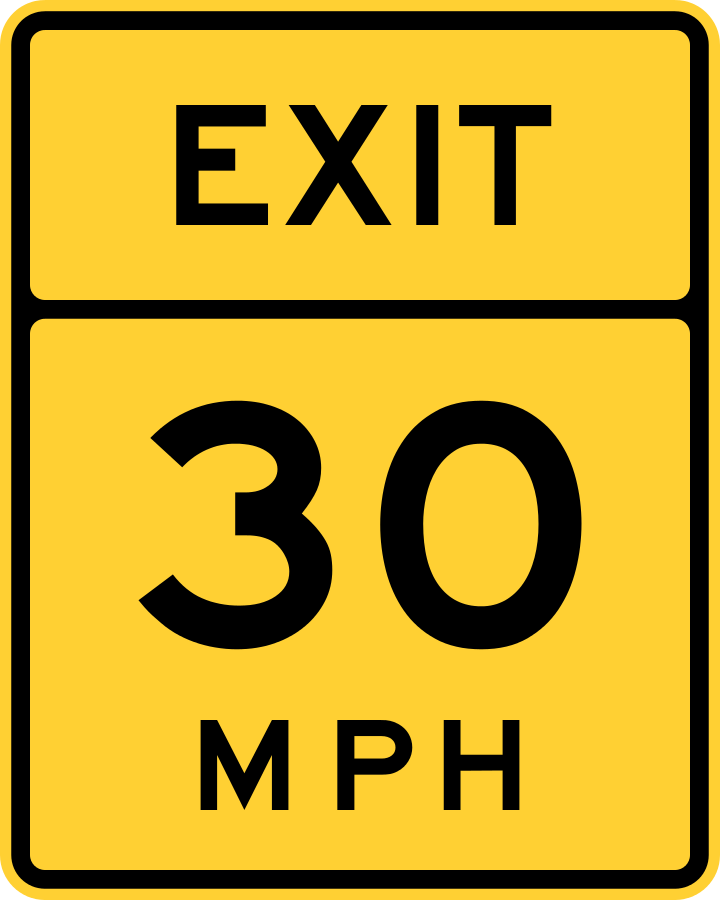 The sign in the picture:
A
shows the highest speed drivers can travel at the exit of the intersection.
B
is used to advise motorists of the appropriate ramp speed at the highway exit point.
C
indicates the minimum ramp speed at the highway exit point.
The correct driving rule is: is used to advise motorists of the appropriate ramp speed at the highway exit point. Following standard DMV road rules and practicing defensive driving ensures safety for all road users.
Question 15:
Parking is not allowed:
A
in an intersection, unless permitted by signs.
B
within 300 feet of a pedestrian safety area.
C
on public roads
Under standard parking and curb regulations: in an intersection, unless permitted by signs. Following parking distance clearances keeps roadways unobstructed and emergency lanes accessible.
Question 16:
If you fail the driving test three times:
A
the Department will require additional behind-the-wheel driver training.
B
you must send proof of the additional driver training before you will be allowed to take the driving test again.
C
no further tests will be allowed without written authorization from the Department.
D
All of the above.
All of the listed points are essential driving requirements: the Department will require additional behind-the-wheel driver training; you must send proof of the additional driver training before you will be allowed to take the driving test again; no further tests will be allowed without written authorization from the Department. Practicing each ensures compliance with DMV safety laws.
Question 17:
What does it mean If an oncoming driver flashes headlights at you during a period of low visibility?
A
Your headlights are too bright. You should turn them off.
B
Your vehicle was difficult to see. You should turn on your headlights.
C
Your headlights are too bright. You should use parking lights instead.
The correct driving rule is: Your vehicle was difficult to see. You should turn on your headlights. Following standard DMV road rules and practicing defensive driving ensures safety for all road users.
Question 18:
 This road sign means:
A
No left turn
B
No U-turn
C
Detour ahead
This traffic sign indicates: No U-turn. Observing and obeying all roadway signs ensures safe traffic flow and legal driving.
Question 19:
BAC is:
A
the acronym for Beer ACcumulation.
B
the number of ounces of alcohol in your blood.
C
the percentage of alcohol in your blood.
Under state DUI and traffic safety laws: the percentage of alcohol in your blood. Alcohol degrades judgment, slows reaction times, and distorts depth perception.
Question 20:
Pentagonal signs are used to indicate:
A
possible hazards on roadways.
B
no passing zones.
C
school crossings.
The correct driving rule is: school crossings. Following standard DMV road rules and practicing defensive driving ensures safety for all road users.
Question 21:
The driver of an emergency vehicle that uses lights and a siren can legally:
A
pass red lights.
B
exceed the speed limit
C
All of the above.
Sharing the road safely requires mutual awareness and respect: pass red lights; exceed the speed limit. Maintaining safe space cushions protects all roadway users.
Question 22:
A flashing yellow traffic signal means:
A
Slow down and be alert at the upcoming intersection.
B
The same thing as a stop sign.
C
Stop and proceed when a green light appears.
D
No right turn.
This traffic sign indicates: slow down and be alert at the upcoming intersection. Observing and obeying all roadway signs ensures safe traffic flow and legal driving.
Question 23:
Examples of proper glass maintenance include:
A
Replacing worn wiper blades.
B
Keeping your windows clean and clear.
C
All of the above.
All of the listed points are essential driving requirements: Replacing worn wiper blades; Keeping your windows clean and clear. Practicing each ensures compliance with DMV safety laws.
Question 24:
 This road sign means:
A
Stop before turning right
B
4-way stop ahead
C
Lane closed for traffic
D
There is a traffic signal ahead
This traffic sign indicates: There is a traffic signal ahead. Observing and obeying all roadway signs ensures safe traffic flow and legal driving.
Question 25:
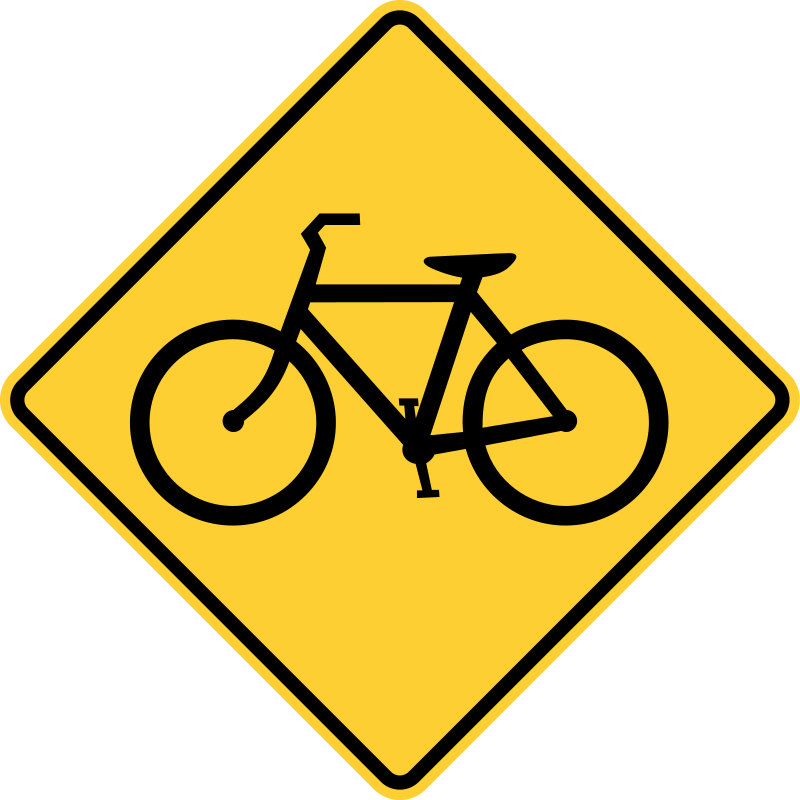 This sign means:
A
Bicycles should yield to vehicles ahead.
B
Warning: a bikeway crosses the roadway ahead.
C
The lane ahead is reserved for bicycles.
This traffic sign indicates: Warning: a bikeway crosses the roadway ahead. Observing and obeying all roadway signs ensures safe traffic flow and legal driving.