Question 1:
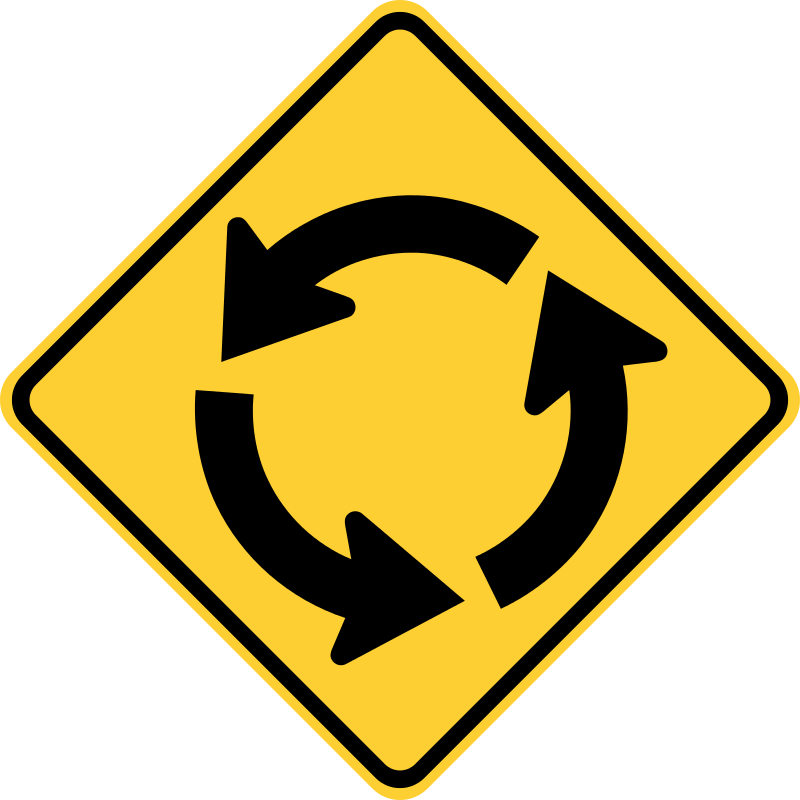 This road sign:
A
warns drivers of a sharp turn left. Drivers should slow their speed and keep to the left.
B
provides an advance notice of a roundabout.
C
warns drivers that U-turns are not permitted.
D
is a no-right-turns sign.
This traffic sign indicates: provides an advance notice of a roundabout. Observing and obeying all roadway signs ensures safe traffic flow and legal driving.
Question 2:
 What does this road sign indicate?
A
Drivers have the right of way over bikes turning left.
B
Vehicles turning left must yield to bikes entering a right turn lane.
C
Motor vehicles entering an exclusive right-turn lane must weave across bicycle traffic in bicycle lanes.
This traffic sign indicates: Motor vehicles entering an exclusive right-turn lane must weave across bicycle traffic in bicycle lanes. Observing and obeying all roadway signs ensures safe traffic flow and legal driving.
Question 3:
 This sign means:
A
Not enter
B
Detour to the right
C
The road to the right is for one-way traffic only
This traffic sign indicates: Detour to the right. Observing and obeying all roadway signs ensures safe traffic flow and legal driving.
Question 4:
 This sign warns drivers that:
A
the road will make a sharp turn to the right.
B
right turns are not allowed.
C
another road enters the highway from the direction shown.
This traffic sign indicates: the road will make a sharp turn to the right. Observing and obeying all roadway signs ensures safe traffic flow and legal driving.
Question 5:
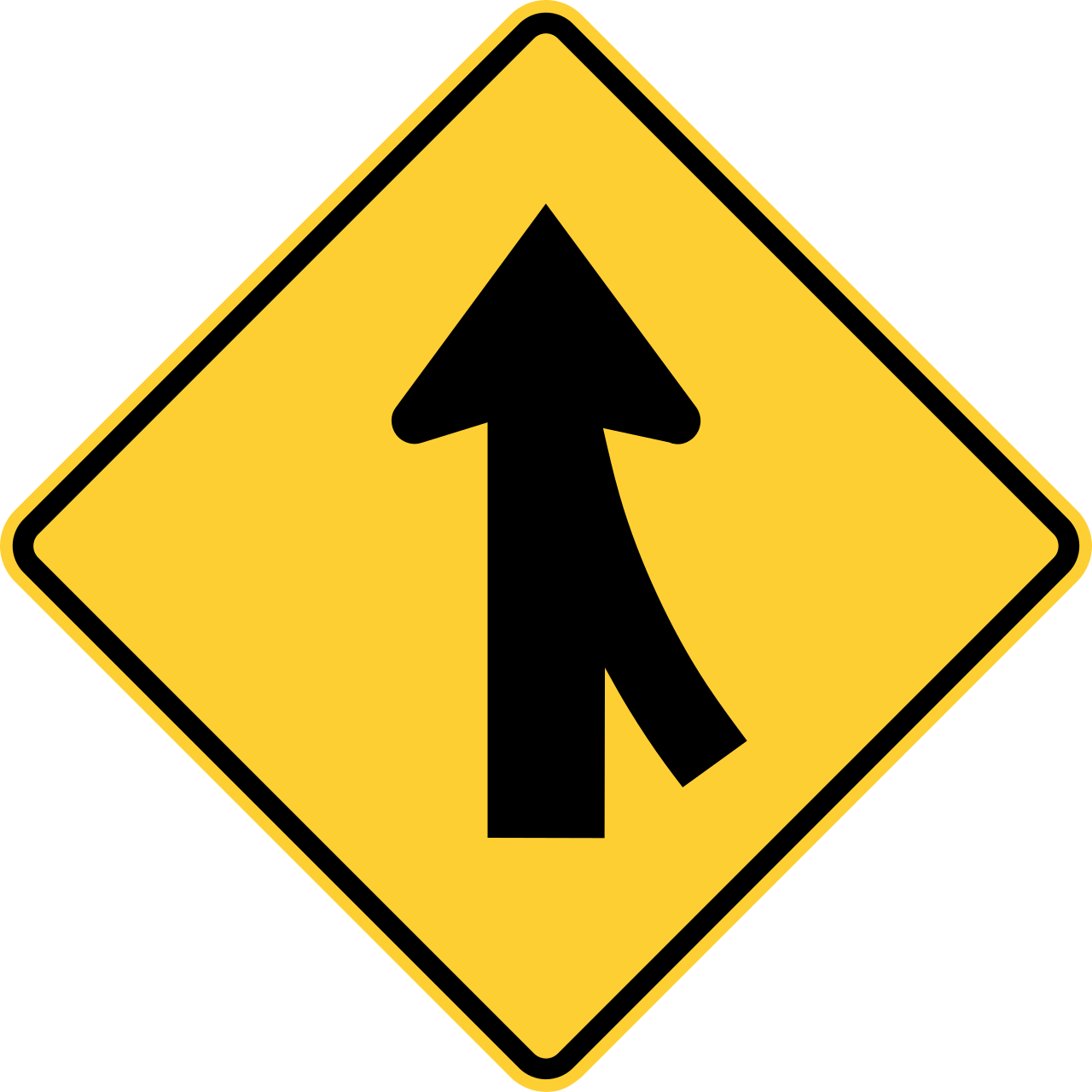 This road sign means:
A
Cars in right lane must slow down
B
Merging traffic ahead
C
Pass only in the right lane
D
No left turn
This traffic sign indicates: Merging traffic ahead. Observing and obeying all roadway signs ensures safe traffic flow and legal driving.
Question 6:
 This sign is a:
A
regulatory sign.
B
warning sign.
C
guide sign.
This traffic sign indicates: warning sign. Observing and obeying all roadway signs ensures safe traffic flow and legal driving.
Question 7:
 This road sign means:
A
Slow down and be prepared to stop if necessary
B
You must come to a complete stop
C
You may proceed at regular speed through the intersection
D
Wrong Way
This traffic sign indicates: slow down and be prepared to stop if necessary. Observing and obeying all roadway signs ensures safe traffic flow and legal driving.
Question 8:
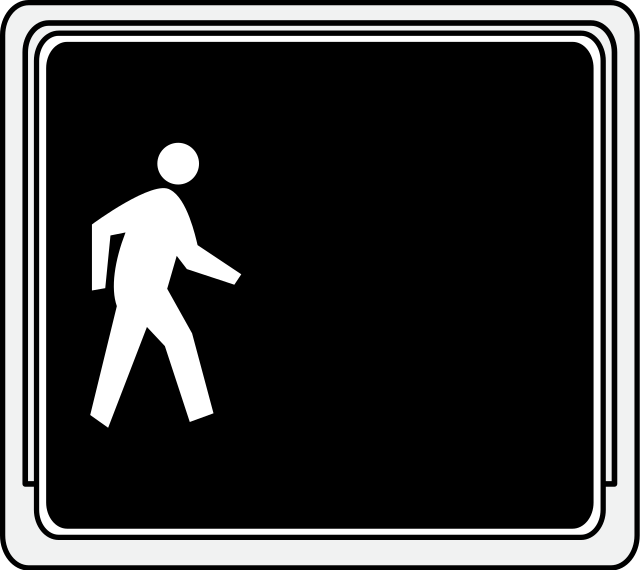 What does the pictured signal indicate?
A
A pedestrian may begin crossing the street.
B
Pedestrians may turn right.
C
A pedestrian may not not begin crossing the street.
State laws require signaling your intention: A pedestrian may begin crossing the street. Signal at least 100 feet before making a turn or changing lanes.
Question 9:
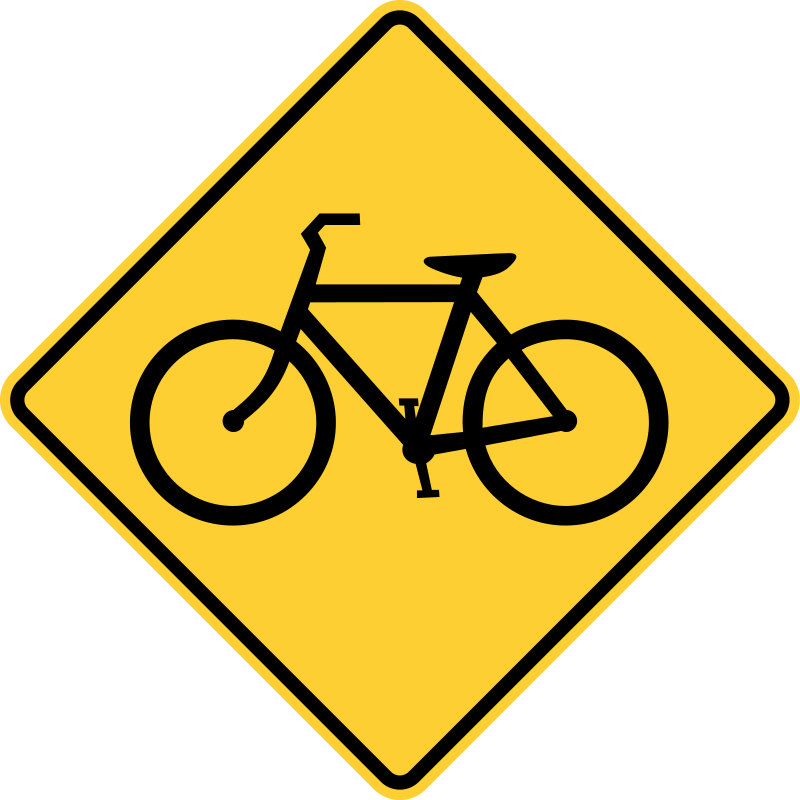 This road sign means:
A
Watch for bicycles
B
Bicycle parking ahead
C
Bicycles are not allowed in this area
This traffic sign indicates: watch for bicycles. Observing and obeying all roadway signs ensures safe traffic flow and legal driving.
Question 10:
 This sign means:
A
narrow road ahead.
B
no turns are allowed on this road.
C
series of curves ahead.
D
the road may be slippery when wet.
This traffic sign indicates: series of curves ahead. Observing and obeying all roadway signs ensures safe traffic flow and legal driving.
Question 11:
 This road sign means:
A
Slow down, slippery when wet
B
Detour ahead
C
Road curves ahead
This traffic sign indicates: slow down, slippery when wet. Observing and obeying all roadway signs ensures safe traffic flow and legal driving.
Question 12:
 This road sign means:
A
A road joins from the left
B
The road ahead turns sharply right then sharply left
C
Sharp right turn
D
Winding road ahead
This traffic sign indicates: The road ahead turns sharply right then sharply left. Observing and obeying all roadway signs ensures safe traffic flow and legal driving.
Question 13:
When you reach an intersection with a stop sign, you should:
A
follow the vehicle ahead of you.
B
stop, look right, then left, then right again.
C
stop, look left, then right, then left again.
D
check your rearview mirror, look left, then right, then proceed.
According to standard right-of-way regulations: stop, look left, then right, then left again. Yielding appropriately prevents intersection collisions and maintains safe traffic flow.
Question 14:
Before a school bus stops to load passengers, the driver will usually flash:
A
yellow warning lights.
B
red warning lights.
C
red lights.
When a school bus displays flashing red lights and extended stop sign: yellow warning lights. Traffic in both directions must come to a full stop on undivided roads until children are clear.
Question 15:
An emergency vehicle that uses lights and a siren can be unpredictable. Why?
A
The driver can legally pass red lights.
B
Emergency vehicles must go faster than the posted speed limit when it is safe to do so.
C
Emergency vehicle drivers are not required to be careful.
When sharing the road with other vehicles: The driver can legally pass red lights. Giving large vehicles and vulnerable users adequate clearance prevents dangerous accidents.
Question 16:
When driving on major highways you should:
A
be ready to react to road hazards.
B
stay alert.
C
keep your eyes moving.
D
All of the above.
All of the listed points are essential driving requirements: be ready to react to road hazards; stay alert; keep your eyes moving. Practicing each ensures compliance with DMV safety laws.
Question 17:
A flashing yellow light means:
A
Merging traffic ahead
B
Pedestrian crossing
C
Come to a full stop
D
Proceed with caution
According to standard right-of-way regulations: proceed with caution. Yielding appropriately prevents intersection collisions and maintains safe traffic flow.
Question 18:
Your brake lights tell other drivers that you:
A
are changing lanes.
B
are slowing down or stopping.
C
are making a turn.
D
have your emergency brake on.
The correct driving rule is: are slowing down or stopping. Following standard DMV road rules and practicing defensive driving ensures safety for all road users.
Question 19:
If you drink alcohol socially, what helps insure safe driving?
A
Stop drinking one hour before driving.
B
Drink coffee before driving.
C
Take a cold shower before driving.
D
Ride home with a friend who has not been drinking.
Under state DUI and traffic safety laws: Ride home with a friend who has not been drinking. Alcohol degrades judgment, slows reaction times, and distorts depth perception.
Question 20:
BAC is expressed in:
A
percentage of alcohol to blood.
B
percentage of blood to alcohol.
C
ounces of alcohol in your blood.
Under state DUI and traffic safety laws: percentage of alcohol to blood. Alcohol degrades judgment, slows reaction times, and distorts depth perception.
Question 21:
If you are pulled over by law enforcement, you should:
A
stay in the driver’s seat with both hands clearly in sight on the steering wheel.
B
unbuckle your seat belt and lower your window.
C
get out of your vehicle and walk toward the patrol car.
D
turn off on your interior light if stopped at night.
The correct driving rule is: stay in the driver’s seat with both hands clearly in sight on the steering wheel. Following standard DMV road rules and practicing defensive driving ensures safety for all road users.
Question 22:
If cars approaching from opposite directions reach an intersection at the same time:
A
a car that moves straight must yield to cars that turn left.
B
a car that turns left must yield to cars that move straight or turn right.
C
a car that turns right must yield to cars that move straight or turn left.
According to standard right-of-way regulations: a car that turns left must yield to cars that move straight or turn right. Yielding appropriately prevents intersection collisions and maintains safe traffic flow.
Question 23:
When meeting a car with blinding headlights, you should:
A
look toward the right side of the road.
B
dim your lights, then speed up and pass quickly.
C
use your emergency flashers to warn the other driver.
D
look toward the left side of the road.
The correct driving rule is: look toward the right side of the road. Following standard DMV road rules and practicing defensive driving ensures safety for all road users.
Question 24:
At intersections where two or more drivers stop at STOP signs at the same time and they are at right angles:
A
the driver on the left must yield to the driver on the right.
B
the driver who is late for work has the right-of-way.
C
the driver on the right must yield to the driver on the left.
The correct driving rule is: the driver on the left must yield to the driver on the right. Following standard DMV road rules and practicing defensive driving ensures safety for all road users.
Question 25:
Conviction for _____________ carries the highest number of points.
A
driving without a license
B
passing a stopped school bus that is unloading children
C
hit and run with property damage
D
aggressive driving
The correct driving rule is: passing a stopped school bus that is unloading children. Following standard DMV road rules and practicing defensive driving ensures safety for all road users.
Question 26:
You may not pass another vehicle on either side of a _______ centerline.
A
solid or broken yellow
B
single broken white
C
double solid yellow
D
single broken yellow
The correct driving rule is: double solid yellow. Following standard DMV road rules and practicing defensive driving ensures safety for all road users.
Question 27:
A driver should be extra alert for motorcyclists, bicycles and pedestrians. Why?
A
They obey specific traffic laws.
B
They always have the right-of-way.
C
They are hard to see in traffic.
D
They don’t have rearview mirrors.
The correct driving rule is: they are hard to see in traffic. Following standard DMV road rules and practicing defensive driving ensures safety for all road users.
Question 28:
You go with a group of friends to a social event, and you plan to have a few drinks. You should:
A
make alcohol the focus of the event.
B
avoid alternating between drinks with alcohol and drinks without any alcohol.
C
arrange to ride home with a friend who does not drink.
The correct driving rule is: arrange to ride home with a friend who does not drink. Following standard DMV road rules and practicing defensive driving ensures safety for all road users.
Question 29:
Are drivers allowed to exceed the speed limit to pass other vehicles?
A
Yes, but only by 10 MPH or less.
B
No.
C
Yes, but only if they drive with caution.
For safe speed and stopping control: No. Adjusting speed to match visibility and road traction prevents loss of steering grip.
Question 30:
To avoid having to make an emergency stop while driving in traffic, drivers should:
A
drive in the right lane only.
B
look ahead and maintain a safe following distance.
C
sound their horn to warn other drivers.
D
drive slower than the flow of traffic.
The correct driving rule is: look ahead and maintain a safe following distance. Following standard DMV road rules and practicing defensive driving ensures safety for all road users.
Question 31:
You reach an intersection that is not controlled at the same time as a driver on your right, and both of you prepare to go straight. Who has the right-of-way?
A
You.
B
No one.
C
The other driver.
According to standard right-of-way regulations: The other driver. Yielding appropriately prevents intersection collisions and maintains safe traffic flow.
Question 32:
What should you do if your brakes fail?
A
Hook your shoe under the pedal and see if you can free it.
B
Turn on your cruise control.
C
Try pumping the brake pedal to increase pressure.
The correct driving rule is: Try pumping the brake pedal to increase pressure. Following standard DMV road rules and practicing defensive driving ensures safety for all road users.
Question 33:
To reduce their chances of colliding with an animal, drivers should:
A
scan the sides of the road to watch for the reflection of vehicle headlights in the eyes of animals.
B
look well down the road and far off to each side.
C
All of the above.
All of the listed points are essential driving requirements: scan the sides of the road to watch for the reflection of vehicle headlights in the eyes of animals; look well down the road and far off to each side. Practicing each ensures compliance with DMV safety laws.
Question 34:
A thumping sound can be a warning:
A
that a tire blowout is about to occur.
B
of a steering failure.
C
of a brake failure.
The correct driving rule is: that a tire blowout is about to occur. Following standard DMV road rules and practicing defensive driving ensures safety for all road users.
Question 35:
You can reduce the chance of a collision with a large vehicle if you:
A
delay near it.
B
cut abruptly in front of it.
C
pay close attention to the turn signals.
The correct driving rule is: pay close attention to the turn signals. Following standard DMV road rules and practicing defensive driving ensures safety for all road users.
Question 36:
When you make a left turn from a one-way road into a one-way road, if the road you enter has two lanes, you:
A
must turn into its right lane.
B
can not turn left.
C
must turn into its left lane.
The correct driving rule is: must turn into its left lane. Following standard DMV road rules and practicing defensive driving ensures safety for all road users.
Question 37:
Drivers can not pass a vehicle on the left if:
A
they approach the top of a hill on a two-way road and can not see over it.
B
they can not safely return to the right lane before they reach a solid yellow center line for the right lane.
C
All of the above.
All of the listed points are essential driving requirements: they approach the top of a hill on a two-way road and can not see over it; they can not safely return to the right lane before they reach a solid yellow center line for the right lane. Practicing each ensures compliance with DMV safety laws.