Question 1:
Drivers are required to yield to pedestrians in a crosswalk.
A
True
B
False
Drivers must always yield the right-of-way to pedestrians crossing at intersections and crosswalks: True. Stop and allow them to clear the lane safely.
Question 2:
If involved in an accident, drivers should:
A
avoid standing or walking in traffic lanes.
B
turn off the ignitions of wrecked vehicles.
C
stop their vehicle at or near the scene.
D
All of the above.
All of the listed points are essential driving requirements: avoid standing or walking in traffic lanes; turn off the ignitions of wrecked vehicles; stop their vehicle at or near the scene. Practicing each ensures compliance with DMV safety laws.
Question 3:
You are driving at night, and a vehicle comes toward you with their high beam headlights on. You should:
A
flash your headlights once quickly.
B
look in the direction of the vehicle.
C
keep your high beams on.
The correct driving rule is: flash your headlights once quickly. Following standard DMV road rules and practicing defensive driving ensures safety for all road users.
Question 4:
 This road sign means:
A
Crossroad
B
Hospital parking ahead
C
Merge
This traffic sign indicates: Crossroad. Observing and obeying all roadway signs ensures safe traffic flow and legal driving.
Question 5:
When there is a _______ at an intersection, you should come to a complete stop, yield to cross traffic/pedestrians, and then proceed when clear.
A
a solid green light
B
a solid red light
C
a flashing red light
D
a flashing yellow light
Drivers must always yield the right-of-way to pedestrians crossing at intersections and crosswalks: a flashing red light. Stop and allow them to clear the lane safely.
Question 6:
Double solid yellow lines mean:
A
the lane to the right may pass.
B
passing is not permitted in either direction.
C
the lane to the left may pass.
D
passing is permitted in either direction.
The correct driving rule is: passing is not permitted in either direction. Following standard DMV road rules and practicing defensive driving ensures safety for all road users.
Question 7:
Drivers who have been drinking are more likely to:
A
keep a safe following distance.
B
yield right-of-way to oncoming vehicles.
C
be less reactive.
The correct driving rule is: be less reactive. Following standard DMV road rules and practicing defensive driving ensures safety for all road users.
Question 8:
If driving in foggy weather, drivers should turn on their high-beams to increase the field of vision.
A
True
B
False
The correct driving rule is: False. Following standard DMV road rules and practicing defensive driving ensures safety for all road users.
Question 9:
When you make a left turn from a two-way road into a four-lane highway, you must:
A
enter the left lane, to the right of the center line.
B
enter the right lane, to the left of the center line.
C
go straight through the intersection, and then make the turn.
Defensive driving guidelines state that: enter the left lane, to the right of the center line. Anticipating road hazards and communicating maneuvers keeps traffic predictable and safe.
Question 10:
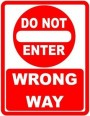 This road sign means:
A
Drivers may proceed if the way is clear
B
Drivers are about to enter a one way street the wrong way
C
U-turns are prohibited
This traffic sign indicates: drivers are about to enter a one way street the wrong way. Observing and obeying all roadway signs ensures safe traffic flow and legal driving.
Question 11:
To avoid hydroplaning you should:
A
keep your tires properly inflated.
B
slow down when roads are wet.
C
All of the above.
All of the listed points are essential driving requirements: keep your tires properly inflated; slow down when roads are wet. Practicing each ensures compliance with DMV safety laws.
Question 12:
A speed limit is the __________ speed at which a vehicle may legally travel on the road under ideal conditions.
A
maximum
B
minimum
C
suggested
D
None of the above.
For safe speed and stopping control: maximum. Adjusting speed to match visibility and road traction prevents loss of steering grip.
Question 13:
 This road sign means:
A
Keep left
B
Divided highway begins
C
Lane ends
This traffic sign indicates: Divided highway begins. Observing and obeying all roadway signs ensures safe traffic flow and legal driving.
Question 14:
Never make a U-turn from:
A
the lane you’re in.
B
the right lane.
C
the left part of the lane nearest to the centerline of the roadway.
According to standard right-of-way regulations: the right lane. Yielding appropriately prevents intersection collisions and maintains safe traffic flow.
Question 15:
 This road sign warns drivers that:
A
they are coming to a point where another traffic lane joins the one they are on.
B
a divided highway is ahead.
C
the one-way street or roadway is about to change to two-way traffic.
This traffic sign indicates: the one-way street or roadway is about to change to two-way traffic. Observing and obeying all roadway signs ensures safe traffic flow and legal driving.
Question 16:
 What does a flashing yellow light mean?
A
The same thing as a stop sign.
B
Drivers may move forward with caution.
C
All of the above.
According to standard right-of-way regulations: drivers may move forward with caution. Yielding appropriately prevents intersection collisions and maintains safe traffic flow.
Question 17:
Drivers may cross a double yellow line to pass another vehicle if:
A
the yellow line next to the other side of the road is broken.
B
the vehicle ahead moves to the right to let them pass.
C
the yellow line next to their side of the road is broken.
The correct driving rule is: the yellow line next to their side of the road is broken. Following standard DMV road rules and practicing defensive driving ensures safety for all road users.
Question 18:
What is the main reason night driving is more difficult than daytime driving?
A
The use of headlight is required by law.
B
Reduced visibility.
C
Driving within the range.
The correct driving rule is: Reduced visibility. Following standard DMV road rules and practicing defensive driving ensures safety for all road users.
Question 19:
If the vehicle you are driving starts to skid, you should:
A
brake lightly.
B
turn off the ignition.
C
stay off the brakes.
The correct driving rule is: stay off the brakes. Following standard DMV road rules and practicing defensive driving ensures safety for all road users.
Question 20:
You should always travel:
A
at the speed of the vehicle behind.
B
according to weather and road conditions.
C
at the speed limit.
The correct driving rule is: according to weather and road conditions. Following standard DMV road rules and practicing defensive driving ensures safety for all road users.
Question 21:
The first sign drivers see when approaching a highway-rail intersection is usually:
A
a crossbuck sign.
B
an advance warning sign.
C
a speed limit sign.
According to standard right-of-way regulations: an advance warning sign. Yielding appropriately prevents intersection collisions and maintains safe traffic flow.
Question 22:
This sign means:
A
The highway ahead is divided into two one-way roadways.
B
Roundabout ahead. Slow down.
C
The divided highway on which drivers are traveling ends ahead.
This traffic sign indicates: The highway ahead is divided into two one-way roadways. Observing and obeying all roadway signs ensures safe traffic flow and legal driving.
Question 23:
In general, you should pass vehicles going in the same direction as you are going:
A
only if the other driver signals it is safe.
B
whenever you have the opportunity to do so.
C
on the right.
D
on the left.
The correct driving rule is: on the left. Following standard DMV road rules and practicing defensive driving ensures safety for all road users.
Question 24:
A broken yellow line on your side of the roadway only means:
A
Passing is permitted on both sides.
B
Passing is permitted on your side of the roadway.
C
Passing is not permitted on either side.
The correct driving rule is: Passing is permitted on your side of the roadway. Following standard DMV road rules and practicing defensive driving ensures safety for all road users.
Question 25:
When you come to a flashing yellow light, you must:
A
slow down and cross carefully.
B
stop before crossing.
C
speed up to beat the red light.
According to standard right-of-way regulations: slow down and cross carefully. Yielding appropriately prevents intersection collisions and maintains safe traffic flow.