Question 1:
Many crashes are caused by:
A
yielding the right of way.
B
frequently checking mirrors and blind spot.
C
maintaining a 4-second following distance between your vehicle and any vehicle in front of you.
D
driving too fast for conditions.
The correct driving rule is: driving too fast for conditions. Following standard DMV road rules and practicing defensive driving ensures safety for all road users.
Question 2:
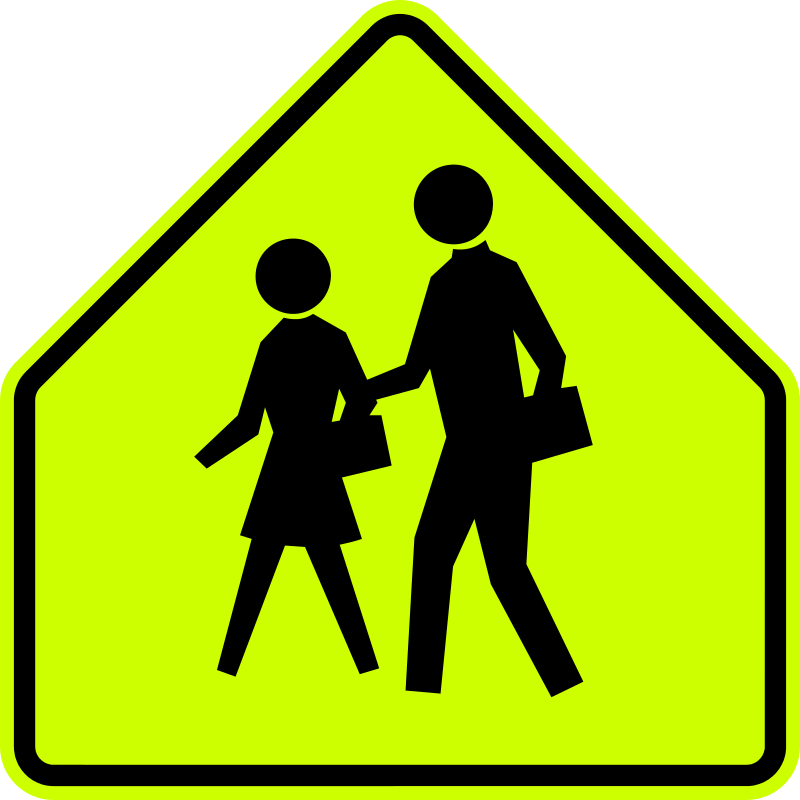 This sign means:
A
Business area nearby. Watch for business people.
B
There is a work zone ahead. Watch for workers.
C
The driver is near a school and should watch for children.
Pentagonal (5-sided) signs are exclusively reserved for school zones and school crossings: The driver is near a school and should watch for children. Drivers must reduce speed and yield right-of-way to all crossing children.
Question 3:
If you become sleepy while driving you should:
A
get some rest or change drivers.
B
drink coffee.
C
open a window.
The correct driving rule is: get some rest or change drivers. Following standard DMV road rules and practicing defensive driving ensures safety for all road users.
Question 4:
When being passed by another vehicle, drivers should:
A
slow down.
B
slightly increase their speed.
C
maintain a constant speed.
The correct driving rule is: maintain a constant speed. Following standard DMV road rules and practicing defensive driving ensures safety for all road users.
Question 5:
If your car goes into water, you should:
A
wait for water to rush in and let it out in small breaths through your nose.
B
call the fire department immediately.
C
remove yourself before it starts to sink.
The correct driving rule is: remove yourself before it starts to sink. Following standard DMV road rules and practicing defensive driving ensures safety for all road users.
Question 6:
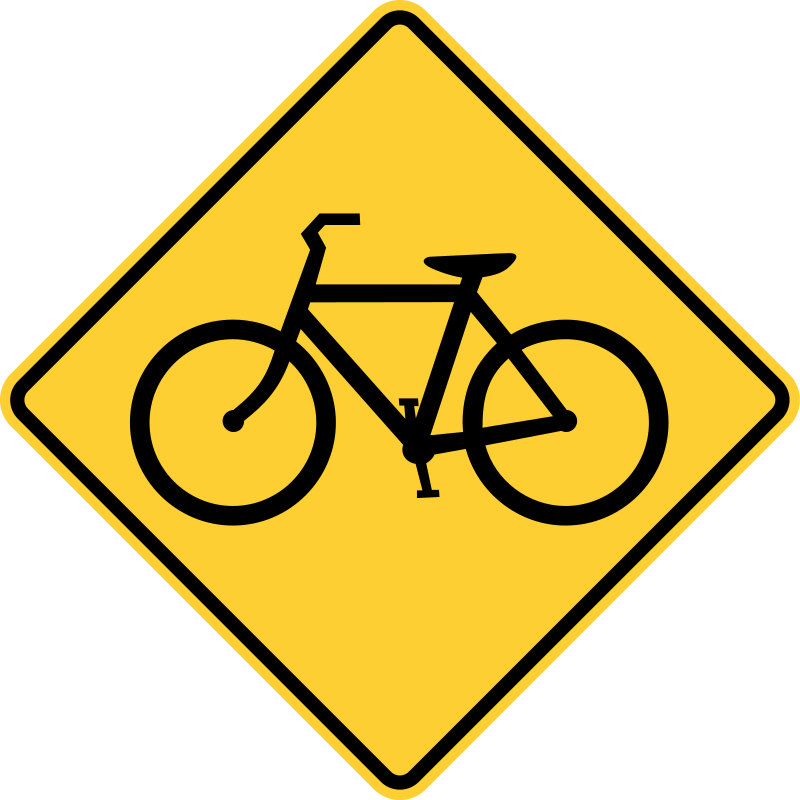 This sign means:
A
Bicycles should yield to vehicles ahead.
B
Warning: a bikeway crosses the roadway ahead.
C
The lane ahead is reserved for bicycles.
This traffic sign indicates: Warning: a bikeway crosses the roadway ahead. Observing and obeying all roadway signs ensures safe traffic flow and legal driving.
Question 7:
Although there may be enough room in the traffic lane for an automobile and a motorcyclist, a vehicle driver should not share the lane with motorcyclists.
A
False
B
True
The correct driving rule is: True. Following standard DMV road rules and practicing defensive driving ensures safety for all road users.
Question 8:
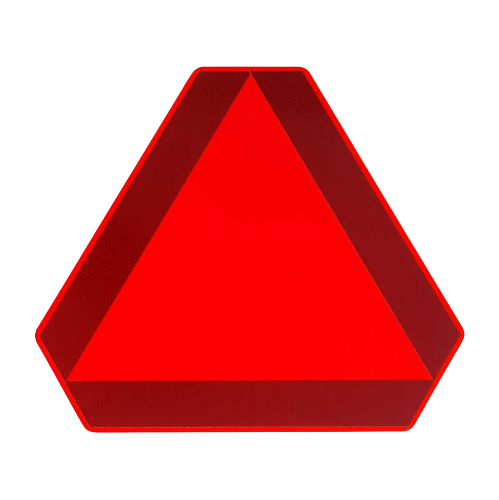 The sign in the picture:
A
is a Construction and Maintenance Traffic Control sign.
B
is found at most intersections and indicates that drivers must yield to other vehicles.
C
is displayed on the rear of slow moving vehicles.
The correct driving rule is: is displayed on the rear of slow moving vehicles. Following standard DMV road rules and practicing defensive driving ensures safety for all road users.
Question 9:
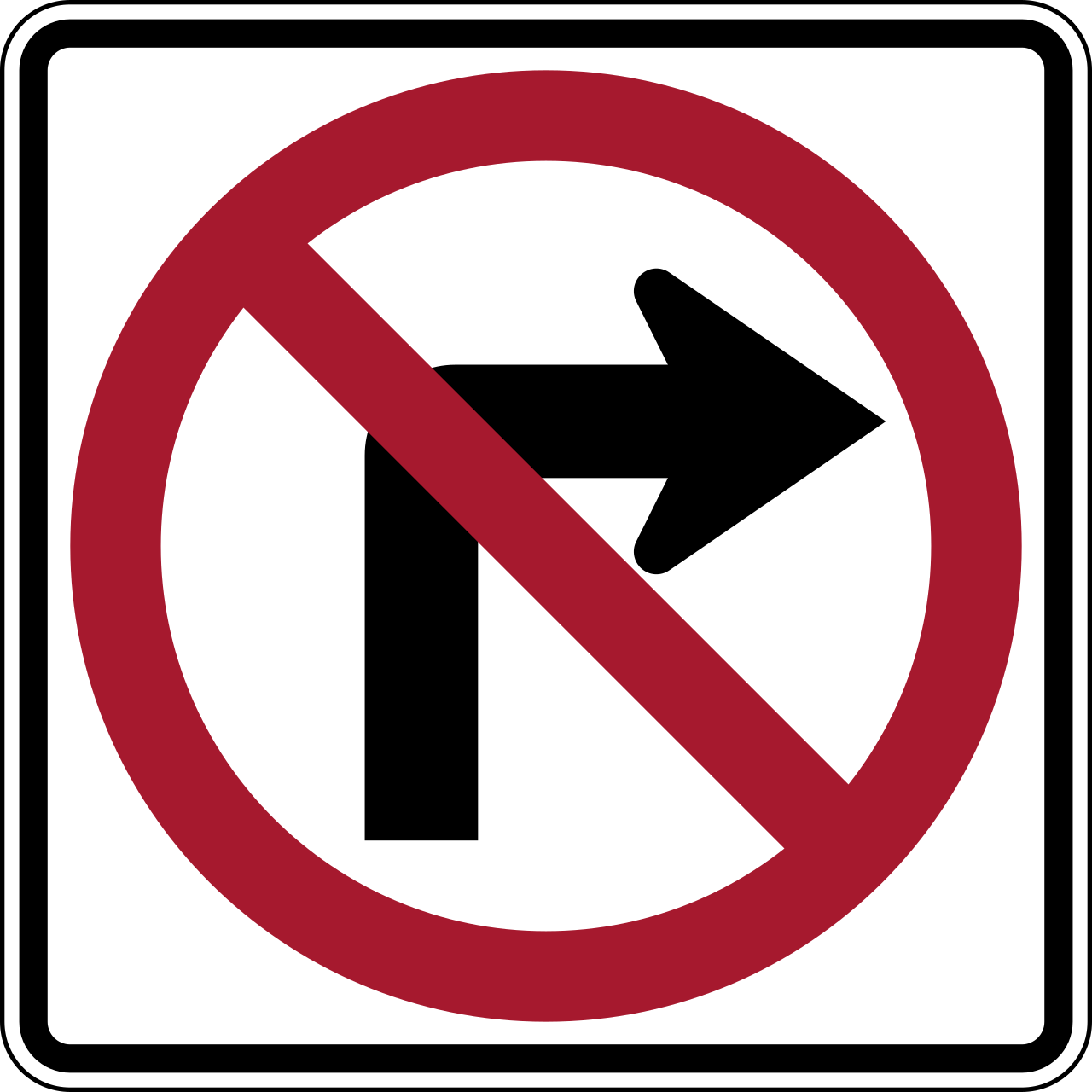 This road sign means:
A
No left turn
B
No right turn
C
No U-turns
This traffic sign indicates: No right turn. Observing and obeying all roadway signs ensures safe traffic flow and legal driving.
Question 10:
Which of the following must you obey over the others?
A
Red light
B
Stop sign
C
Police officer
The correct driving rule is: Police officer. Following standard DMV road rules and practicing defensive driving ensures safety for all road users.
Question 11:
When you see an emergency vehicle with flashing lights behind you, you must:
A
slow down and keep moving.
B
drive to the right edge of the road and slow down.
C
pull over to the right and stop.
D
stop as quickly as you can.
When sharing the road with other vehicles: pull over to the right and stop. Giving large vehicles and vulnerable users adequate clearance prevents dangerous accidents.
Question 12:
If two vehicles arrive at a four-way stop at the same time:
A
both vehicles must stop.
B
the vehicle on the left must yield to the vehicle on the right.
C
the driver on the left must signal the driver on the right to go.
D
the vehicle on the right must yield to the vehicle on the left.
At an uncontrolled intersection or 4-way stop where vehicles arrive at the same time: the vehicle on the left must yield to the vehicle on the right. The driver on the left must always yield to the driver on the right.
Question 13:
If your vehicle has a mechanical problem, you should:
A
signal and pull into the slow lane.
B
stop in your lane and put on your emergency flashers.
C
turn on your hazard lights and pull off the road.
The correct driving rule is: turn on your hazard lights and pull off the road. Following standard DMV road rules and practicing defensive driving ensures safety for all road users.
Question 14:
When you drive into the street from any driveway you:
A
can disregard pedestrians if there is no sidewalk.
B
must drive slowly so approaching vehicles and pedestrians can get out of your way.
C
must honk the horn so approaching vehicles and pedestrians can allow you room.
D
must stop and proceed only when there are no pedestrians or vehicles approaching.
The correct driving rule is: must stop and proceed only when there are no pedestrians or vehicles approaching. Following standard DMV road rules and practicing defensive driving ensures safety for all road users.
Question 15:
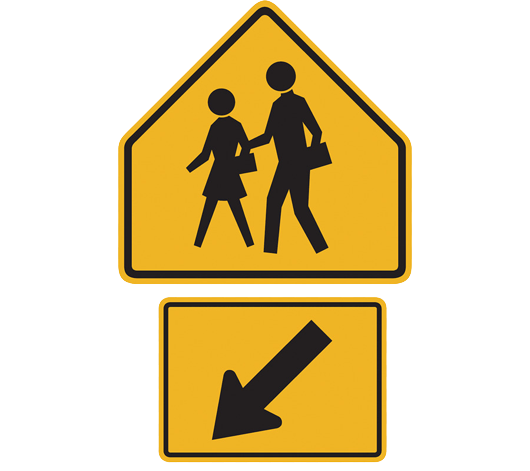 When they approach this sign, drivers must:
A
slow down and watch for children crossing the road.
B
obey signals from crossing guards.
C
stop if necessary.
D
All of the above.
This sign alerts drivers to several mandatory requirements: slow down and watch for children crossing the road, obey signals from crossing guards, stop if necessary. Obeying all posted traffic control instructions is required by law.
Question 16:
You may park or stop along the shoulder of the freeway:
A
if you need to check your smartphone for directions.
B
only if you have an emergency.
C
if no part of your vehicle is on the road.
D
as long as you turn on your emergency flashers.
Under standard parking and curb regulations: only if you have an emergency. Following parking distance clearances keeps roadways unobstructed and emergency lanes accessible.
Question 17:
What can you do to prevent skids on snow and ice?
A
Allow the wheels to keep turning.
B
Brake early and gently.
C
All of the above.
Hazardous road and weather conditions require extra caution: Allow the wheels to keep turning; Brake early and gently. Reducing speed and expanding following distance preserves control.
Question 18:
What should drivers do when the red lights begin to flash?
A
Stop.
B
Yield.
C
Slow down.
The correct driving rule is: stop. Following standard DMV road rules and practicing defensive driving ensures safety for all road users.
Question 19:
What should you do if you see smoke come from under the hood?
A
Call the fire department and then pull off the road and park your vehicle.
B
Pull off the road and park your vehicle. Turn off the ignition, get away from the car and call the fire department.
C
Try to fight the fire yourself.
The correct driving rule is: pull off the road and park your vehicle. Turn off the ignition, get away from the car and call the fire department. Following standard DMV road rules and practicing defensive driving ensures safety for all road users.
Question 20:
When you approach an intersection with a flashing yellow light, you must:
A
come to a complete stop, then proceed.
B
slow and proceed with caution.
C
maintain your normal speed.
According to standard right-of-way regulations: slow and proceed with caution. Yielding appropriately prevents intersection collisions and maintains safe traffic flow.
Question 21:
When changing lanes, you should not:
A
signal your intentions early.
B
check your side and rear view mirrors.
C
use the inside rearview mirror to check for blind spots
D
check to see if other drivers are moving into the same lane.
The correct driving rule is: use the inside rearview mirror to check for blind spots. Following standard DMV road rules and practicing defensive driving ensures safety for all road users.
Question 22:
 This road sign means:
A
Winding road
B
Side road ahead
C
Slippery when wet
This traffic sign indicates: Slippery when wet. Observing and obeying all roadway signs ensures safe traffic flow and legal driving.
Question 23:
BAC is:
A
the acronym for Beer ACcumulation.
B
the number of ounces of alcohol in your blood.
C
the percentage of alcohol in your blood.
Under state DUI and traffic safety laws: the percentage of alcohol in your blood. Alcohol degrades judgment, slows reaction times, and distorts depth perception.