Question 1:
The road is the most slippery:
A
when it first starts to rain.
B
after it rains.
C
All of the above.
For safe speed and stopping control: when it first starts to rain. Adjusting speed to match visibility and road traction prevents loss of steering grip.
Question 2:
 This sign means:
A
No traffic signal ahead
B
Traffic signal ahead
C
Open intersection ahead
This traffic sign indicates: traffic signal ahead. Observing and obeying all roadway signs ensures safe traffic flow and legal driving.
Question 3:
When a pedestrian is crossing a street guided carrying a white cane, drivers must:
A
help the pedestrian cross the street.
B
yield the right of way at corners only.
C
always yield the right-of-way.
Drivers must always yield the right-of-way to pedestrians crossing at intersections and crosswalks: always yield the right-of-way. Stop and allow them to clear the lane safely.
Question 4:
To maintain an adequate 'space cushion' to the front, drivers need to:
A
keep a safe distance between their car and the vehicle in front.
B
The other answers are both correct.
C
control their speed to suit the road and traffic conditions.
The correct driving rule is: The other answers are both correct. Following standard DMV road rules and practicing defensive driving ensures safety for all road users.
Question 5:
When driving behind a motorcycle:
A
allow a following distance of at least 4 motorcycle lengths.
B
allow a following distance of at least 2 car lengths.
C
allow at least 2 seconds of following distance.
D
allow at least 4 seconds of following distance.
Motorcycles can stop rapidly and are easily hidden in vehicle blind spots: allow at least 4 seconds of following distance. Always allow an increased following distance of at least 3 to 4 seconds.
Question 6:
Drugs may interfere with a person’s ability to drive safely:
A
unless they are prescribed by a doctor.
B
even if they are prescribed by a doctor.
C
only when driving at night.
D
only when combined with alcohol.
Under state DUI and traffic safety laws: even if they are prescribed by a doctor. Alcohol degrades judgment, slows reaction times, and distorts depth perception.
Question 7:
Drivers should change lanes:
A
often.
B
as quickly as possible.
C
gradually and carefully.
The correct driving rule is: gradually and carefully. Following standard DMV road rules and practicing defensive driving ensures safety for all road users.
Question 8:
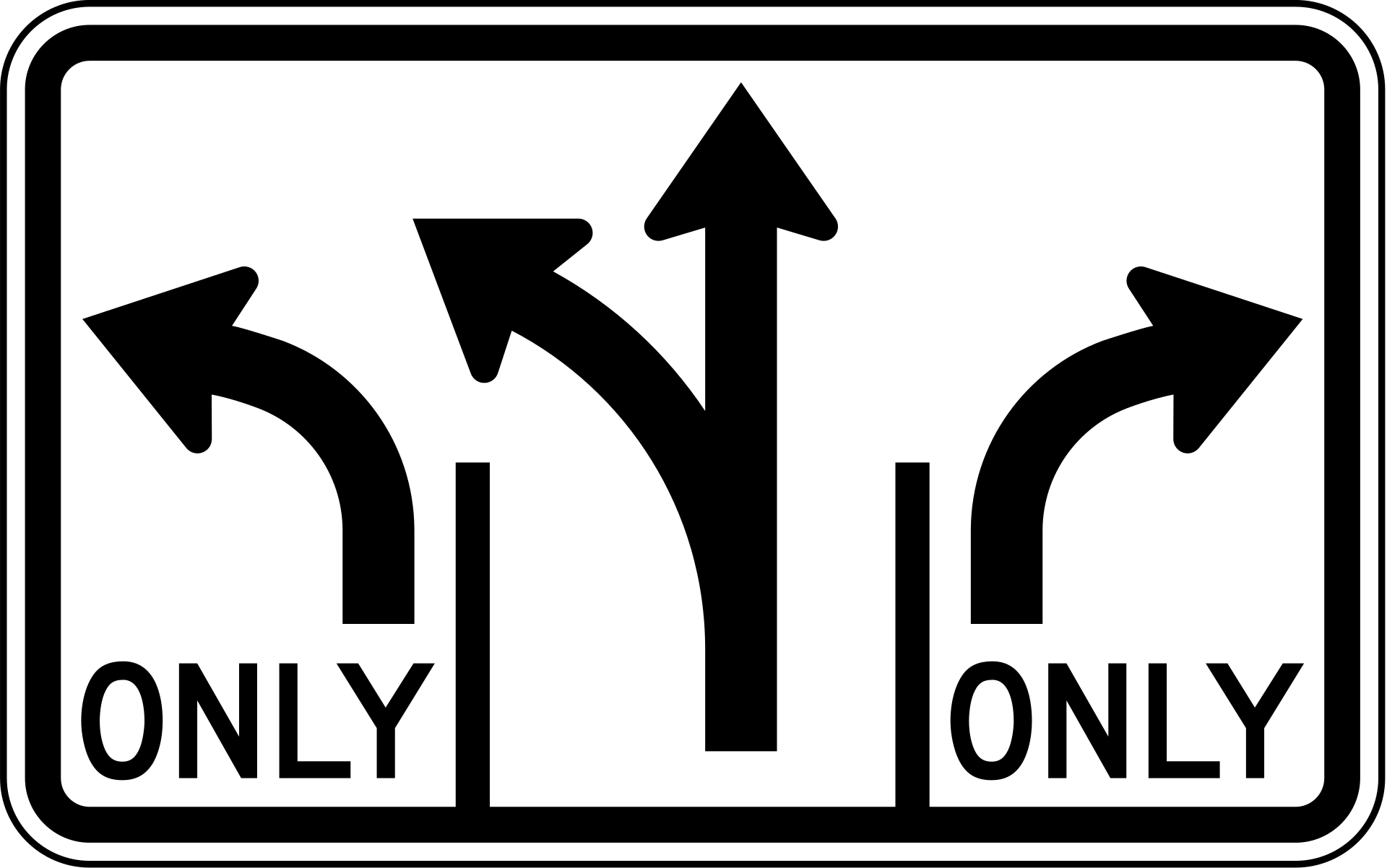 This regulatory sign tells drivers that:
A
traffic in the left lane must turn left at the intersection ahead.
B
all vehicles must turn left immediately.
C
traffic in the right lane must go straight.
This traffic sign indicates: traffic in the left lane must turn left at the intersection ahead. Observing and obeying all roadway signs ensures safe traffic flow and legal driving.
Question 9:
If an approaching driver does not dim the headlights, you should:
A
move your eyes to the left to help avoid the glare of approaching high beams.
B
move your eyes to the right and avoid looking directly at the bright lights.
C
flash your headlights to low beam for a second, then return to high beam.
The correct driving rule is: move your eyes to the right and avoid looking directly at the bright lights. Following standard DMV road rules and practicing defensive driving ensures safety for all road users.
Question 10:
Drivers have to yield to pedestrians:
A
only when the pedestrian is in the crosswalk.
B
only if the pedestrians have a green light.
C
even if the pedestrian is not obeying traffic controls.
The correct driving rule is: even if the pedestrian is not obeying traffic controls. Following standard DMV road rules and practicing defensive driving ensures safety for all road users.
Question 11:
To avoid traction loss from hydroplaning, drivers should:
A
keep a constant speed.
B
apply the brakes as soon as the car starts to skid.
C
slow down.
The correct driving rule is: slow down. Following standard DMV road rules and practicing defensive driving ensures safety for all road users.
Question 12:
To avoid becoming an aggressive driver, you should:
A
drive above the posted speed limit.
B
tailgate the driver in front of you.
C
relax and concentrate on driving.
The correct driving rule is: relax and concentrate on driving. Following standard DMV road rules and practicing defensive driving ensures safety for all road users.
Question 13:
When approaching a construction site, drivers should:
A
accelerate to get out of the way quickly.
B
slow down and adjust their driving manner.
C
honk their horn to alert construction workers of their presence.
The correct driving rule is: slow down and adjust their driving manner. Following standard DMV road rules and practicing defensive driving ensures safety for all road users.
Question 14:
Air bags are meant to _________ seat belts.
A
work with
B
fix
C
replace
The correct driving rule is: work with. Following standard DMV road rules and practicing defensive driving ensures safety for all road users.
Question 15:
When changing lanes, you should:
A
check your mirrors, signal and change lanes.
B
signal, change lanes and check your mirrors.
C
signal, check your mirrors and blind spot in the direction you plan to move, then change lanes.
D
signal and change lanes.
The correct driving rule is: signal, check your mirrors and blind spot in the direction you plan to move, then change lanes. Following standard DMV road rules and practicing defensive driving ensures safety for all road users.
Question 16:
When making a turn, drivers must _____ their speed.
A
reduce
B
maintain
C
increase
D
double
For safe speed and stopping control: reduce. Adjusting speed to match visibility and road traction prevents loss of steering grip.
Question 17:
Your vehicles braking distance will be much longer:
A
when driving at night.
B
on interstate highways.
C
on wet, icy or gravel roads.
D
All of the above.
For safe speed and stopping control: on wet, icy or gravel roads. Adjusting speed to match visibility and road traction prevents loss of steering grip.
Question 18:
Which of the following drugs could affect your ability to drive?
A
A cold remedy.
B
Marijuana.
C
All of the above.
Alcohol and impairing substances degrade all critical driving functions: A cold remedy; Marijuana. Driving while impaired carries severe criminal and safety penalties.
Question 19:
 Signs with orange backgrounds mean:
A
railroad crossing.
B
side road ahead.
C
road construction site.
The correct driving rule is: road construction site. Following standard DMV road rules and practicing defensive driving ensures safety for all road users.
Question 20:
A flashing red traffic light:
A
has the same meaning as a yield sign.
B
is used to indicate a pedestrian crossing.
C
has the same meaning as a stop sign.
D
indicates that you should drive with caution.
The correct driving rule is: has the same meaning as a stop sign. Following standard DMV road rules and practicing defensive driving ensures safety for all road users.
Question 21:
Which shape is a speed limit sign?
A
Round
B
Pentagon
C
Vertical rectangle
For safe speed and stopping control: Vertical rectangle. Adjusting speed to match visibility and road traction prevents loss of steering grip.
Question 22:
To enter a gap in traffic while driving on a highway:
A
check behind, then watch the vehicle ahead.
B
speed up and let vehicles make way.
C
watch only the vehicles behind the gap.
Defensive driving guidelines state that: check behind, then watch the vehicle ahead. Anticipating road hazards and communicating maneuvers keeps traffic predictable and safe.
Question 23:
When driving on roads that may be slippery:
A
do not make any sudden changes in direction or speed.
B
always drive at the highest speed allowed.
C
use cruise control to maintain a steady speed.
D
reduce your following distance.
For safe speed and stopping control: do not make any sudden changes in direction or speed. Adjusting speed to match visibility and road traction prevents loss of steering grip.
Question 24:
Which signs have black letters on a yellow or orange background?
A
Warning signs (diamond)
B
Regulatory signs (vertical rectangle)
C
Railroad advance warning signs (round)
The correct driving rule is: Warning signs (diamond). Following standard DMV road rules and practicing defensive driving ensures safety for all road users.
Question 25:
When driving in fog, drivers should use:
A
low beam headlights.
B
parking lights.
C
high beam headlights.
Always use low-beam headlights in fog, heavy rain, or snow. High beams reflect off moisture droplets and bounce glare back into your eyes.