Question 1:
Are drivers allowed to exceed the speed limit to pass other vehicles?
A
Yes, but only by 10 MPH or less.
B
No.
C
Yes, but only if they drive with caution.
For safe speed and stopping control: No. Adjusting speed to match visibility and road traction prevents loss of steering grip.
Question 2:
The driver and front-seat passengers __ or older can each face a fine if they fail to wear a seat belt.
A
16
B
21
C
18
D
14
The correct driving rule is: 16. Following standard DMV road rules and practicing defensive driving ensures safety for all road users.
Question 3:
You must signal a turn or lane change at least ___feet ahead.
A
100
B
10
C
50
D
200
State laws require signaling your intention: 100. Signal at least 100 feet before making a turn or changing lanes.
Question 4:
 This sign means:
A
U-turns are not allowed.
B
Parking is not allowed.
C
No parking on pavement.
This traffic sign indicates: Parking is not allowed. Observing and obeying all roadway signs ensures safe traffic flow and legal driving.
Question 5:
You reach an intersection that is not controlled at the same time as a driver on your right, and both of you prepare to go straight. Who has the right-of-way?
A
You.
B
No one.
C
The other driver.
According to standard right-of-way regulations: The other driver. Yielding appropriately prevents intersection collisions and maintains safe traffic flow.
Question 6:
What is the first thing you should do if your wheels move off the pavement?
A
Pull the steering wheel back.
B
Pull over to the right and sound your horn to warn the other drivers.
C
Ease your foot off the gas pedal and brake gently.
The correct driving rule is: Ease your foot off the gas pedal and brake gently. Following standard DMV road rules and practicing defensive driving ensures safety for all road users.
Question 7:
Which of the following is NOT correct. When making a turn, drivers should:
A
not cause a pedestrian to stop.
B
give a turn signal for at least 10 feet before you make the turn.
C
slow down to a safe turning speed.
D
always scan for pedestrians before starting a left turn.
The correct driving rule is: give a turn signal for at least 10 feet before you make the turn. Following standard DMV road rules and practicing defensive driving ensures safety for all road users.
Question 8:
An edge line that angles toward the center of the road indicates that:
A
the road is narrower ahead.
B
there’s a narrow bridge ahead.
C
you must turn right.
The correct driving rule is: the road is narrower ahead. Following standard DMV road rules and practicing defensive driving ensures safety for all road users.
Question 9:
Two motorcyclists are allowed to:
A
ride side-by-side in a single lane.
B
share the lane with another vehicle.
C
race on empty roads.
The correct driving rule is: ride side-by-side in a single lane. Following standard DMV road rules and practicing defensive driving ensures safety for all road users.
Question 10:
You can not park within __ feet of a railroad crossing.
A
25
B
50
C
10
D
30
Under standard parking and curb regulations: 50. Following parking distance clearances keeps roadways unobstructed and emergency lanes accessible.
Question 11:
Are bicyclists required to obey traffic laws and signs?
A
No, bicyclists are considered pedestrians when it comes to the rules of the road.
B
Yes.
C
Yes, but only if they are riding in a bicycle lane.
The correct driving rule is: Yes. Following standard DMV road rules and practicing defensive driving ensures safety for all road users.
Question 12:
You are driving at 50 MPH on a slippery expressway. The posted speed limit is 55 MPH. A police officer could ticket you for:
A
driving below the speed limit.
B
a speed “not reasonable” for the conditions.
C
driving on a slippery road.
D
None of the above.
For safe speed and stopping control: a speed “not reasonable” for the conditions. Adjusting speed to match visibility and road traction prevents loss of steering grip.
Question 13:
Under Leandra’s Law, first-time offenders driving while intoxicated with a child less than 16 years old in the vehicle may be charged with a class E felony punishable by up to ____________ in State prison.
A
one year
B
three years
C
four years
D
18 months
In nearly all US states, drivers age 21 and older are legally intoxicated with a Blood Alcohol Concentration (BAC) of 0.08% or higher.
Question 14:
What color are back fog lights?
A
Amber or red.
B
Amber.
C
Red.
D
White.
For safe speed and stopping control: Red. Adjusting speed to match visibility and road traction prevents loss of steering grip.
Question 15:
Under the New York State occupant restraint law:
A
seat belt use is required in taxis and emergency vehicles.
B
the driver is responsible for making sure that each passenger under 16 are buckled up when required.
C
if a vehicle is driven by a person with a Class-DJ learner permit, passengers 16 or older in must wear a seat belt.
D
None of the above.
The correct driving rule is: the driver is responsible for making sure that each passenger under 16 are buckled up when required. Following standard DMV road rules and practicing defensive driving ensures safety for all road users.
Question 16:
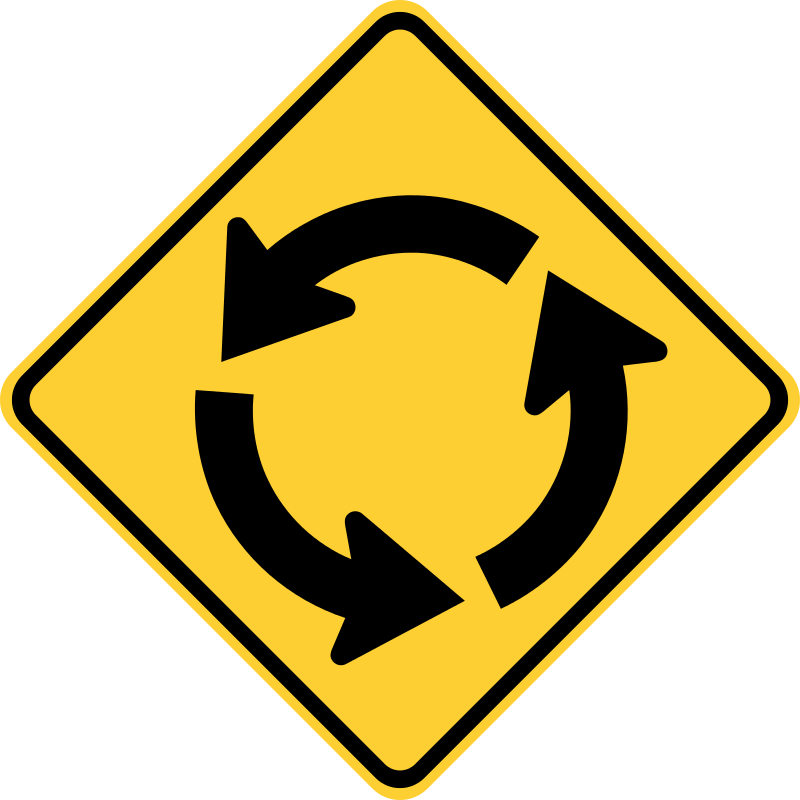 This road sign:
A
warns drivers of a sharp turn left. Drivers should slow their speed and keep to the left.
B
provides an advance notice of a roundabout.
C
warns drivers that U-turns are not permitted.
D
is a no-right-turns sign.
This traffic sign indicates: provides an advance notice of a roundabout. Observing and obeying all roadway signs ensures safe traffic flow and legal driving.
Question 17:
If an approaching driver does not dim the headlights, you should:
A
move your eyes to the left to help avoid the glare of approaching high beams.
B
move your eyes to the right and avoid looking directly at the bright lights.
C
flash your headlights to low beam for a second, then return to high beam.
The correct driving rule is: move your eyes to the right and avoid looking directly at the bright lights. Following standard DMV road rules and practicing defensive driving ensures safety for all road users.
Question 18:
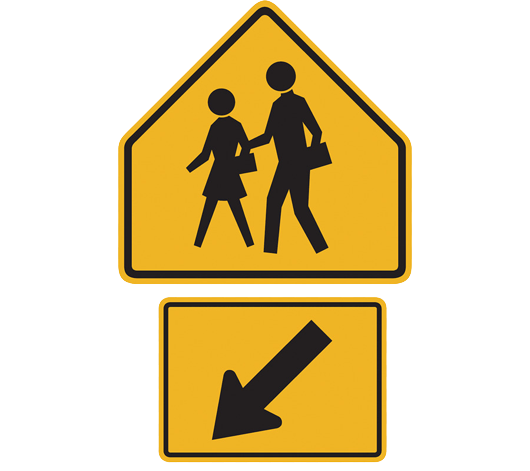 When you approach this sign, you must:
A
stop if necessary.
B
watch for workers crossing the road.
C
None of the above.
This traffic sign indicates: stop if necessary. Observing and obeying all roadway signs ensures safe traffic flow and legal driving.
Question 19:
 This road sign means:
A
Vehicles may only travel in the center lane.
B
The center lane is shared for left turns in both directions of travel.
C
The center lane in both directions of travel will soon turn left.
This traffic sign indicates: The center lane is shared for left turns in both directions of travel. Observing and obeying all roadway signs ensures safe traffic flow and legal driving.
Question 20:
When you prepare to make a left turn from a one-way road into a one-way road, you must:
A
move into the right lane, or to the left side of a single lane.
B
move into the right lane, or to the right side of a single lane.
C
move into the left lane, or to the left side of a single lane.
The correct driving rule is: move into the left lane, or to the left side of a single lane. Following standard DMV road rules and practicing defensive driving ensures safety for all road users.