Question 1:
 This sign warns drivers of:
A
low clearance.
B
a narrow bridge ahead.
C
a low place in the road.
This traffic sign indicates: a narrow bridge ahead. Observing and obeying all roadway signs ensures safe traffic flow and legal driving.
Question 2:
 This road sign means:
A
You must turn right
B
Railroad crossing
C
Crossroad ahead
D
4-way stop
This traffic sign indicates: Crossroad ahead. Observing and obeying all roadway signs ensures safe traffic flow and legal driving.
Question 3:
Drivers must yield for emergency vehicles:
A
Never.
B
only when other vehicles yield.
C
when they see a flashing red or blue light or hear a siren.
D
None of the above.
The correct driving rule is: when they see a flashing red or blue light or hear a siren. Following standard DMV road rules and practicing defensive driving ensures safety for all road users.
Question 4:
What should you do if your vision through the windshield becomes blocked?
A
Pull your vehicle off the road and park it.
B
Turn on your emergency lights.
C
Open the side window so you can see.
D
All of the above.
All of the listed points are essential driving requirements: Pull your vehicle off the road and park it; Turn on your emergency lights; Open the side window so you can see. Practicing each ensures compliance with DMV safety laws.
Question 5:
A flashing red light means:
A
The same as a STOP sign.
B
The light will soon change to steady red.
C
Drive with caution.
When an emergency vehicle approaches with flashing lights or sirens, you must safely pull over to the right curb and stop completely until it passes.
Question 6:
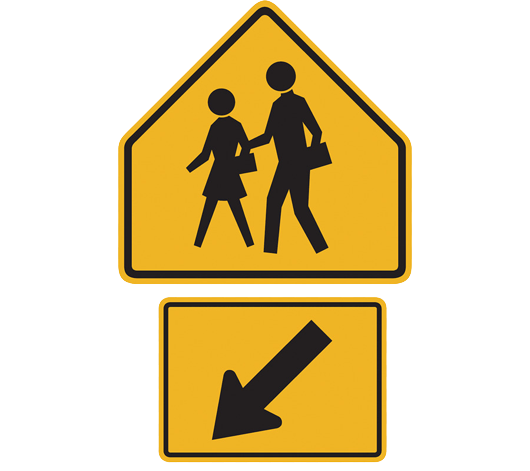 At a school crossing, drivers should:
A
always stop, whether there’s a stop sign or not.
B
always sound their horn and stay alert.
C
watch for children and be ready to stop.
The correct driving rule is: watch for children and be ready to stop. Following standard DMV road rules and practicing defensive driving ensures safety for all road users.
Question 7:
To pass a bicyclist traveling in the same direction on a two-lane road without bicycle lanes, you should:
A
continue driving straight, it is the bicyclist’s responsibility to get out of your way.
B
slow down and wait until there is no oncoming traffic, then pass the bicyclist leaving him or her sufficient space.
C
honk at the bicyclist to let him or her know you are about to pass.
D
not pass the bicyclist until you come to a traffic signal or stop sign.
State laws require motorists to provide a safe clearance buffer: slow down and wait until there is no oncoming traffic, then pass the bicyclist leaving him or her sufficient space. Allow at least 3 feet of space when overtaking a bicyclist.
Question 8:
 This sign indicates that:
A
the highest safe speed drivers should travel around the curve ahead is 25 MPH.
B
the safe speed around the curve ahead is at least 25 MPH.
C
drivers may not turn right if traveling at 25 MPH or less.
This traffic sign indicates: the highest safe speed drivers should travel around the curve ahead is 25 MPH. Observing and obeying all roadway signs ensures safe traffic flow and legal driving.
Question 9:
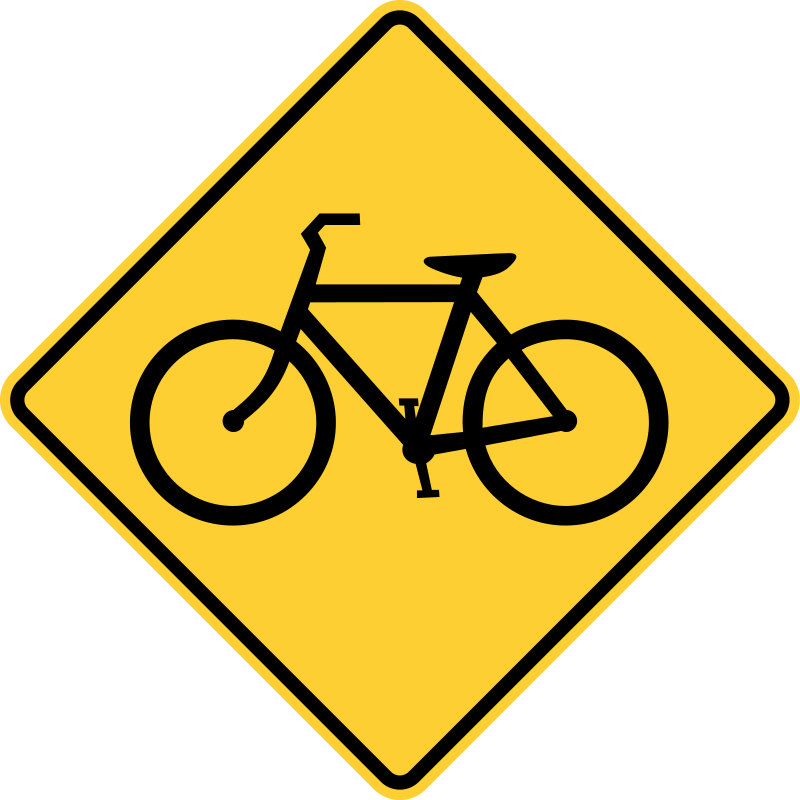 This road sign means:
A
Yield right-of-way to bicycles
B
Bicycles cross or ride beside traffic
C
Yield to motorcyles, but not to bicycles
D
Bicycles have the same rights as other vehicles
This traffic sign indicates: Bicycles cross or ride beside traffic. Observing and obeying all roadway signs ensures safe traffic flow and legal driving.
Question 10:
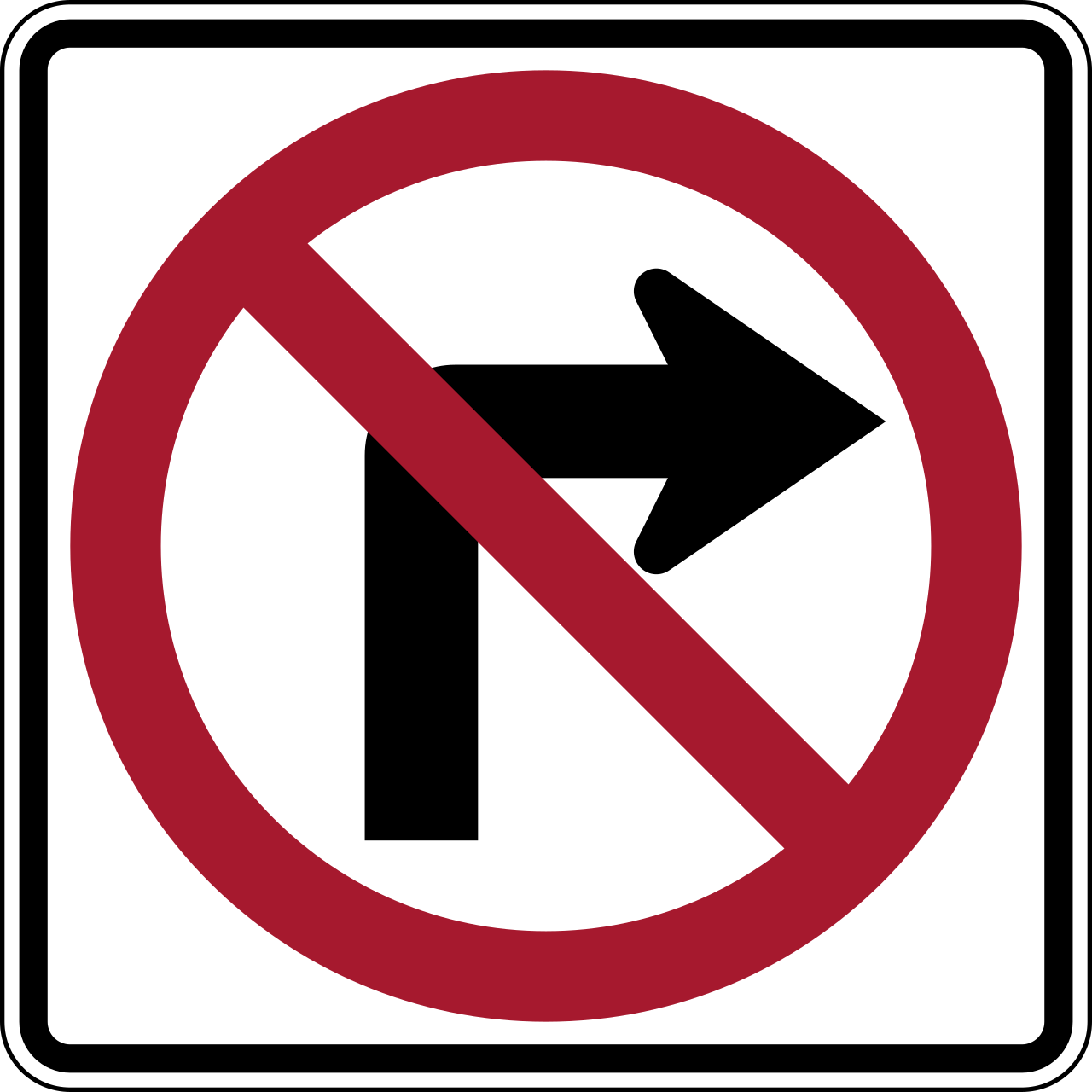 This road sign means:
A
No left turn
B
No right turn
C
No U-turns
This traffic sign indicates: No right turn. Observing and obeying all roadway signs ensures safe traffic flow and legal driving.
Question 11:
Implied Consent Law means that by driving a motor vehicle you have given your consent to:
A
keep your vehicle in safe operating condition.
B
appear in court if arrested for a traffic violation.
C
avoid implicit hazards while driving.
D
take a breath, blood, or urine test if arrested for driving under the influence.
Under the Implied Consent Law, operating a motor vehicle means you agree to chemical BAC testing (breath, blood, or urine) upon lawful arrest by a police officer. Refusal results in mandatory license suspension.
Question 12:
A vehicle that enters a road from a driveway:
A
has the right-of-way.
B
must yield to traffic approaching from the right, while it has the right-of-way over vehicles approaching from the left.
C
must stop and yield the right-of-way to traffic on the roadway and to pedestrians.
The correct driving rule is: must stop and yield the right-of-way to traffic on the roadway and to pedestrians. Following standard DMV road rules and practicing defensive driving ensures safety for all road users.
Question 13:
At a light rail intersection, you should always:
A
share the road with pedestrians and bicyclists.
B
look both ways before crossing the tracks.
C
be alert and obey all traffic signals.
D
All of the above.
Safe navigation at intersections requires following all established rules: share the road with pedestrians and bicyclists; look both ways before crossing the tracks; be alert and obey all traffic signals. Always yield right-of-way properly to prevent collisions.
Question 14:
If an approaching driver does not dim the headlights, you should:
A
move your eyes to the left to help avoid the glare of approaching high beams.
B
move your eyes to the right and avoid looking directly at the bright lights.
C
flash your headlights to low beam for a second, then return to high beam.
The correct driving rule is: move your eyes to the right and avoid looking directly at the bright lights. Following standard DMV road rules and practicing defensive driving ensures safety for all road users.
Question 15:
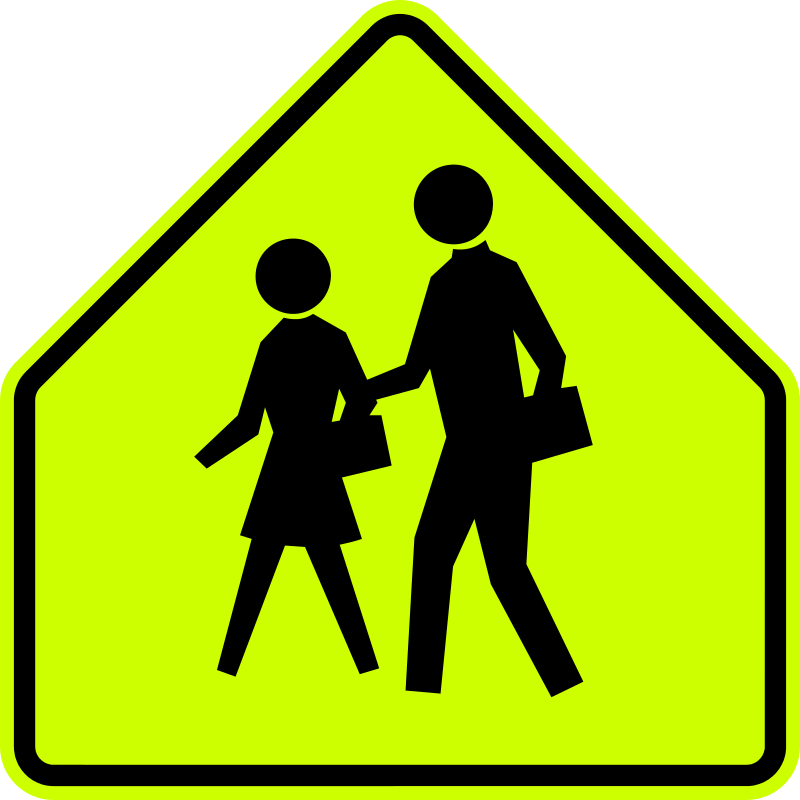 This warning sign means:
A
You are approaching a school
B
Watch out for children crossing the street
C
Slow down, drive with caution and watch for children
D
All of the above.
This sign alerts drivers to several mandatory requirements: You are approaching a school, Watch out for children crossing the street, Slow down, drive with caution and watch for children. Obeying all posted traffic control instructions is required by law.
Question 16:
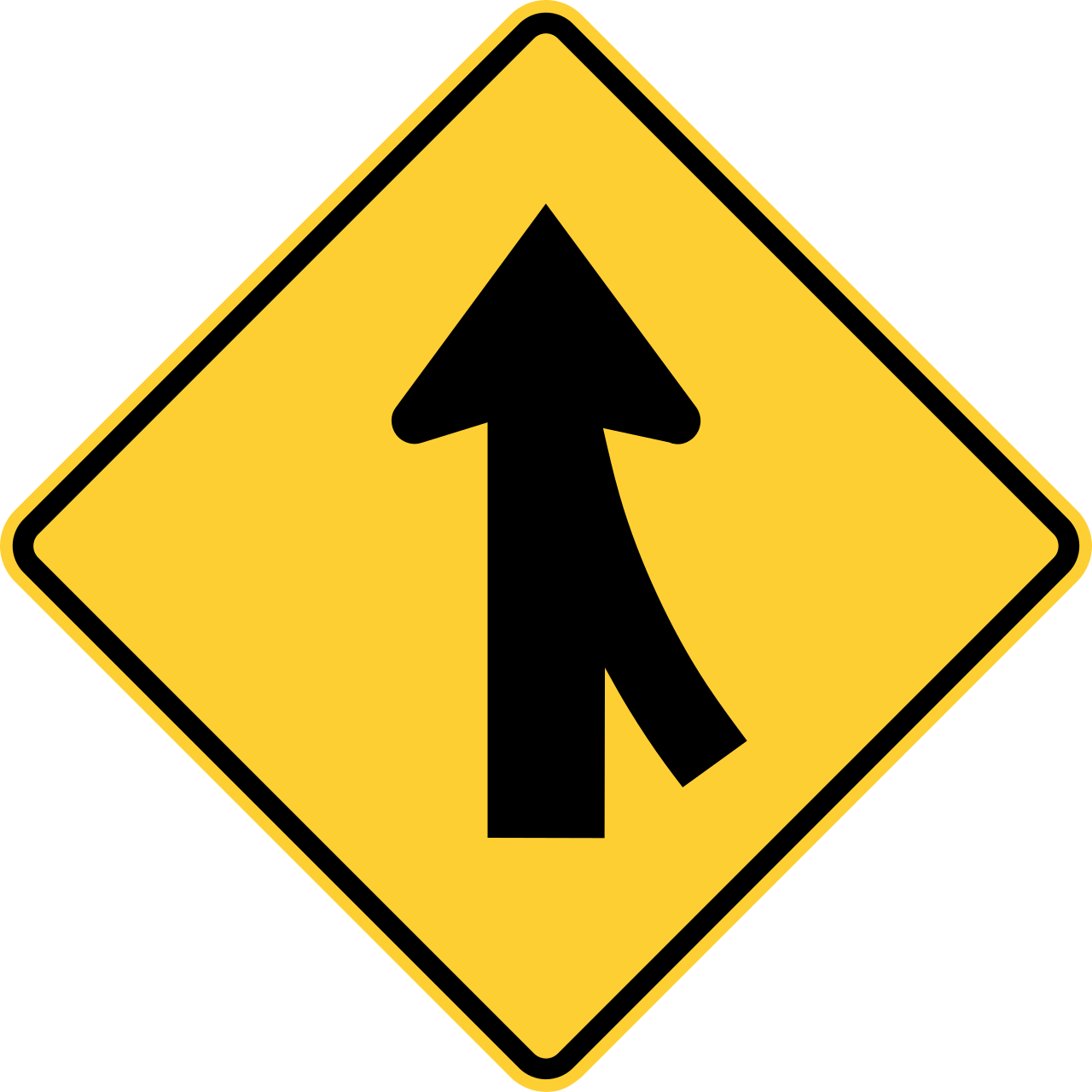 This road sign means:
A
Merging traffic from the right
B
Sharp curves ahead
C
Intersection ahead
This traffic sign indicates: Merging traffic from the right. Observing and obeying all roadway signs ensures safe traffic flow and legal driving.
Question 17:
What should you do as you prepare to turn right at an intersection?
A
Honk your horn.
B
Yield to bicyclists coming from the opposite direction.
C
Signal your turn, check for bicyclists, and do not turn directly in front of a bicyclist.
According to standard right-of-way regulations: signal your turn, check for bicyclists, and do not turn directly in front of a bicyclist. Yielding appropriately prevents intersection collisions and maintains safe traffic flow.
Question 18:
 This road sign means:
A
A road joins from the left
B
You must bear either right or left
C
A 3-way intersection is ahead
This traffic sign indicates: you must bear either right or left. Observing and obeying all roadway signs ensures safe traffic flow and legal driving.
Question 19:
You are stopped at a stop sign and you are going to go straight through the intersection. A car on the cross road has stopped at a stop sign on your right and is going to go straight. Who has the right-of-way?
A
Whoever enters the intersection first.
B
You.
C
The car on your right.
According to standard right-of-way regulations: The car on your right. Yielding appropriately prevents intersection collisions and maintains safe traffic flow.
Question 20:
A yellow arrow means:
A
Do not go in the direction of the arrow.
B
If you intend to turn in the direction of the arrow, be prepared to stop.
C
The same as a steady yellow light.
The correct driving rule is: If you intend to turn in the direction of the arrow, be prepared to stop. Following standard DMV road rules and practicing defensive driving ensures safety for all road users.
Question 21:
 This road sign means:
A
Slow down, slippery when wet
B
Detour ahead
C
Road curves ahead
This traffic sign indicates: slow down, slippery when wet. Observing and obeying all roadway signs ensures safe traffic flow and legal driving.
Question 22:
Which of the following is true about the Anti-Locking Brake System?
A
It prevents skidding.
B
It allows drivers to steer during an emergency braking situation.
C
All of the above.
All of the listed points are essential driving requirements: It prevents skidding; It allows drivers to steer during an emergency braking situation. Practicing each ensures compliance with DMV safety laws.
Question 23:
A flashing yellow light means:
A
Merging traffic ahead
B
Pedestrian crossing
C
Come to a full stop
D
Proceed with caution
According to standard right-of-way regulations: proceed with caution. Yielding appropriately prevents intersection collisions and maintains safe traffic flow.
Question 24:
Drinking alcohol while taking drugs:
A
reduces the effects of the alcohol.
B
reduces the effects of the drug or medicine.
C
has no effect, they are different substances.
D
could multiply the effects of the alcohol.
Under state DUI and traffic safety laws: could multiply the effects of the alcohol. Alcohol degrades judgment, slows reaction times, and distorts depth perception.
Question 25:
When an aggressive driver confronts you, you should:
A
Try to move away safely.
B
Remain calm and relaxed.
C
All of the above.
All of the listed points are essential driving requirements: Try to move away safely; Remain calm and relaxed. Practicing each ensures compliance with DMV safety laws.
Question 26:
Oregon law restricts cell phone use while driving. In what way?
A
Drivers 18 and older must use a hands-free device.
B
Drivers 18 and older are not allowed to text.
C
Drivers under 18 are not allowed to text or talk.
D
All of the above.
All of the listed points are essential driving requirements: Drivers 18 and older must use a hands-free device; Drivers 18 and older are not allowed to text; Drivers under 18 are not allowed to text or talk. Practicing each ensures compliance with DMV safety laws.
Question 27:
This sign indicates:
A
Winding road
B
Merging traffic
C
Divided highway ends
This traffic sign indicates: Merging traffic. Observing and obeying all roadway signs ensures safe traffic flow and legal driving.
Question 28:
Your BAC depends on:
A
how fit you are.
B
the type of beverage you drink.
C
the amount of alcohol you drink.
Under state DUI and traffic safety laws: the amount of alcohol you drink. Alcohol degrades judgment, slows reaction times, and distorts depth perception.
Question 29:
Unlike passenger cars, trucks have blind spots:
A
on the right.
B
directly behind them.
C
on the front.
The correct driving rule is: directly behind them. Following standard DMV road rules and practicing defensive driving ensures safety for all road users.
Question 30:
When approaching a railroad crossing drivers should:
A
slow down.
B
be ready to stop.
C
look for a train.
D
All of the above.
All of the listed points are essential driving requirements: slow down; be ready to stop; look for a train. Practicing each ensures compliance with DMV safety laws.
Question 31:
 What does this road sign indicate?
A
Hospital service
B
Area reserved for people with disabilities
C
Interstate highway
This traffic sign indicates: Hospital service. Observing and obeying all roadway signs ensures safe traffic flow and legal driving.
Question 32:
 A flashing yellow light:
A
warns drivers to proceed with caution.
B
is used at dangerous intersections.
C
All of the above.
Safe navigation at intersections requires following all established rules: warns drivers to proceed with caution; is used at dangerous intersections. Always yield right-of-way properly to prevent collisions.
Question 33:
A red traffic sign means?
A
Construction warning.
B
Railroad crossing.
C
Stop.
This traffic sign indicates: stop. Observing and obeying all roadway signs ensures safe traffic flow and legal driving.
Question 34:
This sign means:
A
A road crosses the main highway ahead.
B
The divided highway on which drivers are traveling ends ahead.
C
Drivers are coming to a point where another traffic lane joins the one they are on.
This traffic sign indicates: drivers are coming to a point where another traffic lane joins the one they are on. Observing and obeying all roadway signs ensures safe traffic flow and legal driving.
Question 35:
 What does the flashing signal in the picture indicate?
A
The same thing as a stop sign.
B
Pedestrians should finish crossing the street if started.
C
Pedestrians should start crossing the street.
State laws require signaling your intention: pedestrians should finish crossing the street if started. Signal at least 100 feet before making a turn or changing lanes.