Question 1:
If a traffic light is broken or not functioning you should:
A
proceed as you normally would.
B
stop and wait for a licensed traffic technician to arrive.
C
stop and wait for it to turn green.
D
continue as if it was a four-way stop sign.
The correct driving rule is: continue as if it was a four-way stop sign. Following standard DMV road rules and practicing defensive driving ensures safety for all road users.
Question 2:
What should you do in case of a brake failure?
A
Pull off the road into an open space, if available.
B
Apply the parking brake slowly.
C
All of the above.
All of the listed points are essential driving requirements: Pull off the road into an open space, if available; Apply the parking brake slowly. Practicing each ensures compliance with DMV safety laws.
Question 3:
Regulation signs normally are:
A
white triangles.
B
green rectangles.
C
white rectangles.
The correct driving rule is: white rectangles. Following standard DMV road rules and practicing defensive driving ensures safety for all road users.
Question 4:
When making a right turn on a green light, drivers must:
A
yield to pedestrians.
B
stop and look for oncoming traffic.
C
maintain normal driving speed.
D
increase their speed.
According to standard right-of-way regulations: yield to pedestrians. Yielding appropriately prevents intersection collisions and maintains safe traffic flow.
Question 5:
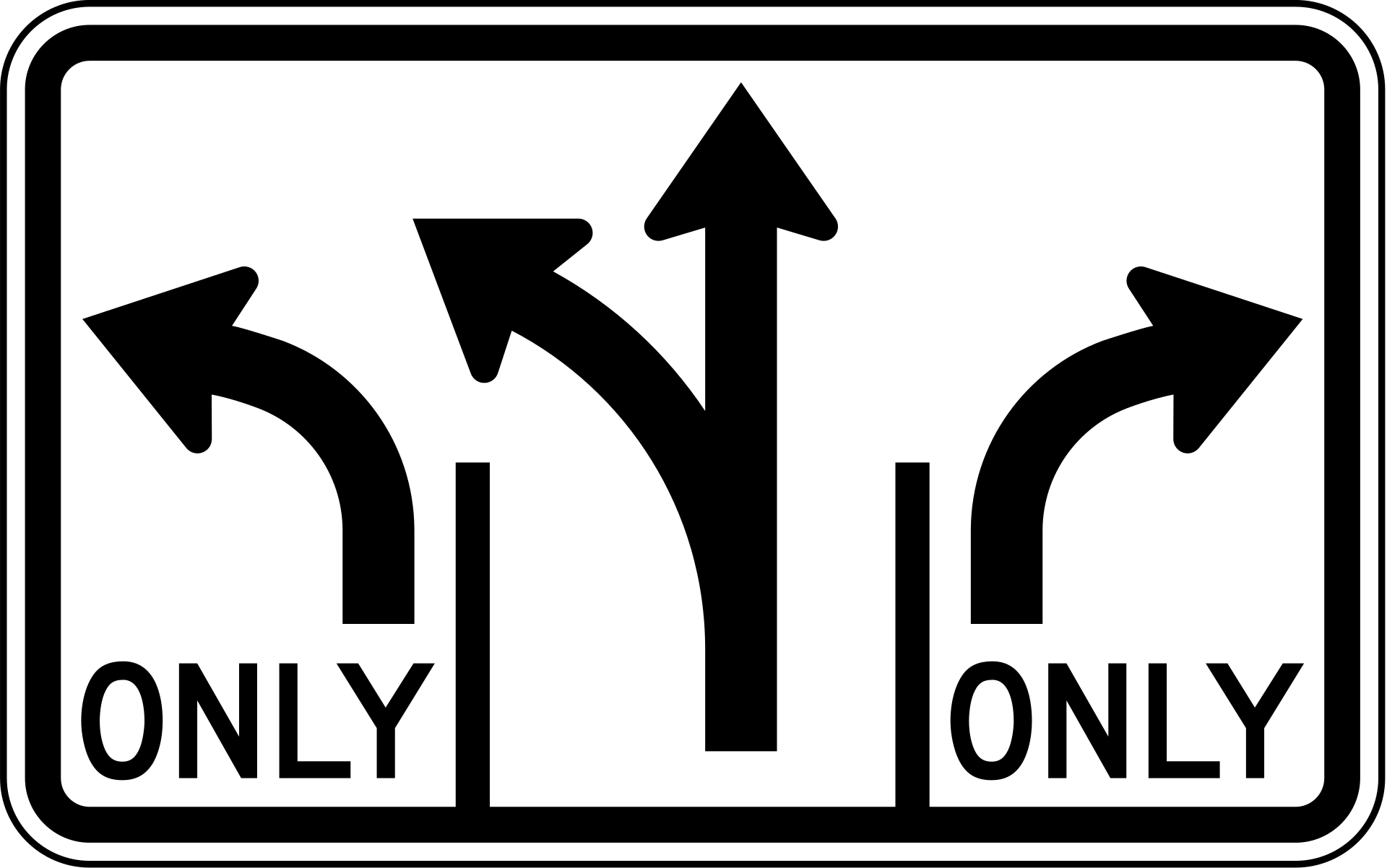 These pavement markings tell you that at the intersection ahead:
A
you can only turn right from the center lane.
B
the center lane mergers into one lane.
C
center lane traffic may go straight or turn left.
D
center lane traffic must turn left.
According to standard right-of-way regulations: center lane traffic may go straight or turn left. Yielding appropriately prevents intersection collisions and maintains safe traffic flow.
Question 6:
In Pennsylvania the top major crash type for 16 year old drivers is:
A
driving in reverse on a side street.
B
crashing into the vehicle ahead.
C
crashing into a wall.
D
single vehicle/run-off-the-road.
The correct driving rule is: single vehicle/run-off-the-road. Following standard DMV road rules and practicing defensive driving ensures safety for all road users.
Question 7:
When driving on slick roads, drivers should:
A
accelerate quickly.
B
take turns more slowly.
C
use alternate routes.
D
drive as they would on dry roads.
The correct driving rule is: take turns more slowly. Following standard DMV road rules and practicing defensive driving ensures safety for all road users.
Question 8:
 A flashing red light:
A
is used at dangerous intersections.
B
means the same thing as a stop sign.
C
All of the above.
Safe navigation at intersections requires following all established rules: is used at dangerous intersections; means the same thing as a stop sign. Always yield right-of-way properly to prevent collisions.
Question 9:
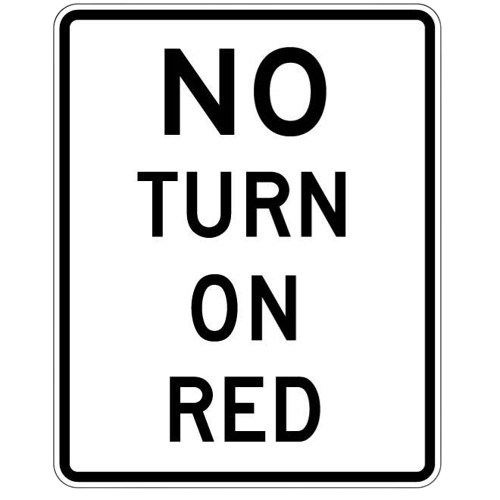 This sign tells drivers:
A
they must wait for the traffic signal to turn green before turning right or left.
B
they may not turn right or left during the red light.
C
All of the above.
This sign alerts drivers to several mandatory requirements: they must wait for the traffic signal to turn green before turning right or left, they may not turn right or left during the red light. Obeying all posted traffic control instructions is required by law.
Question 10:
Road signs that point out scenic areas and parks are:
A
brown and white.
B
black and orange.
C
green and white.
The correct driving rule is: brown and white. Following standard DMV road rules and practicing defensive driving ensures safety for all road users.
Question 11:
 This road sign means:
A
Stop before turning right
B
4-way stop ahead
C
Lane closed for traffic
D
There is a traffic signal ahead
This traffic sign indicates: There is a traffic signal ahead. Observing and obeying all roadway signs ensures safe traffic flow and legal driving.
Question 12:
The law gives _______ the right of way at intersections.
A
drivers going straight
B
no one
C
drivers turning right
D
drivers turning left
According to standard right-of-way regulations: no one. Yielding appropriately prevents intersection collisions and maintains safe traffic flow.
Question 13:
People under 16 years of age who use a false identification card to buy alcohol will:
A
receive a driving suspension that starts on their 16th birthday.
B
never be able to take the driver’s exam.
C
receive a driving suspension that starts on their 21st birthday.
D
be forced to attend an Alcohol Education class.
Under state DUI and traffic safety laws: receive a driving suspension that starts on their 16th birthday. Alcohol degrades judgment, slows reaction times, and distorts depth perception.
Question 14:
To reduce your risk of being involved in a traffic crash, the most effective thing you can do is:
A
Only driving between 11:00 AM and 4:00 PM
B
Limiting your driving to week days.
C
Wearing your seat belt.
D
Driving in the right lane on multi-lane highways.
The correct driving rule is: Wearing your seat belt. Following standard DMV road rules and practicing defensive driving ensures safety for all road users.
Question 15:
You reach an intersection controlled by a stop sign, and can’t get a good view of cross-street traffic when you stop behind the white top bar painted on the pavement. You should:
A
wait until the fastest vehicles have passed, then proceed.
B
pull forward slowly, check for traffic and pedestrians, and proceed when clear.
C
check for traffic on the right, then proceed.
D
sound your horn before proceeding.
According to standard right-of-way regulations: pull forward slowly, check for traffic and pedestrians, and proceed when clear. Yielding appropriately prevents intersection collisions and maintains safe traffic flow.
Question 16:
At a stop sign there is no stop line, you must stop:
A
before you enter the intersection.
B
before you enter the crosswalk.
C
after you enter the crosswalk.
The correct driving rule is: before you enter the crosswalk. Following standard DMV road rules and practicing defensive driving ensures safety for all road users.
Question 17:
A flashing yellow traffic signal means:
A
Slow down and be alert at the upcoming intersection.
B
The same thing as a stop sign.
C
Stop and proceed when a green light appears.
D
No right turn.
This traffic sign indicates: slow down and be alert at the upcoming intersection. Observing and obeying all roadway signs ensures safe traffic flow and legal driving.
Question 18:
 A sign with this shape means:
A
You must yield the right-of-way
B
No passing zone
C
Right curve ahead
D
Railroad crossing
The correct driving rule is: No passing zone. Following standard DMV road rules and practicing defensive driving ensures safety for all road users.