Question 1:
A diamond-shaped sign is a:
A
school zone sign.
B
warning sign.
C
regulatory sign.
The correct driving rule is: warning sign. Following standard DMV road rules and practicing defensive driving ensures safety for all road users.
Question 2:
You are approaching a railroad crossing and the crossing signals are flashing. You should:
A
look for a train, then speed up.
B
slow down and look for a train.
C
do what the approaching vehicle does.
D
stop and look for a train.
The correct driving rule is: stop and look for a train. Following standard DMV road rules and practicing defensive driving ensures safety for all road users.
Question 3:
If you suddenly have no control of the steering wheel, you should:
A
turn on your emergency flashers and pull off the road.
B
ease your foot off the gas pedal. Turn on your emergency flashers and allow your vehicle to come to a slow stop.
C
pump your brake pedal to build pressure.
D
react as you would with a blowout.
The correct driving rule is: ease your foot off the gas pedal. Turn on your emergency flashers and allow your vehicle to come to a slow stop. Following standard DMV road rules and practicing defensive driving ensures safety for all road users.
Question 4:
When an emergency vehicle approaches using a siren, air horn or a red or blue flashing light, drivers must move to the right side of the road and stop until the vehicle has passed.
A
True
B
False
Diamond-shaped yellow warning signs alert drivers to upcoming roadway hazards: True. Adjusting speed in advance prevents skids and loss of control.
Question 5:
What should drivers do in case of a brake failure?
A
Shift to a lower gear.
B
Tie a white cloth on the left door handle.
C
Brake lightly.
The correct driving rule is: shift to a lower gear. Following standard DMV road rules and practicing defensive driving ensures safety for all road users.
Question 6:
Drivers must yield the right-of-way to pedestrians when:
A
pedestrians are crossing the road in marked crosswalks.
B
All of the above.
C
the driver is turning a corner and pedestrians are crossing with the light.
Safe navigation at intersections requires following all established rules: pedestrians are crossing the road in marked crosswalks; the driver is turning a corner and pedestrians are crossing with the light. Always yield right-of-way properly to prevent collisions.
Question 7:
If two vehicles arrive at a four-way stop at the same time:
A
both vehicles must stop.
B
the vehicle on the left must yield to the vehicle on the right.
C
the driver on the left must signal the driver on the right to go.
D
the vehicle on the right must yield to the vehicle on the left.
At an uncontrolled intersection or 4-way stop where vehicles arrive at the same time: the vehicle on the left must yield to the vehicle on the right. The driver on the left must always yield to the driver on the right.
Question 8:
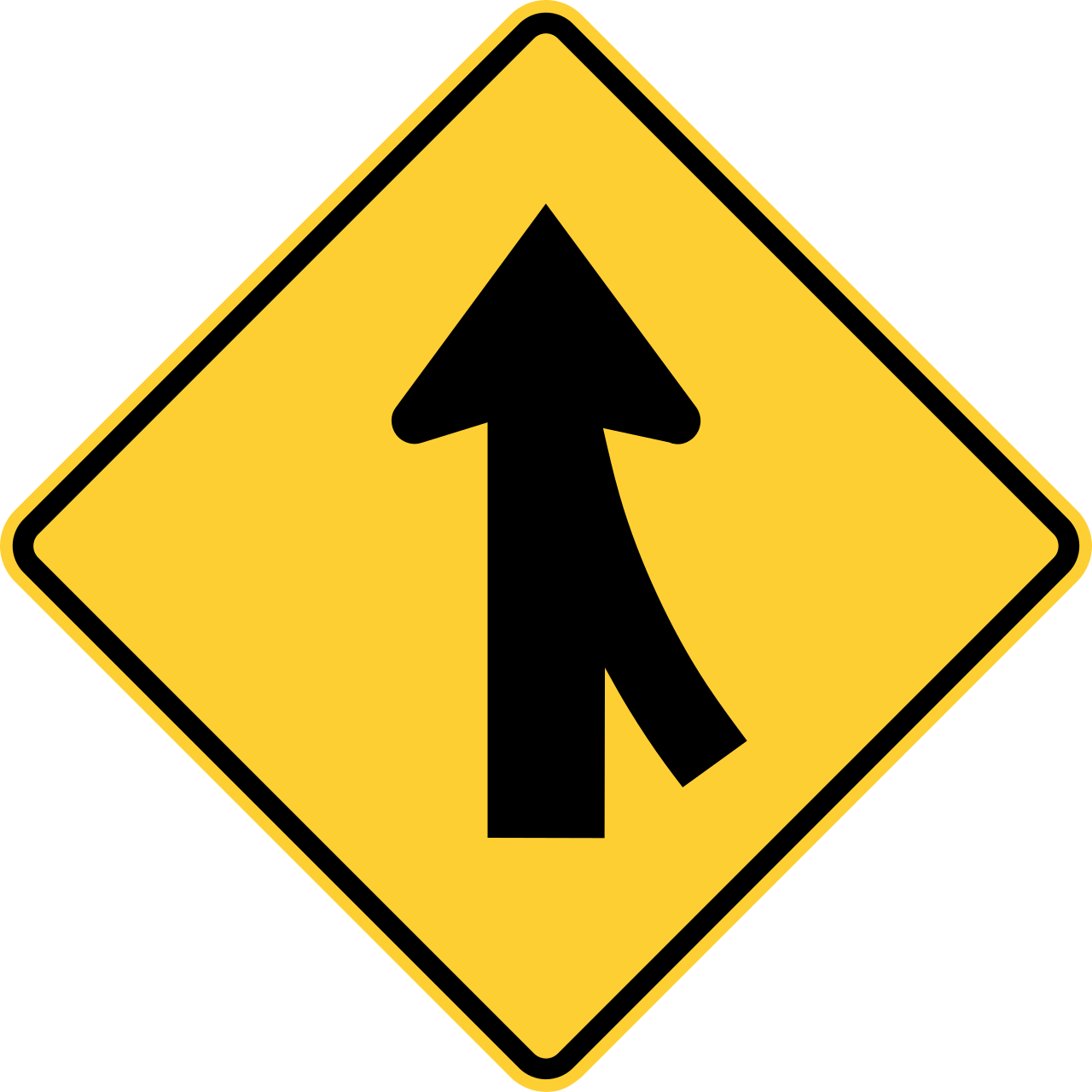 This road sign means:
A
Lane shifting
B
Traffic is entering from another road, drive with caution
C
Stop for other traffic
D
Yield right-of-way
This traffic sign indicates: traffic is entering from another road, drive with caution. Observing and obeying all roadway signs ensures safe traffic flow and legal driving.
Question 9:
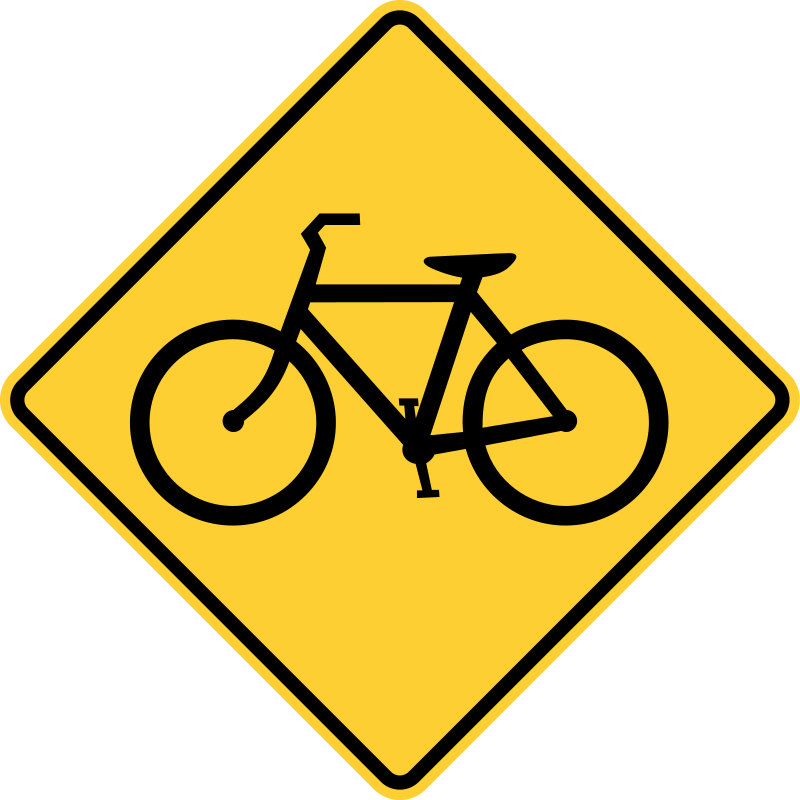 This road sign means:
A
Watch for bicycles
B
Bicycle parking ahead
C
Bicycles are not allowed in this area
This traffic sign indicates: watch for bicycles. Observing and obeying all roadway signs ensures safe traffic flow and legal driving.
Question 10:
Most signs used in street work areas are:
A
round.
B
diamond shaped.
C
rectangle shaped.
The correct driving rule is: diamond shaped. Following standard DMV road rules and practicing defensive driving ensures safety for all road users.
Question 11:
 This road sign means:
A
No right turn
B
Divided highway ends
C
Lane ends
D
Two way Traffic
This traffic sign indicates: Lane ends. Observing and obeying all roadway signs ensures safe traffic flow and legal driving.
Question 12:
If you miss your exit on a freeway, do NOT:
A
continue on the freeway and find an alternative route.
B
turn around or back up.
C
get back on the freeway in the opposite direction and return to the exit you want.
Defensive driving guidelines state that: turn around or back up. Anticipating road hazards and communicating maneuvers keeps traffic predictable and safe.
Question 13:
 This sign means:
A
You may make a U-turn.
B
Hairpin corner ahead.
C
You must make a U-turn.
This traffic sign indicates: you must make a U-turn. Observing and obeying all roadway signs ensures safe traffic flow and legal driving.
Question 14:
When driving at night with no other vehicles ahead, a driver should use:
A
high beam lights.
B
low-beam lights.
C
parking lights.
The correct driving rule is: high beam lights. Following standard DMV road rules and practicing defensive driving ensures safety for all road users.
Question 15:
______________ is an unsafe distraction when driving.
A
Leaving early to drive to an appointment.
B
Texting a message on your cell phone.
C
Controlling an emotion before putting the vehicle in gear.
D
Asking a passenger to enter your mapping request into your GPS.
The correct driving rule is: Texting a message on your cell phone. Following standard DMV road rules and practicing defensive driving ensures safety for all road users.
Question 16:
To practice defensive driving you should:
A
always leave yourself a way out.
B
look well ahead of your vehicle and be aware of developing traffic situations around you.
C
maintain a proper following distance.
D
All of the above.
All of the listed points are essential driving requirements: always leave yourself a way out; look well ahead of your vehicle and be aware of developing traffic situations around you; maintain a proper following distance. Practicing each ensures compliance with DMV safety laws.
Question 17:
 This sign warns drivers that:
A
the road will make a sharp turn to the right.
B
right turns are not allowed.
C
another road enters the highway from the direction shown.
This traffic sign indicates: the road will make a sharp turn to the right. Observing and obeying all roadway signs ensures safe traffic flow and legal driving.
Question 18:
In general, you should pass vehicles going in the same direction as you are going:
A
only if the other driver signals it is safe.
B
whenever you have the opportunity to do so.
C
on the right.
D
on the left.
The correct driving rule is: on the left. Following standard DMV road rules and practicing defensive driving ensures safety for all road users.
Question 19:
This sign warns that:
A
traffic must merge left.
B
the bridge ahead is wide enough for only one vehicle at a time.
C
traffic must merge right.
This traffic sign indicates: traffic must merge left. Observing and obeying all roadway signs ensures safe traffic flow and legal driving.
Question 20:
Regulation signs normally are ____ rectangles with ____ letters or symbols.
A
yellow; black
B
white; black
C
green; white
The correct driving rule is: white; black. Following standard DMV road rules and practicing defensive driving ensures safety for all road users.
Question 21:
A red traffic signal light means that you must:
A
when there is no stop line, stop before entering any crosswalk.
B
stop at the stop line.
C
where there is no stop line or crosswalk, stop before entering the intersection.
D
All of the above.
This sign alerts drivers to several mandatory requirements: when there is no stop line, stop before entering any crosswalk, stop at the stop line, where there is no stop line or crosswalk, stop before entering the intersection. Obeying all posted traffic control instructions is required by law.
Question 22:
You should use turn signals to indicate your intention with sufficient time to allow other drivers to see the signal:
A
if it’s raining.
B
AFTER you move.
C
BEFORE you move.
State laws require signaling your intention: BEFORE you move. Signal at least 100 feet before making a turn or changing lanes.
Question 23:
Warning signs normally are:
A
rectangles.
B
triangles.
C
diamond-shaped.
The correct driving rule is: diamond-shaped. Following standard DMV road rules and practicing defensive driving ensures safety for all road users.
Question 24:
You are stopped behind other vehicles waiting at a stop sign. When the intersection is clear:
A
you may follow the vehicle ahead without stopping again.
B
you may proceed with caution through the intersection without stopping if there is no other traffic.
C
you must stop again at the stop sign.
D
you must proceed through the intersection without stopping again.
According to standard right-of-way regulations: you must stop again at the stop sign. Yielding appropriately prevents intersection collisions and maintains safe traffic flow.
Question 25:
What should you do in case of a steering failure?
A
Pump your gas pedal a few times to increase the pressure.
B
Don't panic. Turn on your emergency lights to let other drivers know you are having car problems. Move toward the side of the road and bring the car to a gradual stop.
C
Leave the road immediately.
The correct driving rule is: Don't panic. Turn on your emergency lights to let other drivers know you are having car problems. Move toward the side of the road and bring the car to a gradual stop. Following standard DMV road rules and practicing defensive driving ensures safety for all road users.