Question 1:
When driving on the freeway behind large trucks, you should:
A
move to the right of the truck and pass it quickly.
B
drive closer behind the truck than for a passenger vehicle.
C
increase your following distance.
Defensive driving guidelines state that: increase your following distance. Anticipating road hazards and communicating maneuvers keeps traffic predictable and safe.
Question 2:
Look over your shoulder to check your blind spot:
A
when changing lanes.
B
when pulling to the right side of the road or away from a curb.
C
on all right and left turns.
D
All of the above.
Sharing the road safely requires mutual awareness and respect: when changing lanes; when pulling to the right side of the road or away from a curb; on all right and left turns. Maintaining safe space cushions protects all roadway users.
Question 3:
 This sign means:
A
The road will curve to the right, then to the left.
B
Road slippery when wet. Drive slowly.
C
Winding road ahead. Drive with caution.
This traffic sign indicates: Road slippery when wet. Drive slowly. Observing and obeying all roadway signs ensures safe traffic flow and legal driving.
Question 4:
You are driving and you are feeling drowsy. You should:
A
avoid drinking coffee.
B
turn on the radio to keep you awake.
C
find a safe place to stop for a break.
Under state DUI and traffic safety laws: find a safe place to stop for a break. Alcohol degrades judgment, slows reaction times, and distorts depth perception.
Question 5:
When driving in fog, you should never use your high beams because:
A
the light will reflect back into your eyes.
B
vehicles behind you may follow too closely.
C
oncoming vehicles might not see you.
For safe speed and stopping control: the light will reflect back into your eyes. Adjusting speed to match visibility and road traction prevents loss of steering grip.
Question 6:
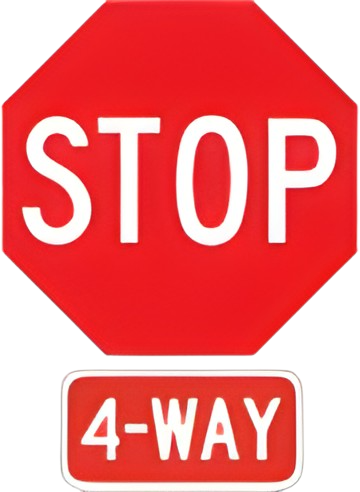 A four-way stop sign means:
A
traffic from all four directions must stop.
B
if two vehicles reach the intersection at the same time, the driver on the left yields to the driver on the right.
C
All of the above.
This sign alerts drivers to several mandatory requirements: traffic from all four directions must stop, if two vehicles reach the intersection at the same time, the driver on the left yields to the driver on the right. Obeying all posted traffic control instructions is required by law.
Question 7:
Which statement about drinking alcohol and driving is true?
A
Alcohol affects judgement and coordination, which are needed to drive safely.
B
After drinking, a cold shower will sober you up.
C
If you are under the legal BAC limit, your driving is not affected.
Under state DUI and traffic safety laws: Alcohol affects judgement and coordination, which are needed to drive safely. Alcohol degrades judgment, slows reaction times, and distorts depth perception.
Question 8:
If you remain in the back blind spot of a large vehicle:
A
you increase the chance of a crash.
B
the large vehicle will take much longer to stop.
C
you can reduce fuel consumption.
Large commercial trucks have extensive blind spots on all four sides called the 'No-Zone': you increase the chance of a crash. If you cannot see the truck driver in their side mirrors, they cannot see you.
Question 9:
Where must a pedestrian walk when there are no sidewalks?
A
On the side of the road, in the same direction of traffic.
B
In the middle of the road, facing oncoming traffic.
C
On the side of the road, facing the traffic.
Drivers must always yield the right-of-way to pedestrians crossing at intersections and crosswalks: On the side of the road, facing the traffic. Stop and allow them to clear the lane safely.
Question 10:
 The octagonal shape is used:
A
for stop signs and railroad advance warning signs.
B
exclusively for stop signs.
C
to warn drivers of existing or possible hazards on roadways.
An octagonal Stop sign requires a full and complete stop before the stop line or crosswalk: exclusively for stop signs. Proceed only after yielding to all cross traffic and pedestrians.
Question 11:
One broken line indicates:
A
You can pass other vehicles and change lanes, if it is safe.
B
You can not pass other vehicles or go across the line.
C
You can change lanes, but only when traffic conditions or obstructions in the road make it necessary.
The correct driving rule is: you can pass other vehicles and change lanes, if it is safe. Following standard DMV road rules and practicing defensive driving ensures safety for all road users.
Question 12:
When passing you should NOT:
A
leave less than 4 feet of space between your vehicle and the vehicle you are passing.
B
signal left to let others know that you will be pulling out.
C
look in your rearview mirrors and glance over your shoulder before pulling out to pass.
D
go far enough past the vehicle you are passing so that you can see the vehicle in your inside rearview mirror.
Defensive driving guidelines state that: leave less than 4 feet of space between your vehicle and the vehicle you are passing. Anticipating road hazards and communicating maneuvers keeps traffic predictable and safe.
Question 13:
 This road sign means:
A
Drive with caution and be ready to stop
B
Slow down or stop
C
You must come to a complete stop
An octagonal Stop sign requires a full and complete stop before the stop line or crosswalk: you must come to a complete stop. Proceed only after yielding to all cross traffic and pedestrians.
Question 14:
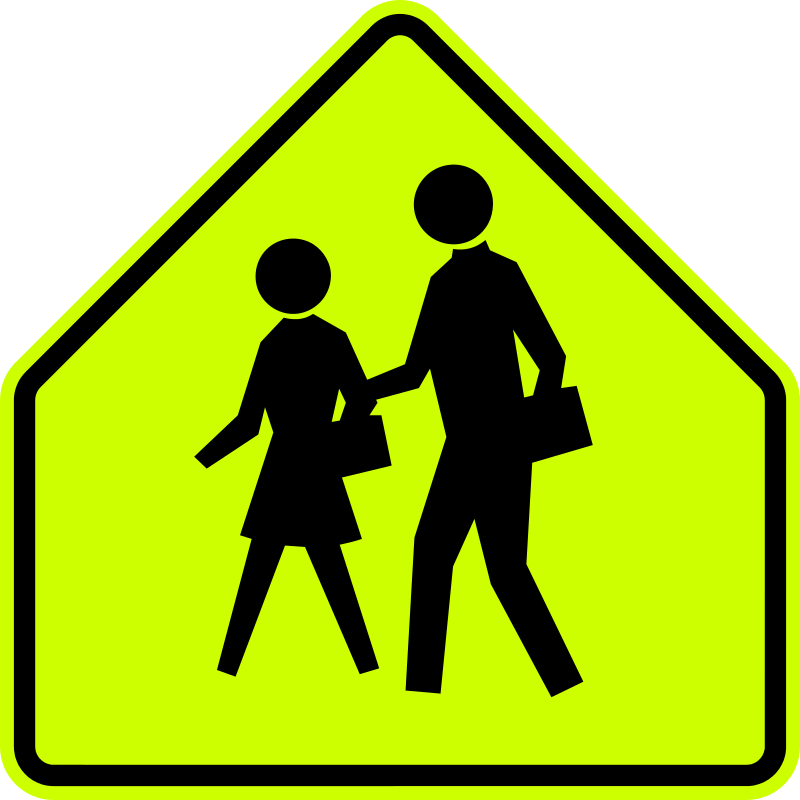 When you see this sign, you should:
A
be prepared to stop if children are in the crosswalk.
B
slow down, proceed with caution and watch for blind people.
C
always stop at the crosswalk.
This traffic sign indicates: be prepared to stop if children are in the crosswalk. Observing and obeying all roadway signs ensures safe traffic flow and legal driving.
Question 15:
A thumping sound can be a warning:
A
that a tire blowout is about to occur.
B
of a steering failure.
C
of a brake failure.
The correct driving rule is: that a tire blowout is about to occur. Following standard DMV road rules and practicing defensive driving ensures safety for all road users.
Question 16:
What should you do in case of a brake failure?
A
Pull off the road into an open space, if available.
B
Apply the parking brake slowly.
C
All of the above.
All of the listed points are essential driving requirements: Pull off the road into an open space, if available; Apply the parking brake slowly. Practicing each ensures compliance with DMV safety laws.
Question 17:
Hydroplaning is usually caused by:
A
excessive rain.
B
excessive stops.
C
excessive speed.
D
sudden turns.
The correct driving rule is: excessive speed. Following standard DMV road rules and practicing defensive driving ensures safety for all road users.
Question 18:
Your BAC depends on:
A
how fit you are.
B
the type of beverage you drink.
C
the amount of alcohol you drink.
Under state DUI and traffic safety laws: the amount of alcohol you drink. Alcohol degrades judgment, slows reaction times, and distorts depth perception.
Question 19:
Braking distance is affected by:
A
the condition of your brakes and tires.
B
pavement conditions.
C
the speed your vehicle is traveling.
D
All of the above.
Hazardous road and weather conditions require extra caution: the condition of your brakes and tires; pavement conditions; the speed your vehicle is traveling. Reducing speed and expanding following distance preserves control.
Question 20:
 This road sign means:
A
A four-way intersection is ahead
B
Do not pass
C
A steep grade is ahead
This traffic sign indicates: A four-way intersection is ahead. Observing and obeying all roadway signs ensures safe traffic flow and legal driving.
Question 21:
This road sign means:
A
Slow down or stop
B
Stop
C
Road narrows ahead
This traffic sign indicates: stop. Observing and obeying all roadway signs ensures safe traffic flow and legal driving.
Question 22:
You should never depend on your mirrors when you prepare to change lanes. Why?
A
Mirrors leave “blind spots” behind both sides of vehicles.
B
Mirrors need to be adjusted.
C
Mirrors are useless.
The correct driving rule is: Mirrors leave “blind spots” behind both sides of vehicles. Following standard DMV road rules and practicing defensive driving ensures safety for all road users.
Question 23:
Blocking an intersection during rush hour traffic is not permitted:
A
under any circumstances.
B
unless you entered the intersection on a green light.
C
unless you have the right-of-way.
According to standard right-of-way regulations: under any circumstances. Yielding appropriately prevents intersection collisions and maintains safe traffic flow.
Question 24:
If a traffic officer signals you to drive through a red light:
A
you must do it.
B
you must wait for the red light to turn green.
C
you must not obey the officer. Signs and signals take precedence over directions given by traffic officers.
According to standard right-of-way regulations: you must do it. Yielding appropriately prevents intersection collisions and maintains safe traffic flow.
Question 25:
Which shape is a warning sign?
A
Diamond
B
Triangle
C
Pennant
This traffic sign indicates: Diamond. Observing and obeying all roadway signs ensures safe traffic flow and legal driving.