Question 1:
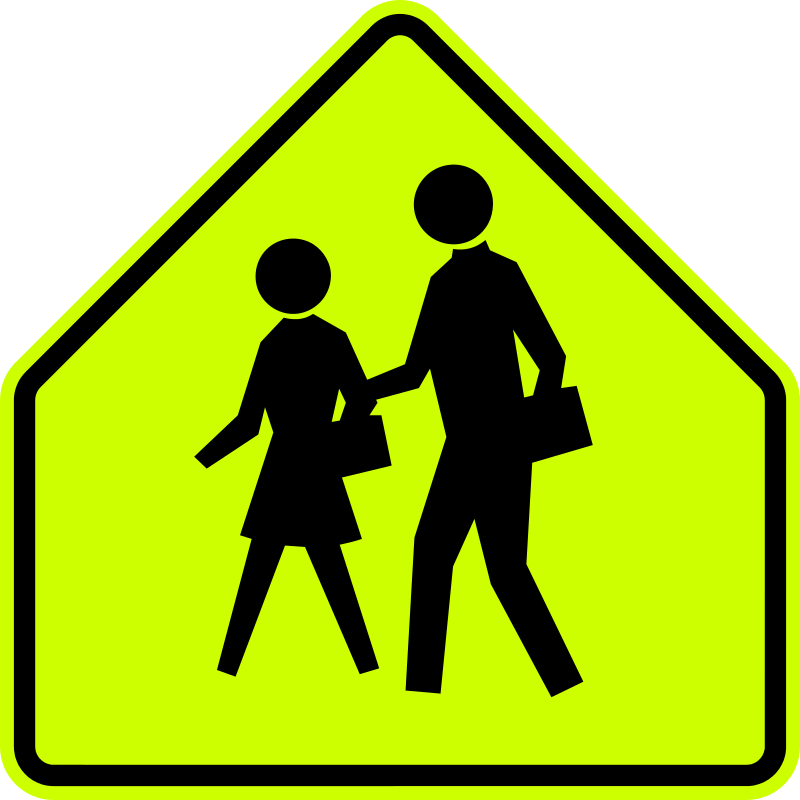 This road sign means:
A
School crossing
B
Playground ahead
C
Pedestrian crossing
Pentagonal (5-sided) signs are exclusively reserved for school zones and school crossings: School crossing. Drivers must reduce speed and yield right-of-way to all crossing children.
Question 2:
A red traffic sign means?
A
Do not enter.
B
Stop.
C
All of the above.
This sign alerts drivers to several mandatory requirements: Do not enter, Stop. Obeying all posted traffic control instructions is required by law.
Question 3:
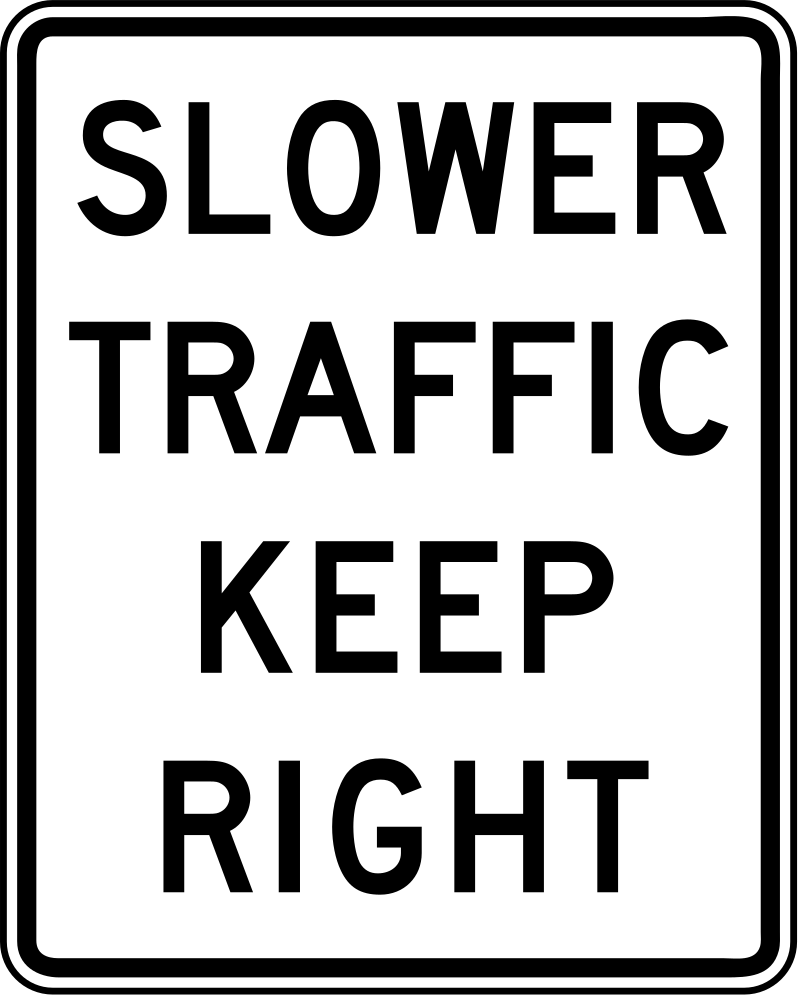 This regulatory road sign indicates that:
A
Vehicles must slow down and stay in the right lane.
B
The right hand lane is reserved for buses and car-pool vehicles.
C
Slower vehicles traveling on multiple lane highways must stay in the right hand lane.
This traffic sign indicates: Slower vehicles traveling on multiple lane highways must stay in the right hand lane. Observing and obeying all roadway signs ensures safe traffic flow and legal driving.
Question 4:
In the following situations, drivers should increase their following interval:
A
When following vehicles that are required to come to a stop at railroad crossings.
B
When it is hard to see ahead because of bad weather.
C
All of the above.
All of the listed points are essential driving requirements: When following vehicles that are required to come to a stop at railroad crossings; When it is hard to see ahead because of bad weather. Practicing each ensures compliance with DMV safety laws.
Question 5:
You should never depend on your mirrors when you prepare to change lanes. Why?
A
Mirrors leave “blind spots” behind both sides of vehicles.
B
Mirrors need to be adjusted.
C
Mirrors are useless.
The correct driving rule is: Mirrors leave “blind spots” behind both sides of vehicles. Following standard DMV road rules and practicing defensive driving ensures safety for all road users.
Question 6:
Examples of proper glass maintenance include:
A
Replacing worn wiper blades.
B
Keeping your windows clean and clear.
C
All of the above.
All of the listed points are essential driving requirements: Replacing worn wiper blades; Keeping your windows clean and clear. Practicing each ensures compliance with DMV safety laws.
Question 7:
ABS is the acronym for Anti-Locking Brake System.
A
False
B
True
The correct driving rule is: True. Following standard DMV road rules and practicing defensive driving ensures safety for all road users.
Question 8:
When stopping on a road to perform a straight line backing maneuver:
A
the vehicle must be backed as fast as possible.
B
drivers should give a hand signal to warn approaching traffic from the rear that they intend to stop.
C
drivers should look straight ahead while backing.
The correct driving rule is: drivers should give a hand signal to warn approaching traffic from the rear that they intend to stop. Following standard DMV road rules and practicing defensive driving ensures safety for all road users.
Question 9:
A curb painted red means:
A
No parking or stopping
B
Parking is for disabled persons with a special placard or plate.
C
Reserved for passengers pick up or drop off
Under standard parking and curb regulations: No parking or stopping. Following parking distance clearances keeps roadways unobstructed and emergency lanes accessible.
Question 10:
While driving on an undivided highway, you approach a school bus that is stopped and has its red lights flashing. You:
A
may pass if the way is clear.
B
may pass the bus on the right, if no children are present.
C
must remain stopped until the bus driver turns off the flashing red lights.
When a school bus displays flashing red lights and extended stop sign: must remain stopped until the bus driver turns off the flashing red lights. Traffic in both directions must come to a full stop on undivided roads until children are clear.
Question 11:
Who must wear seat belts?
A
The driver and front seat passengers.
B
Only passengers and not the driver.
C
All passengers, including the driver.
The correct driving rule is: All passengers, including the driver. Following standard DMV road rules and practicing defensive driving ensures safety for all road users.
Question 12:
 This sign warns ____________ ahead.
A
of two-way traffic
B
of a reduction of lanes
C
that a divided highway ends
This traffic sign indicates: of two-way traffic. Observing and obeying all roadway signs ensures safe traffic flow and legal driving.
Question 13:
What should you do if you see smoke come from under the hood?
A
Call the fire department and then pull off the road and park your vehicle.
B
Pull off the road and park your vehicle. Turn off the ignition, get away from the car and call the fire department.
C
Try to fight the fire yourself.
The correct driving rule is: pull off the road and park your vehicle. Turn off the ignition, get away from the car and call the fire department. Following standard DMV road rules and practicing defensive driving ensures safety for all road users.
Question 14:
At intersections marked with stop lines, drivers must:
A
come to a complete stop.
B
slow down and enter the intersection.
C
signal other vehicles to stop.
The correct driving rule is: come to a complete stop. Following standard DMV road rules and practicing defensive driving ensures safety for all road users.
Question 15:
Temporary signs used in work zones have a(n) _____ background and ____ letters or symbols.
A
yellow; black
B
orange; black
C
blue; white
The correct driving rule is: orange; black. Following standard DMV road rules and practicing defensive driving ensures safety for all road users.
Question 16:
A vehicle is stopped at a crosswalk to permit a pedestrian to cross the roadway. The driver of the vehicle approaching from the rear should:
A
sound the horn.
B
overtake and pass the stopped vehicle.
C
not overtake and pass the stopped vehicle.
Drivers must always yield the right-of-way to pedestrians crossing at intersections and crosswalks: not overtake and pass the stopped vehicle. Stop and allow them to clear the lane safely.
Question 17:
Two drivers reach an uncontrolled intersection at the same time. Who has the right of way?
A
The driver on the left.
B
No one.
C
The driver on the right.
At an uncontrolled intersection or 4-way stop where vehicles arrive at the same time: The driver on the right. The driver on the left must always yield to the driver on the right.
Question 18:
Before crossing any railroad tracks, you must:
A
look and listen for trains.
B
make sure there is room for your vehicle on the other side.
C
All of the above.
All of the listed points are essential driving requirements: look and listen for trains; make sure there is room for your vehicle on the other side. Practicing each ensures compliance with DMV safety laws.
Question 19:
Does a vehicle prepared to enter a traffic circle or rotary have right-of-way over vehicles in the circle?
A
Yes, but only if they are entering the rotary from the right lane.
B
No. Vehicles already in the circle have the right-of-way.
C
Only if the light is green.
D
Yes.
Vehicles entering a roundabout must yield right-of-way to circulating traffic already inside: No. Vehicles already in the circle have the right-of-way. Wait for a safe gap before entering.
Question 20:
When approaching someone using a white cane or guide dog, drivers should:
A
slow down and be prepared to stop.
B
proceed normally.
C
come to a complete stop and invite them to take the right-of-way.
The correct driving rule is: slow down and be prepared to stop. Following standard DMV road rules and practicing defensive driving ensures safety for all road users.
Question 21:
You should use turn signals to indicate your intention with sufficient time to allow other drivers to see the signal:
A
if it’s raining.
B
AFTER you move.
C
BEFORE you move.
State laws require signaling your intention: BEFORE you move. Signal at least 100 feet before making a turn or changing lanes.
Question 22:
When passing another vehicle on a two-lane road, you should:
A
signal at least 100 feet prior to the lane change.
B
ensure there is no oncoming traffic.
C
All of the above.
Defensive driving best practices include: signal at least 100 feet prior to the lane change; ensure there is no oncoming traffic. Staying alert and maintaining spacing prevents unexpected hazards.
Question 23:
Which of the following statements about blind spots is true?
A
Blind spots can be checked by looking in your rear view mirrors.
B
They are eliminated if you have one outside mirror on each side of the vehicle.
C
Large trucks have bigger blind spots than most passenger vehicles.
The correct driving rule is: Large trucks have bigger blind spots than most passenger vehicles. Following standard DMV road rules and practicing defensive driving ensures safety for all road users.
Question 24:
 This sign means:
A
The highway ahead is divided into two one-way roadways.
B
Roundabout ahead. Slow down.
C
The divided highway on which drivers are traveling ends ahead.
This traffic sign indicates: The highway ahead is divided into two one-way roadways. Observing and obeying all roadway signs ensures safe traffic flow and legal driving.
Question 25:
With conventional brakes, the correct way to stop in an emergency situation where traction is lost and the car slides is by pumping the brakes.
A
True
B
False
The correct driving rule is: True. Following standard DMV road rules and practicing defensive driving ensures safety for all road users.
Question 26:
Which shape is a railroad advance warning sign?
A
Crossbuck
B
Round
C
Pentagon
Circular signs with an 'X' and 'RR' designate a Railroad Advance Warning: Round. Drivers must slow down, look both ways, listen for trains, and be prepared to stop.
Question 27:
If you meet a stopped school bus with the lights flashing and the signal arm extended, you should:
A
proceed at 15 MPH or less, if no children are present.
B
stop.
C
watch for children and proceed at normal speed.
When a school bus displays flashing red lights and extended stop sign: stop. Traffic in both directions must come to a full stop on undivided roads until children are clear.
Question 28:
When approaching any intersection or driveway, drivers should:
A
look both ways and be ready to stop.
B
pass other vehicles and then stop.
C
drive at the fastest speed just before entering the intersection.
According to standard right-of-way regulations: look both ways and be ready to stop. Yielding appropriately prevents intersection collisions and maintains safe traffic flow.
Question 29:
You should never park a vehicle:
A
Within 150 feet of a fire hydrant.
B
in a school zone.
C
within 50 feet of a railroad crossing.
Under standard parking and curb regulations: within 50 feet of a railroad crossing. Following parking distance clearances keeps roadways unobstructed and emergency lanes accessible.
Question 30:
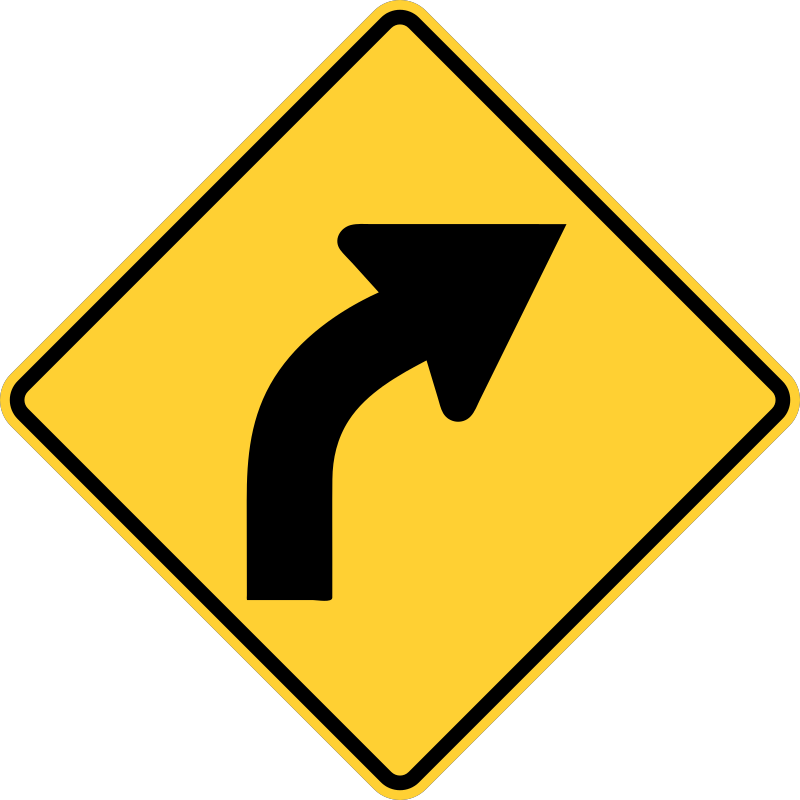 This sign means:
A
The road will curve to the right.
B
Left turns are not allowed at the intersection.
C
Do not turn right.
This traffic sign indicates: The road will curve to the right. Observing and obeying all roadway signs ensures safe traffic flow and legal driving.