Question 1:
Continuous hard braking on ice and snow often:
A
is the best option during winter.
B
keeps the brakes from freezing.
C
causes the front wheels to lock.
For safe speed and stopping control: causes the front wheels to lock. Adjusting speed to match visibility and road traction prevents loss of steering grip.
Question 2:
Always stop before you cross railroad tracks when:
A
you are not wearing safety belts.
B
you are following a bicyclist or motorcyclist across railroad tracks.
C
you don't have room on the other side to completely cross the tracks.
The correct driving rule is: you don't have room on the other side to completely cross the tracks. Following standard DMV road rules and practicing defensive driving ensures safety for all road users.
Question 3:
At a stop sign there is no stop line, you must stop:
A
before you enter the intersection.
B
before you enter the crosswalk.
C
after you enter the crosswalk.
The correct driving rule is: before you enter the crosswalk. Following standard DMV road rules and practicing defensive driving ensures safety for all road users.
Question 4:
When riding in a vehicle equipped with air bags is, children ages 12 and under are safer:
A
buckled up in the back seat.
B
in the bed of a pick-up truck.
C
buckled up in the front seat.
The correct driving rule is: buckled up in the back seat. Following standard DMV road rules and practicing defensive driving ensures safety for all road users.
Question 5:
 This warning sign:
A
provides advance notice to upcoming speed limit change.
B
shows the current speed limit that all vehicles traveling in the direction of the arrow must not exceed.
C
indicates the suggested highest safe speed.
This traffic sign indicates: provides advance notice to upcoming speed limit change. Observing and obeying all roadway signs ensures safe traffic flow and legal driving.
Question 6:
What is a likely effect when you take another drug while you drink alcohol?
A
The effects of the alcohol and the drug are enhanced.
B
There are no effects, unless the drug is prescription only.
C
If the drug is over-the-counter, there are no effects.
Under state DUI and traffic safety laws: The effects of the alcohol and the drug are enhanced. Alcohol degrades judgment, slows reaction times, and distorts depth perception.
Question 7:
 This road sign means:
A
Yield sign ahead
B
Side road entering from the left
C
Side road
A triangular Yield sign requires drivers to slow down and give right-of-way to other traffic: yield sign ahead. Proceed only when there is a safe opening.
Question 8:
When driving on a roadway with a single broken white line:
A
you may cross the broken white line to change lanes.
B
you may change lanes only if you are in the right lane.
C
you may not cross the broken white line.
The correct driving rule is: you may cross the broken white line to change lanes. Following standard DMV road rules and practicing defensive driving ensures safety for all road users.
Question 9:
At a crosswalk:
A
construction workers must yield to drivers.
B
drivers must yield to pedestrians.
C
pedestrians must yield to drivers.
Drivers must always yield the right-of-way to pedestrians crossing at intersections and crosswalks: drivers must yield to pedestrians. Stop and allow them to clear the lane safely.
Question 10:
When driving in a construction zone you should:
A
slightly increase your speed.
B
come to a complete stop and check road conditions.
C
expect the unexpected.
The correct driving rule is: expect the unexpected. Following standard DMV road rules and practicing defensive driving ensures safety for all road users.
Question 11:
What is the meaning of blue traffic signs?
A
A blue background indicates a regulatory sign.
B
They give directional information.
C
Blue indicates road user services.
The correct driving rule is: Blue indicates road user services. Following standard DMV road rules and practicing defensive driving ensures safety for all road users.
Question 12:
Where there is no bicycle lane, where on the road must a bicyclist ride?
A
on the left shoulder of the road.
B
near the right curb or edge of the road.
C
near the left edge of the road.
State laws require motorists to provide a safe clearance buffer: near the right curb or edge of the road. Allow at least 3 feet of space when overtaking a bicyclist.
Question 13:
 This sign warns drivers that:
A
they must turn either to the right or left.
B
there is a double curve ahead.
C
there is a winding road ahead.
This traffic sign indicates: there is a winding road ahead. Observing and obeying all roadway signs ensures safe traffic flow and legal driving.
Question 14:
The use of alcohol and/or drugs affects:
A
concentration and reaction time.
B
alertness and judgement.
C
All of the above.
Alcohol and impairing substances degrade all critical driving functions: concentration and reaction time; alertness and judgement. Driving while impaired carries severe criminal and safety penalties.
Question 15:
Blind spots around a large vehicle are _________________ than the blind spots around a car.
A
larger and deeper
B
less dangerous
C
narrower and shorter
The correct driving rule is: larger and deeper. Following standard DMV road rules and practicing defensive driving ensures safety for all road users.
Question 16:
If you are continually being passed on the right, you should:
A
move into the right lane and allow other vehicles to pass you on the left.
B
move into the left lane and allow other vehicles to pass you on the right.
C
increase your speed immediately.
The correct driving rule is: move into the right lane and allow other vehicles to pass you on the left. Following standard DMV road rules and practicing defensive driving ensures safety for all road users.
Question 17:
When driving in work zones, drivers should:
A
closely follow the driver in front of them.
B
reduce their speed and be prepared to stop.
C
maintain their speed through the work zone.
The correct driving rule is: reduce their speed and be prepared to stop. Following standard DMV road rules and practicing defensive driving ensures safety for all road users.
Question 18:
When parking downhill:
A
turn your wheels away from the side of the road.
B
turn your wheels towards the side of the road.
C
keep your wheels straight.
When parking downhill (with or without a curb): turn your wheels towards the side of the road. Turn front wheels toward the curb or road edge (right) so the vehicle rolls safely off the roadway if it slips.
Question 19:
What do flashing red lights on a school bus indicate?
A
The bus is stopped to load or discharge passengers.
B
Traffic that approaches from either direction may proceed.
C
The bus is about to stop.
When a school bus displays flashing red lights and extended stop sign: The bus is stopped to load or discharge passengers. Traffic in both directions must come to a full stop on undivided roads until children are clear.
Question 20:
Signs that indicate a No Passing Zone tell drivers that:
A
it is not safe to pass.
B
passing is only permitted in daylight hours.
C
not passing other vehicles is prohibited.
Defensive driving guidelines state that: it is not safe to pass. Anticipating road hazards and communicating maneuvers keeps traffic predictable and safe.
Question 21:
If you become sleepy while driving you should:
A
get some rest or change drivers.
B
drink coffee.
C
open a window.
The correct driving rule is: get some rest or change drivers. Following standard DMV road rules and practicing defensive driving ensures safety for all road users.
Question 22:
A red arrow on a traffic light means:
A
You may not turn in the direction of the arrow until a green light or arrow light goes on.
B
You may turn in in the direction of the arrow after coming to a complete stop.
C
You must stop and then proceed when the way is clear.
The correct driving rule is: you may not turn in the direction of the arrow until a green light or arrow light goes on. Following standard DMV road rules and practicing defensive driving ensures safety for all road users.
Question 23:
 Vertical rectangles tell drivers:
A
the law.
B
what is not allowed.
C
the direction they should travel.
The correct driving rule is: the law. Following standard DMV road rules and practicing defensive driving ensures safety for all road users.
Question 24:
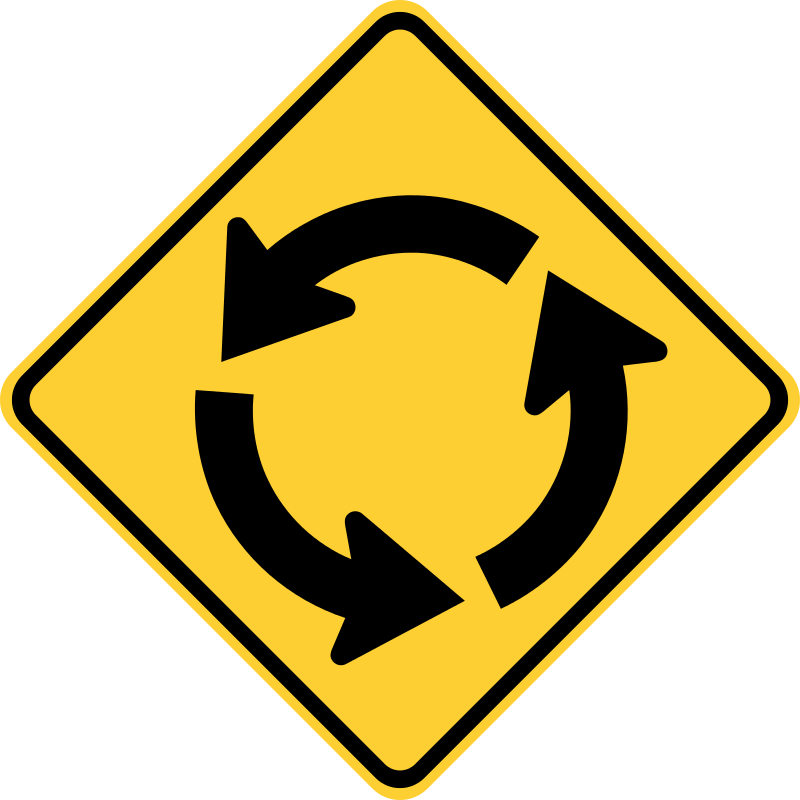 This road sign:
A
warns drivers of a sharp turn left. Drivers should slow their speed and keep to the left.
B
provides an advance notice of a roundabout.
C
warns drivers that U-turns are not permitted.
D
is a no-right-turns sign.
This traffic sign indicates: provides an advance notice of a roundabout. Observing and obeying all roadway signs ensures safe traffic flow and legal driving.
Question 25:
__________ are blue with white letters and symbols.
A
Warning signs
B
Service signs
C
Destination signs (guide signs)
The correct driving rule is: Service signs. Following standard DMV road rules and practicing defensive driving ensures safety for all road users.