Question 1:
One broken line indicates:
A
You can pass other vehicles and change lanes, if it is safe.
B
You can not pass other vehicles or go across the line.
C
You can change lanes, but only when traffic conditions or obstructions in the road make it necessary.
The correct driving rule is: you can pass other vehicles and change lanes, if it is safe. Following standard DMV road rules and practicing defensive driving ensures safety for all road users.
Question 2:
Worn tires:
A
may cause you to hydroplane even with very little water on the road.
B
can increase your stopping distance.
C
can make turning more difficult.
D
All of the above.
All of the listed points are essential driving requirements: may cause you to hydroplane even with very little water on the road; can increase your stopping distance; can make turning more difficult. Practicing each ensures compliance with DMV safety laws.
Question 3:
Your ability to drive safely can be impaired by:
A
alcohol.
B
lack of sleep.
C
drugs, even if they are over-the-counter.
D
All of the above.
All of the listed points are essential driving requirements: alcohol; lack of sleep; drugs, even if they are over-the-counter. Practicing each ensures compliance with DMV safety laws.
Question 4:
Most crashes involving large trucks:
A
are caused by truck drivers.
B
are caused by car drivers.
C
happen in bad weather.
D
happen at night.
The correct driving rule is: are caused by car drivers. Following standard DMV road rules and practicing defensive driving ensures safety for all road users.
Question 5:
When driving in fog, drivers should:
A
not use high beam headlights.
B
use low beam headlights to better illuminate the road ahead.
C
slow down and drive cautiously.
D
All of the above.
Hazardous road and weather conditions require extra caution: not use high beam headlights; use low beam headlights to better illuminate the road ahead; slow down and drive cautiously. Reducing speed and expanding following distance preserves control.
Question 6:
Which shape is a speed limit sign?
A
Round
B
Pentagon
C
Vertical rectangle
For safe speed and stopping control: Vertical rectangle. Adjusting speed to match visibility and road traction prevents loss of steering grip.
Question 7:
 This sign warns drivers that:
A
there is a one lane bridge ahead.
B
the right lane ends.
C
the road ahead is narrow.
This traffic sign indicates: the right lane ends. Observing and obeying all roadway signs ensures safe traffic flow and legal driving.
Question 8:
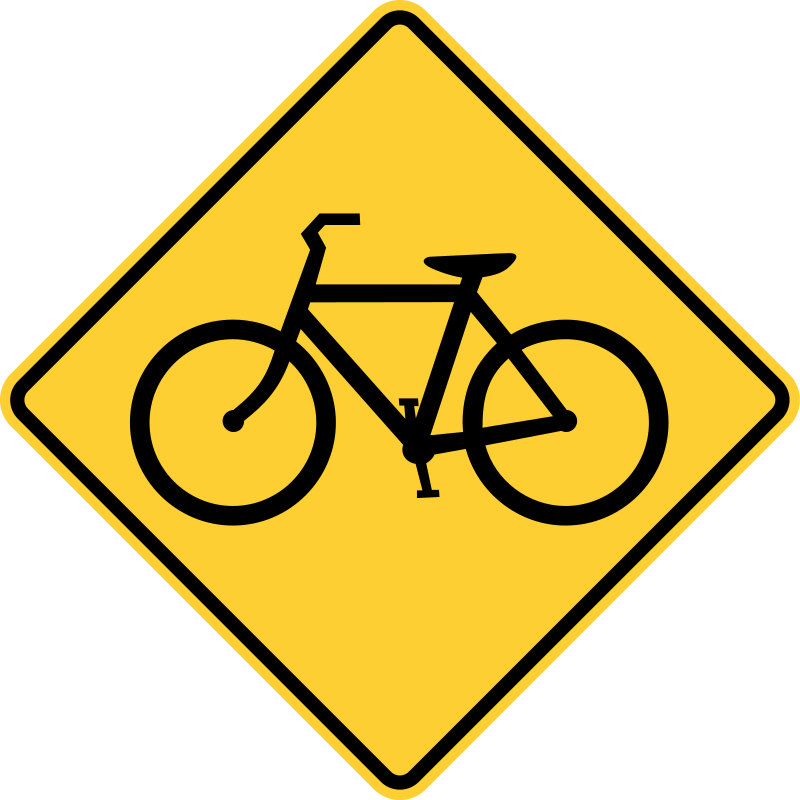 This sign means:
A
Bicycles should yield to vehicles ahead.
B
Warning: a bikeway crosses the roadway ahead.
C
The lane ahead is reserved for bicycles.
This traffic sign indicates: Warning: a bikeway crosses the roadway ahead. Observing and obeying all roadway signs ensures safe traffic flow and legal driving.
Question 9:
If a bus has signaled and is pulling back onto the roadway, you must:
A
yield.
B
honk to let them know you’re there.
C
move to the left lane.
D
speed up to pass.
The correct driving rule is: yield. Following standard DMV road rules and practicing defensive driving ensures safety for all road users.
Question 10:
You may park or stop along the shoulder of the freeway:
A
if you need to check your smartphone for directions.
B
only if you have an emergency.
C
if no part of your vehicle is on the road.
D
as long as you turn on your emergency flashers.
Under standard parking and curb regulations: only if you have an emergency. Following parking distance clearances keeps roadways unobstructed and emergency lanes accessible.
Question 11:
If you remain in the back blind spot of a large vehicle:
A
you increase the chance of a crash.
B
the large vehicle will take much longer to stop.
C
you can reduce fuel consumption.
Large commercial trucks have extensive blind spots on all four sides called the 'No-Zone': you increase the chance of a crash. If you cannot see the truck driver in their side mirrors, they cannot see you.
Question 12:
When passing you should NOT:
A
leave less than 4 feet of space between your vehicle and the vehicle you are passing.
B
signal left to let others know that you will be pulling out.
C
look in your rearview mirrors and glance over your shoulder before pulling out to pass.
D
go far enough past the vehicle you are passing so that you can see the vehicle in your inside rearview mirror.
Defensive driving guidelines state that: leave less than 4 feet of space between your vehicle and the vehicle you are passing. Anticipating road hazards and communicating maneuvers keeps traffic predictable and safe.
Question 13:
Drinking alcohol while taking drugs can:
A
have a less pronounced effect than either taken separately.
B
have a more pronounced effect than either taken separately.
C
improves concentration.
D
improve your driving performance.
Under state DUI and traffic safety laws: have a more pronounced effect than either taken separately. Alcohol degrades judgment, slows reaction times, and distorts depth perception.
Question 14:
When driving at night, you should slow down and:
A
use high beams whenever possible, but never when there's oncoming traffic.
B
use high beams until other drivers dim their lights.
C
follow the vehicle ahead more closely to avoid glare from oncoming headlights.
D
come to a complete stop whenever there's oncoming traffic.
The correct driving rule is: use high beams whenever possible, but never when there's oncoming traffic. Following standard DMV road rules and practicing defensive driving ensures safety for all road users.
Question 15:
 This road sign means:
A
Stop before turning right
B
4-way stop ahead
C
Lane closed for traffic
D
There is a traffic signal ahead
This traffic sign indicates: There is a traffic signal ahead. Observing and obeying all roadway signs ensures safe traffic flow and legal driving.
Question 16:
If you suddenly have no control of the steering wheel, you should:
A
turn on your emergency flashers and pull off the road.
B
ease your foot off the gas pedal. Turn on your emergency flashers and allow your vehicle to come to a slow stop.
C
pump your brake pedal to build pressure.
D
react as you would with a blowout.
The correct driving rule is: ease your foot off the gas pedal. Turn on your emergency flashers and allow your vehicle to come to a slow stop. Following standard DMV road rules and practicing defensive driving ensures safety for all road users.
Question 17:
Aggressive driving includes:
A
quick lane changes without a signal.
B
chasing or challenging other drivers.
C
All of the above.
All of the listed points are essential driving requirements: quick lane changes without a signal; chasing or challenging other drivers. Practicing each ensures compliance with DMV safety laws.
Question 18:
This sign warns that:
A
traffic must merge left.
B
the bridge ahead is wide enough for only one vehicle at a time.
C
traffic must merge right.
This traffic sign indicates: traffic must merge left. Observing and obeying all roadway signs ensures safe traffic flow and legal driving.
Question 19:
 This road sign means:
A
Truck stop ahead
B
No trucks allowed
C
Hill or downgrade up ahead
This traffic sign indicates: Hill or downgrade up ahead. Observing and obeying all roadway signs ensures safe traffic flow and legal driving.
Question 20:
When you are in a line of traffic that is crossing a railroad track that has no signals or gates:
A
you may pass slower drivers crossing the track.
B
before you start to cross, you need to make sure there is space to get all the way across the tracks without stopping.
C
you have the right of way and do not need to check for trains.
D
All of the above.
The correct driving rule is: before you start to cross, you need to make sure there is space to get all the way across the tracks without stopping. Following standard DMV road rules and practicing defensive driving ensures safety for all road users.