Question 1:
Speed limit signs are:
A
service signs
B
regulation signs (regulatory signs)
C
warning signs
For safe speed and stopping control: regulation signs (regulatory signs). Adjusting speed to match visibility and road traction prevents loss of steering grip.
Question 2:
To avoid becoming an aggressive driver, you should:
A
Adjust your schedule to drive during times with the most highway traffic.
B
Allow enough travel time to reach your destination on schedule.
C
Listen to heavy metal music.
The correct driving rule is: allow enough travel time to reach your destination on schedule. Following standard DMV road rules and practicing defensive driving ensures safety for all road users.
Question 3:
 A flashing yellow light:
A
warns drivers to proceed with caution.
B
is used at dangerous intersections.
C
All of the above.
Safe navigation at intersections requires following all established rules: warns drivers to proceed with caution; is used at dangerous intersections. Always yield right-of-way properly to prevent collisions.
Question 4:
What should drivers do when the red lights begin to flash?
A
Stop.
B
Yield.
C
Slow down.
The correct driving rule is: stop. Following standard DMV road rules and practicing defensive driving ensures safety for all road users.
Question 5:
A driver must use a turn signal at least ______ before making a turn or changing lanes.
A
100 feet
B
25 feet
C
200 feet
D
50 feet
State laws require signaling your intention: 100 feet. Signal at least 100 feet before making a turn or changing lanes.
Question 6:
You hear a siren close by but can not see where the emergency vehicle is. What do you do?
A
Keep driving until you are sure the emergency vehicle is headed toward you.
B
Stop immediately and activate your emergency flashers.
C
Pull over to the right side of the road and stop until you are sure the emergency vehicle is not headed toward you.
When sharing the road with other vehicles: pull over to the right side of the road and stop until you are sure the emergency vehicle is not headed toward you. Giving large vehicles and vulnerable users adequate clearance prevents dangerous accidents.
Question 7:
A speed restriction sign:
A
shows the recommended speed for a curve/turn.
B
is blue with white lettering.
C
must be ignored in snow conditions.
D
has a diamond shape.
For safe speed and stopping control: shows the recommended speed for a curve/turn. Adjusting speed to match visibility and road traction prevents loss of steering grip.
Question 8:
___________ are the most frequent fatality in work zone crashes.
A
Motorcyclists
B
Construction workers
C
Drivers and their passengers
D
Bicyclists
The correct driving rule is: drivers and their passengers. Following standard DMV road rules and practicing defensive driving ensures safety for all road users.
Question 9:
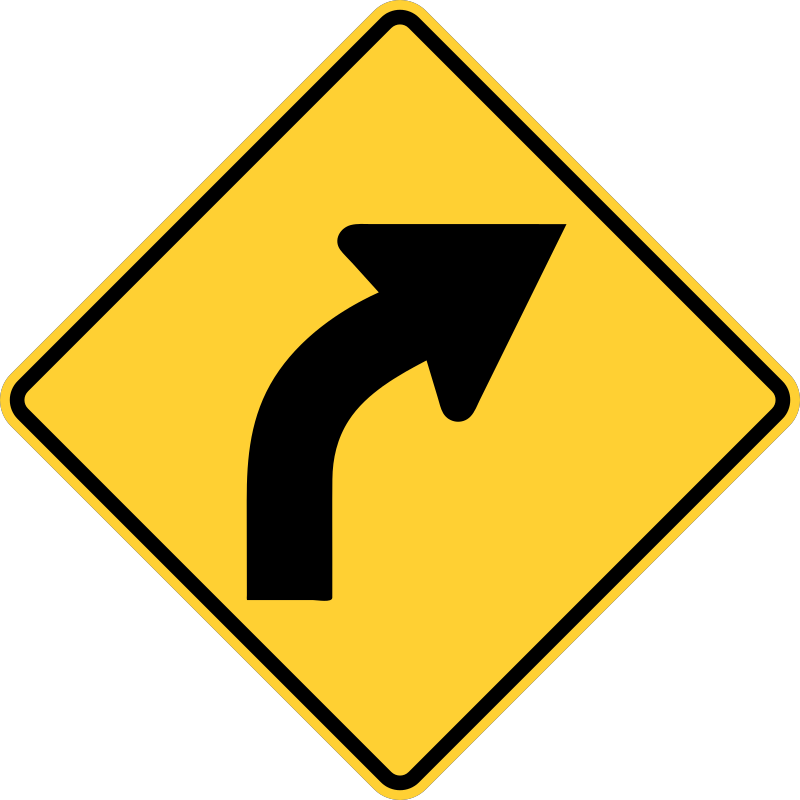 This road sign means:
A
Wrong Way
B
Merging Traffic
C
Curve ahead
This traffic sign indicates: Curve ahead. Observing and obeying all roadway signs ensures safe traffic flow and legal driving.
Question 10:
If the entrance lane is too short to allow acceleration to expressway speed, you should:
A
stop and wait for a large space in traffic.
B
enter the expressway and accelerate quickly.
C
reduce your speed to 15 MPH or less and blend with traffic.
For safe speed and stopping control: stop and wait for a large space in traffic. Adjusting speed to match visibility and road traction prevents loss of steering grip.
Question 11:
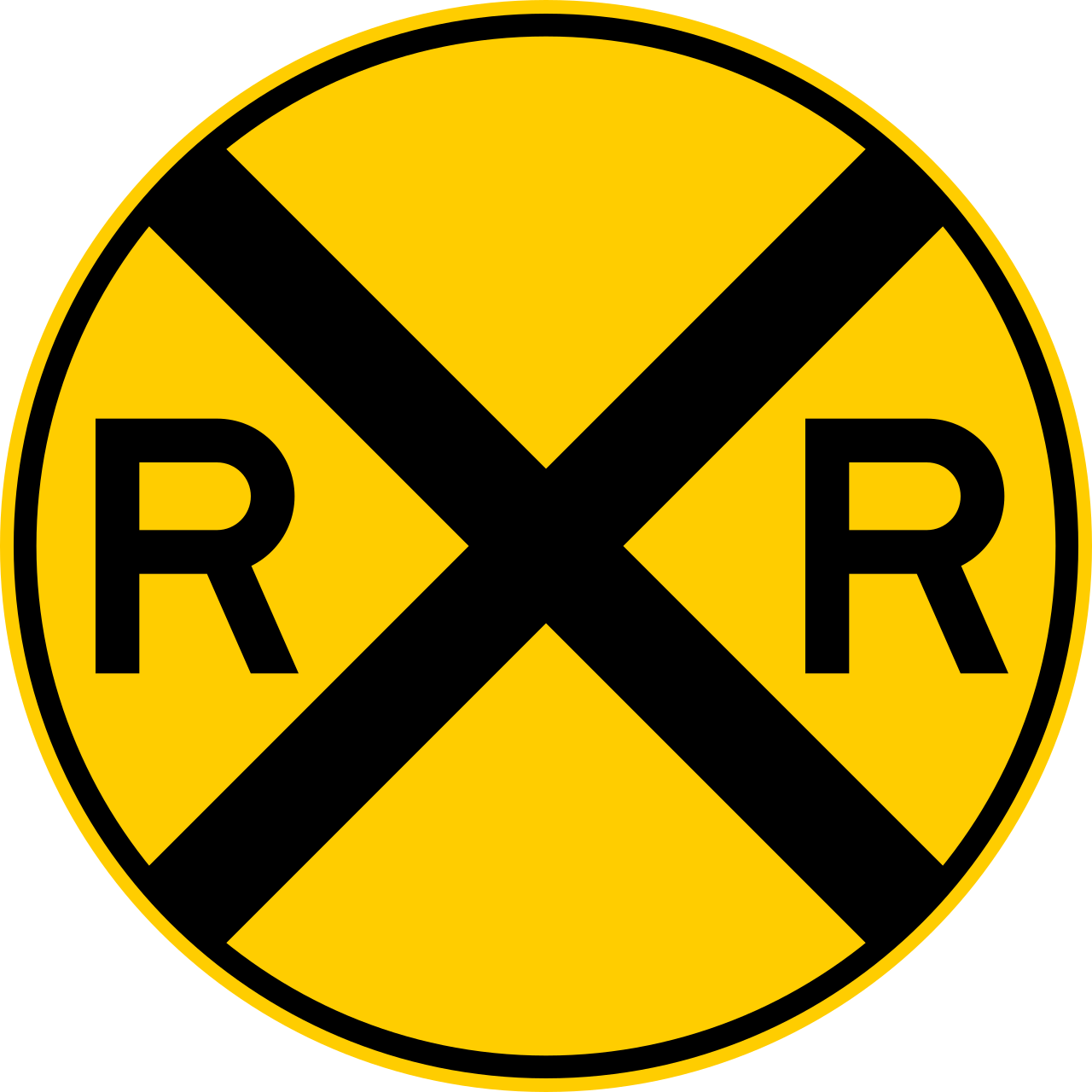 This road sign means:
A
Railroad Crossing
B
One Way
C
Limited parking
Circular signs with an 'X' and 'RR' designate a Railroad Advance Warning: Railroad Crossing. Drivers must slow down, look both ways, listen for trains, and be prepared to stop.
Question 12:
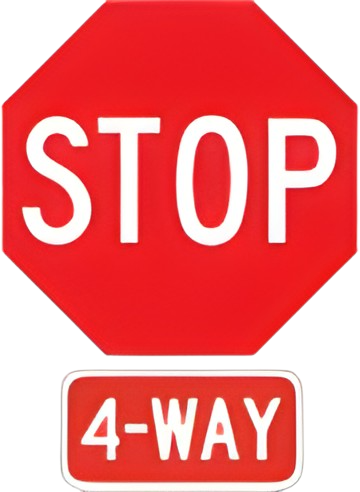 A 4-way stop sign means:
A
The first vehicle to reach the intersection should move forward first.
B
Traffic from all four directions must stop.
C
There are four stop signs at the intersection.
D
All of the above.
This sign alerts drivers to several mandatory requirements: The first vehicle to reach the intersection should move forward first, Traffic from all four directions must stop, There are four stop signs at the intersection. Obeying all posted traffic control instructions is required by law.
Question 13:
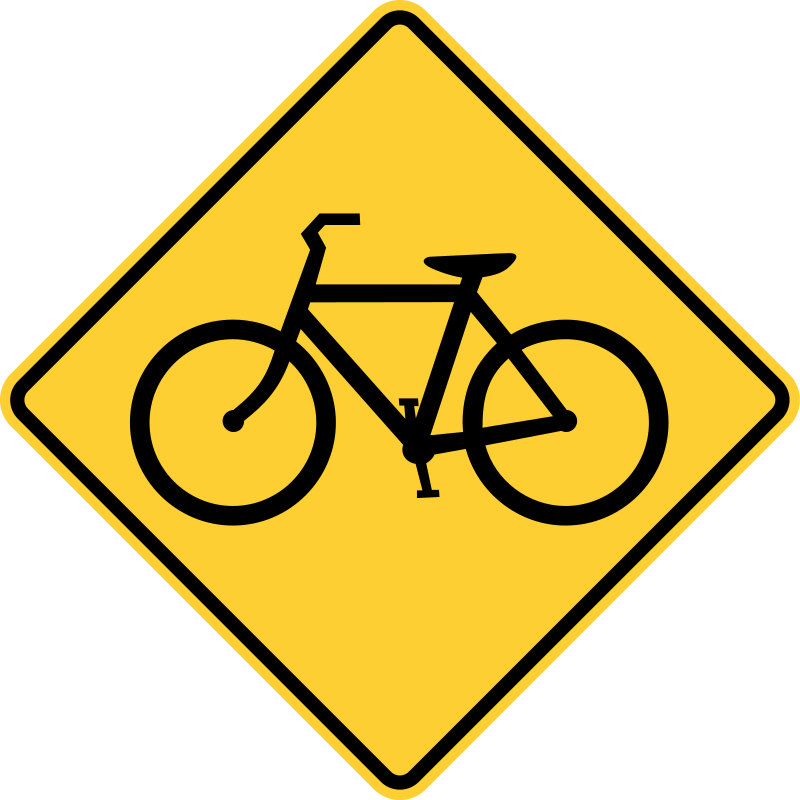 This road sign means:
A
Watch for bicycles
B
Bicycle parking ahead
C
Bicycles are not allowed in this area
This traffic sign indicates: watch for bicycles. Observing and obeying all roadway signs ensures safe traffic flow and legal driving.
Question 14:
 When drivers see this road sign:
A
they must come to a complete stop and call the police.
B
they must not drive past this sign.
C
they must turn around immediately.
This traffic sign indicates: they must turn around immediately. Observing and obeying all roadway signs ensures safe traffic flow and legal driving.
Question 15:
What should you do in case of a steering failure?
A
Pump your gas pedal a few times to increase the pressure.
B
Don't panic. Turn on your emergency lights to let other drivers know you are having car problems. Move toward the side of the road and bring the car to a gradual stop.
C
Leave the road immediately.
The correct driving rule is: Don't panic. Turn on your emergency lights to let other drivers know you are having car problems. Move toward the side of the road and bring the car to a gradual stop. Following standard DMV road rules and practicing defensive driving ensures safety for all road users.
Question 16:
Air bags are meant to _________ seat belts.
A
work with
B
fix
C
replace
The correct driving rule is: work with. Following standard DMV road rules and practicing defensive driving ensures safety for all road users.
Question 17:
If the traffic lights are out of service when you approach an intersection, you:
A
must continue according to the rules of right-of-way.
B
must slow down and yield to oncoming traffic and pedestrians.
C
must come to a stop as you would for a stop sign.
D
must proceed with caution.
According to standard right-of-way regulations: must come to a stop as you would for a stop sign. Yielding appropriately prevents intersection collisions and maintains safe traffic flow.
Question 18:
On slippery roads, drivers should:
A
leave more space in front of their vehicle.
B
increase their speed to avoid hydroplaning.
C
come to a complete stop.
For safe speed and stopping control: leave more space in front of their vehicle. Adjusting speed to match visibility and road traction prevents loss of steering grip.
Question 19:
When passing another vehicle:
A
pass the vehicle as safely and as quickly as possible.
B
honk your horn repeatedly to warn the other driver.
C
there is no need to signal.
D
you can exceed the posted speed limit.
Defensive driving guidelines state that: pass the vehicle as safely and as quickly as possible. Anticipating road hazards and communicating maneuvers keeps traffic predictable and safe.
Question 20:
 This road sign means:
A
One way
B
No right turn
C
Exit
D
Sharp right turn ahead
This traffic sign indicates: Sharp right turn ahead. Observing and obeying all roadway signs ensures safe traffic flow and legal driving.