Question 1:
Collisions can happen more often when:
A
one lane of traffic is traveling faster than the others.
B
one vehicle is traveling faster than the flow of traffic.
C
all vehicles are traveling at the posted speed limit.
The correct driving rule is: one vehicle is traveling faster than the flow of traffic. Following standard DMV road rules and practicing defensive driving ensures safety for all road users.
Question 2:
Which statement about driving and drugs is true?
A
Only illegals drugs can impair your driving.
B
Prescription drugs are safe to use if they don't make you feel drowsy.
C
Even over the counter drugs can impair your driving.
Under state DUI and traffic safety laws: Even over the counter drugs can impair your driving. Alcohol degrades judgment, slows reaction times, and distorts depth perception.
Question 3:
 This sign means:
A
Divided highway ahead.
B
Divided highway ends.
C
Drivers will soon be on a roadway with two-way traffic.
This traffic sign indicates: Divided highway ahead. Observing and obeying all roadway signs ensures safe traffic flow and legal driving.
Question 4:
To avoid becoming an aggressive driver, you should:
A
Adjust your schedule to drive during times with the most highway traffic.
B
Allow enough travel time to reach your destination on schedule.
C
Listen to heavy metal music.
The correct driving rule is: allow enough travel time to reach your destination on schedule. Following standard DMV road rules and practicing defensive driving ensures safety for all road users.
Question 5:
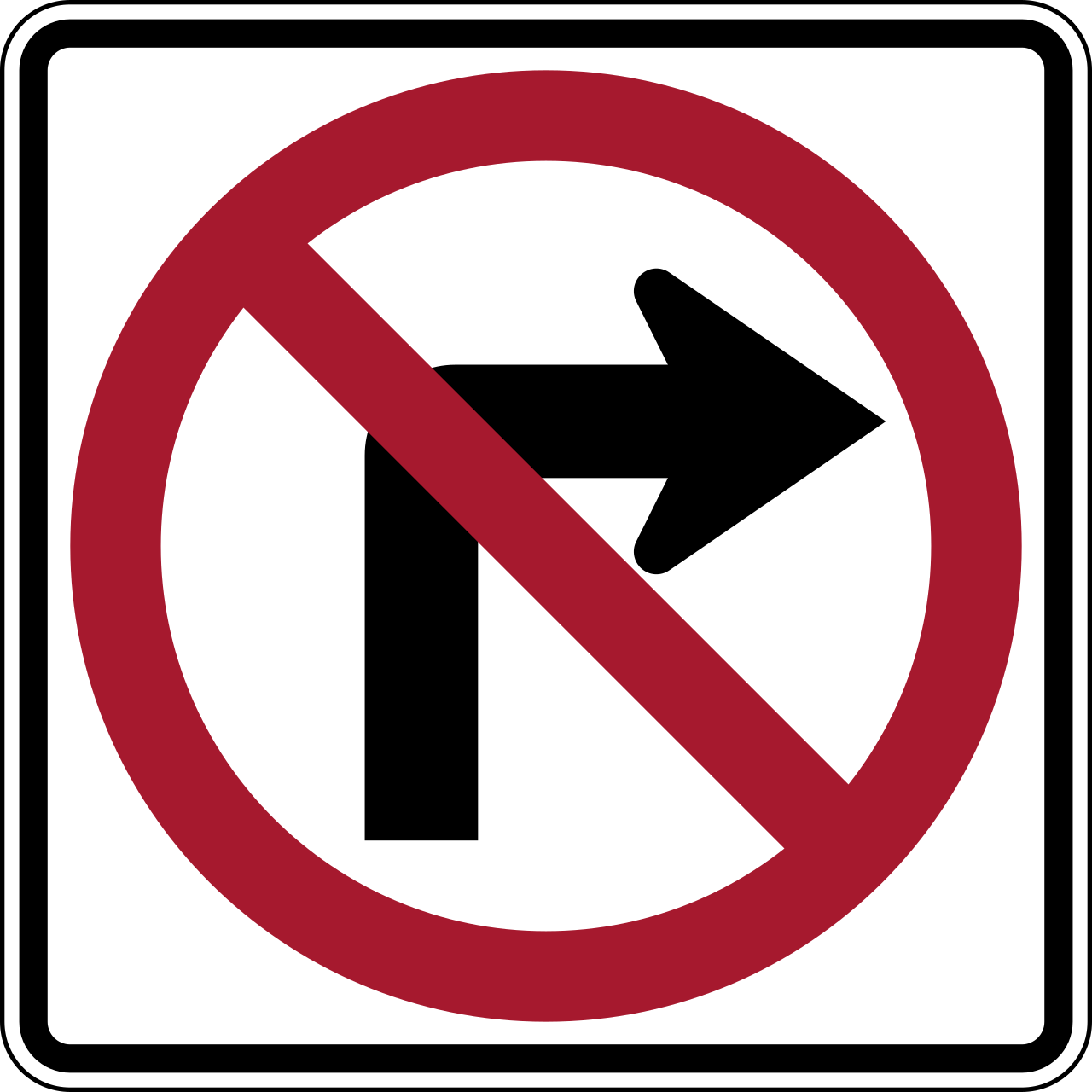 This road sign means:
A
No left turn
B
No right turn
C
No U-turns
This traffic sign indicates: No right turn. Observing and obeying all roadway signs ensures safe traffic flow and legal driving.
Question 6:
After you stop for a school bus, you must:
A
turn off your engine.
B
pass the bus before the red lights stop flashing.
C
None of the above.
When a school bus displays flashing red lights and extended stop sign: None of the above. Traffic in both directions must come to a full stop on undivided roads until children are clear.
Question 7:
Large trucks:
A
have high-tech air brakes which allow them to stop quickly.
B
take longer to stop than passenger vehicles.
C
are more maneuverable than passenger vehicles.
The correct driving rule is: take longer to stop than passenger vehicles. Following standard DMV road rules and practicing defensive driving ensures safety for all road users.
Question 8:
If cars approaching from opposite directions reach an intersection at the same time:
A
a car that moves straight must yield to cars that turn left.
B
a car that turns left must yield to cars that move straight or turn right.
C
a car that turns right must yield to cars that move straight or turn left.
According to standard right-of-way regulations: a car that turns left must yield to cars that move straight or turn right. Yielding appropriately prevents intersection collisions and maintains safe traffic flow.
Question 9:
To avoid hydroplaning, drivers should:
A
slow down.
B
apply the brakes firmly.
C
drive at a constant speed.
The correct driving rule is: slow down. Following standard DMV road rules and practicing defensive driving ensures safety for all road users.
Question 10:
Before applying for a probationary license, the minimum number of driving hours an applicant under 18 must obtain is:
A
30 hours total with 10 at night.
B
40 hours total with 10 at night.
C
20 hours total with 10 at night.
D
10 hours total with 5 at night.
The correct driving rule is: 30 hours total with 10 at night. Following standard DMV road rules and practicing defensive driving ensures safety for all road users.
Question 11:
Drive below the posted speed limit when:
A
anything makes conditions less than perfect.
B
you are on a four lane road.
C
entering a highway where there are other cars.
D
others drive below the speed limit.
For safe speed and stopping control: anything makes conditions less than perfect. Adjusting speed to match visibility and road traction prevents loss of steering grip.
Question 12:
After passing a vehicle, it is safe to return to your lane when:
A
the driver you passed slows down to let you return to your lane.
B
you can see both headlights of the vehicle you just passed in your rearview mirror.
C
you are at least 100 feet ahead of the vehicle you passed.
Defensive driving guidelines state that: you can see both headlights of the vehicle you just passed in your rearview mirror. Anticipating road hazards and communicating maneuvers keeps traffic predictable and safe.
Question 13:
 This road sign means:
A
Pedestrian crossing
B
School zone
C
School crossing
This traffic sign indicates: Pedestrian crossing. Observing and obeying all roadway signs ensures safe traffic flow and legal driving.
Question 14:
When in a motor vehicle on a highway, it is:
A
illegal to drink from, but permissible to transport, open containers of alcohol in the passenger compartment.
B
illegal to possess an open container of alcohol in the passenger compartment.
C
acceptable to drink alcoholic beverages if you are not driving.
D
permissible to drink a moderate amount of alcohol when driving with a passenger.
Defensive driving guidelines state that: illegal to possess an open container of alcohol in the passenger compartment. Anticipating road hazards and communicating maneuvers keeps traffic predictable and safe.
Question 15:
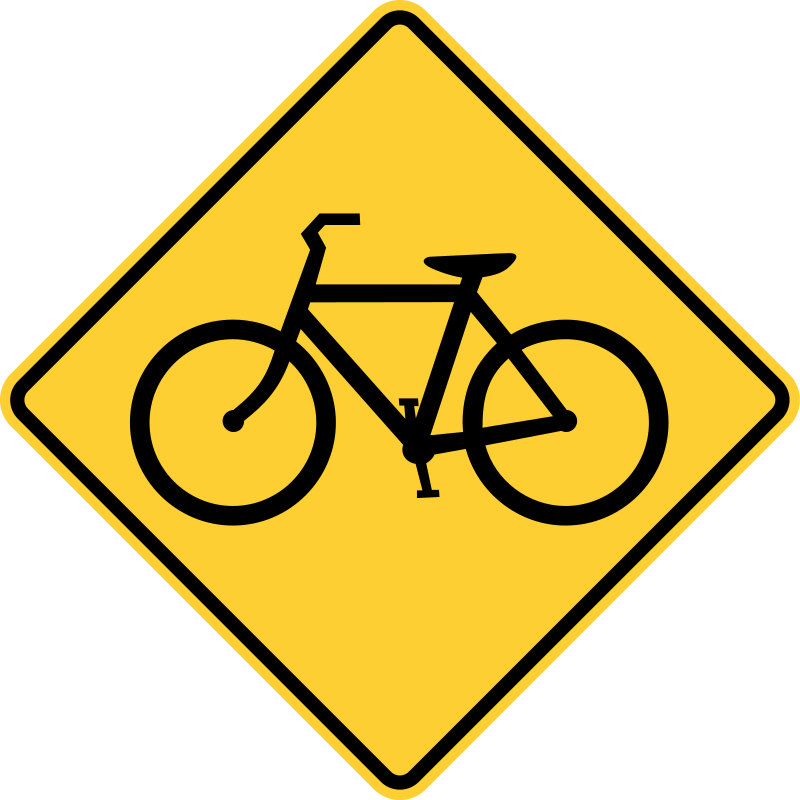 This road sign means:
A
Bicycle crossing
B
Bicycles have the right-of-way
C
This lane is reserved for bicyclists
This traffic sign indicates: Bicycle crossing. Observing and obeying all roadway signs ensures safe traffic flow and legal driving.
Question 16:
If you've had a few beers, the effects of alcohol will be reduced only by:
A
waiting several hours.
B
taking a cold shower.
C
getting a cup of coffee.
Under state DUI and traffic safety laws: waiting several hours. Alcohol degrades judgment, slows reaction times, and distorts depth perception.
Question 17:
Which of the following must you obey over the others?
A
A flashing red light.
B
A stop sign.
C
A steady red light.
D
A police officer.
The correct driving rule is: A police officer. Following standard DMV road rules and practicing defensive driving ensures safety for all road users.
Question 18:
Alcohol:
A
makes you less aware of what is happening to your driving abilities.
B
makes it easier to make correct decisions.
C
improves your reaction time.
Under state DUI and traffic safety laws: makes you less aware of what is happening to your driving abilities. Alcohol degrades judgment, slows reaction times, and distorts depth perception.
Question 19:
 This road sign means:
A
Curves ahead
B
Divided highway ahead
C
Divided highway ends
This traffic sign indicates: Divided highway ends. Observing and obeying all roadway signs ensures safe traffic flow and legal driving.
Question 20:
Continuous hard braking on ice and snow often:
A
is the best option during winter.
B
keeps the brakes from freezing.
C
causes the front wheels to lock.
For safe speed and stopping control: causes the front wheels to lock. Adjusting speed to match visibility and road traction prevents loss of steering grip.
Question 21:
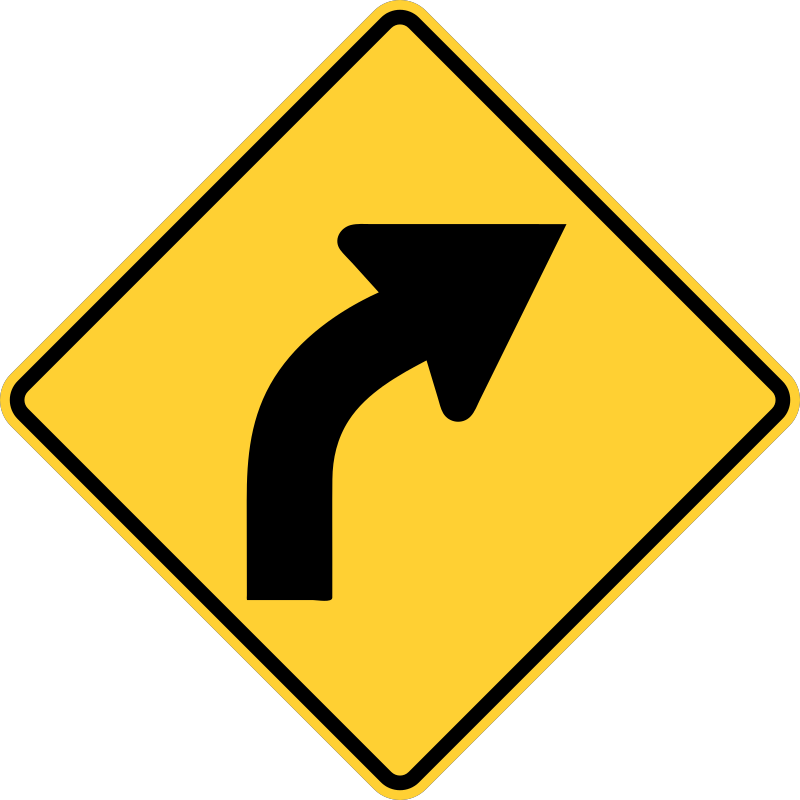 When they see this sign, drivers should:
A
increase their speed and keep well to the right.
B
slow down and keep well to the right.
C
slow down and keep well to the left.
This traffic sign indicates: slow down and keep well to the left. Observing and obeying all roadway signs ensures safe traffic flow and legal driving.
Question 22:
This road sign means:
A
Keep left
B
Divided highway begins
C
Lane ends
This traffic sign indicates: Divided highway begins. Observing and obeying all roadway signs ensures safe traffic flow and legal driving.
Question 23:
If a pedestrian is in the middle of the street when your signal light changes to green, you should:
A
proceed unless the pedestrian is in your lane.
B
proceed because you have the right-of-way.
C
wait until the pedestrian crosses the street before proceeding.
Drivers must always yield the right-of-way to pedestrians crossing at intersections and crosswalks: wait until the pedestrian crosses the street before proceeding. Stop and allow them to clear the lane safely.
Question 24:
You face a green light, but traffic on the other side of the intersection does not allow you to travel all the way through the intersection. What must you do?
A
Enter the intersection and wait until traffic ahead clears.
B
Wait for the next green light.
C
Wait until traffic ahead clears, so you do not block the intersection.
According to standard right-of-way regulations: wait until traffic ahead clears, so you do not block the intersection. Yielding appropriately prevents intersection collisions and maintains safe traffic flow.
Question 25:
When a traffic signal light turns green, you should:
A
back up slowly.
B
yield the right-of-way to pedestrians.
C
yield the right-of-way to larger vehicles.
D
wait 5 seconds before proceeding.
A triangular Yield sign requires drivers to slow down and give right-of-way to other traffic: yield the right-of-way to pedestrians. Proceed only when there is a safe opening.
Question 26:
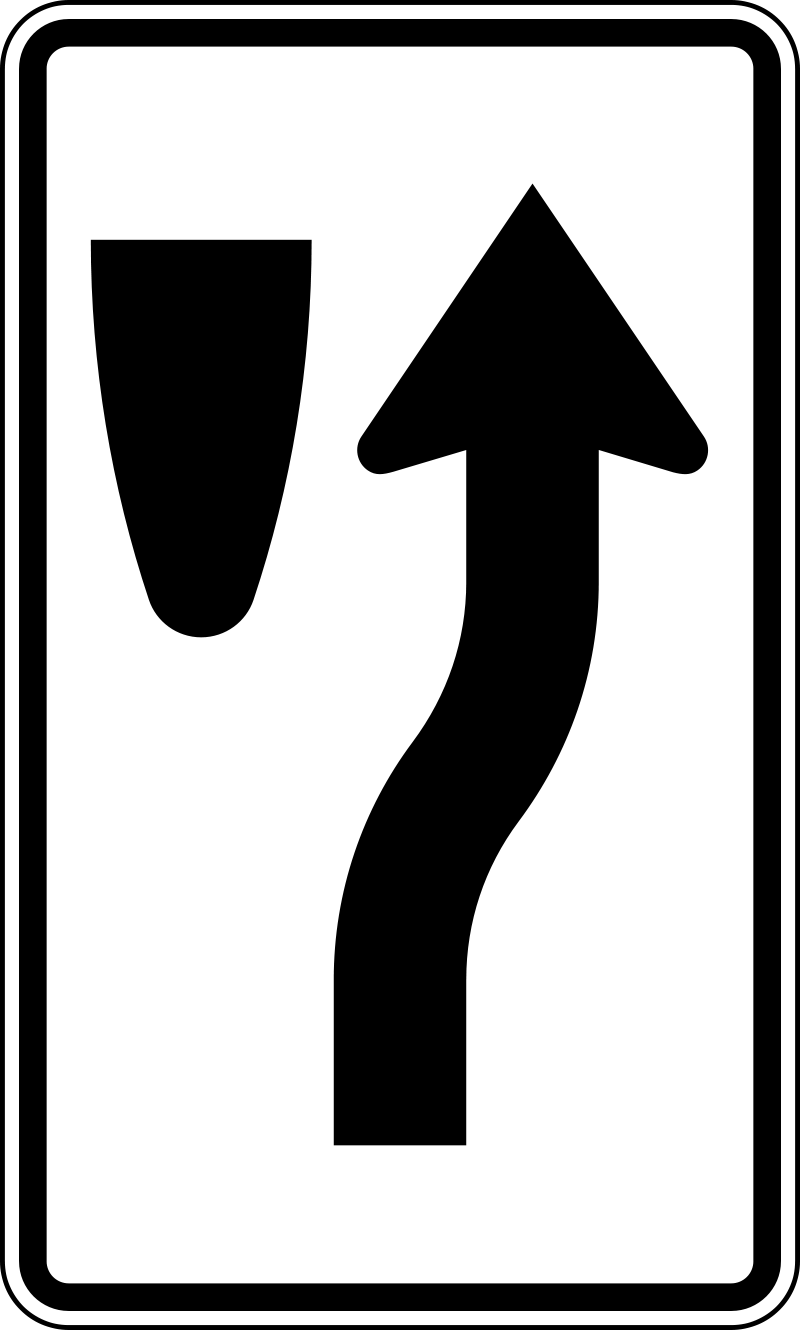 This road sign means:
A
Stop sign ahead
B
Keep to the side indicated by the arrow
C
Side road
D
Low shoulder
This traffic sign indicates: keep to the side indicated by the arrow. Observing and obeying all roadway signs ensures safe traffic flow and legal driving.
Question 27:
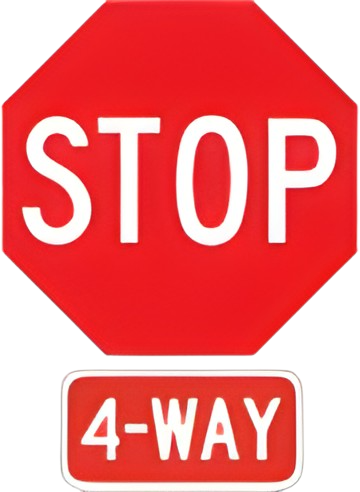 A 4-way stop sign means:
A
The first vehicle to reach the intersection should move forward first.
B
Traffic from all four directions must stop.
C
There are four stop signs at the intersection.
D
All of the above.
This sign alerts drivers to several mandatory requirements: The first vehicle to reach the intersection should move forward first, Traffic from all four directions must stop, There are four stop signs at the intersection. Obeying all posted traffic control instructions is required by law.
Question 28:
To check your blind spot before changing lanes:
A
look into the right side mirror.
B
look into the rearview mirror.
C
look over your shoulder in the direction you plan to move.
D
look into the left side mirror.
Large commercial trucks have extensive blind spots on all four sides called the 'No-Zone': look over your shoulder in the direction you plan to move. If you cannot see the truck driver in their side mirrors, they cannot see you.
Question 29:
Don't be afraid to sound a sharp blast on your horn when:
A
when a child is about to run into the street.
B
another vehicle is in danger of hitting you.
C
All of the above.
All of the listed points are essential driving requirements: when a child is about to run into the street; another vehicle is in danger of hitting you. Practicing each ensures compliance with DMV safety laws.
Question 30:
Smoking while driving:
A
does not affect driving abilities.
B
is not distracting.
C
helps increase driver alertness.
D
is distracting.
The correct driving rule is: is distracting. Following standard DMV road rules and practicing defensive driving ensures safety for all road users.
Question 31:
 This road sign means:
A
Low shoulder
B
Stop ahead
C
Tow away zone
D
Buggy warning
This traffic sign indicates: Low shoulder. Observing and obeying all roadway signs ensures safe traffic flow and legal driving.
Question 32:
 This sign means:
A
U-turns are not allowed.
B
Parking is not allowed.
C
No parking on pavement.
This traffic sign indicates: Parking is not allowed. Observing and obeying all roadway signs ensures safe traffic flow and legal driving.
Question 33:
This sign means:
A
The highway ahead is divided into two one-way roadways.
B
Roundabout ahead. Slow down.
C
The divided highway on which drivers are traveling ends ahead.
This traffic sign indicates: The highway ahead is divided into two one-way roadways. Observing and obeying all roadway signs ensures safe traffic flow and legal driving.
Question 34:
A traffic sign with a red circle around and a slash over a symbol means:
A
the maneuver shown by the symbol is not allowed.
B
Do not drive faster than the posted speed limit.
C
the maneuver shown on the sign should be executed with extreme caution.
This traffic sign indicates: the maneuver shown by the symbol is not allowed. Observing and obeying all roadway signs ensures safe traffic flow and legal driving.
Question 35:
A crosswalk is:
A
a special type of 4-way intersection.
B
an area designated for blind persons.
C
the area where pedestrians may cross the road.
Drivers must always yield the right-of-way to pedestrians crossing at intersections and crosswalks: the area where pedestrians may cross the road. Stop and allow them to clear the lane safely.
Question 36:
Directions given by traffic officers ___________ signs, signals or pavement markings.
A
take precedence over
B
are less important than
C
must obey
The correct driving rule is: take precedence over. Following standard DMV road rules and practicing defensive driving ensures safety for all road users.
Question 37:
Following another vehicle too closely is known as:
A
speedgating.
B
closetailing.
C
tailgating.
The correct driving rule is: tailgating. Following standard DMV road rules and practicing defensive driving ensures safety for all road users.
Question 38:
What is the meaning of red traffic signs?
A
High emphasis warning.
B
Stop, do not enter or wrong way.
C
Regulatory.
The correct driving rule is: Stop, do not enter or wrong way. Following standard DMV road rules and practicing defensive driving ensures safety for all road users.
Question 39:
The use of alcohol and/or drugs affects:
A
concentration and reaction time.
B
alertness and judgement.
C
All of the above.
Alcohol and impairing substances degrade all critical driving functions: concentration and reaction time; alertness and judgement. Driving while impaired carries severe criminal and safety penalties.
Question 40:
 This sign means drivers should:
A
not drive in this lane.
B
give the right-of-way to traffic on the road they wish to enter.
C
proceed at normal speed through the upcoming intersection.
D
come to a complete stop and check for oncoming traffic before proceeding.
This traffic sign indicates: give the right-of-way to traffic on the road they wish to enter. Observing and obeying all roadway signs ensures safe traffic flow and legal driving.
Question 41:
It is unlawful to:
A
pass within 250 feet of any intersection.
B
exceed the posted speed limit when passing.
C
pass within 150 feet of any railroad crossing.
The correct driving rule is: exceed the posted speed limit when passing. Following standard DMV road rules and practicing defensive driving ensures safety for all road users.
Question 42:
 This road sign means:
A
Vehicles may only travel in the center lane.
B
The center lane is shared for left turns in both directions of travel.
C
The center lane in both directions of travel will soon turn left.
This traffic sign indicates: The center lane is shared for left turns in both directions of travel. Observing and obeying all roadway signs ensures safe traffic flow and legal driving.
Question 43:
This road sign means:
A
Right turn permitted on red light
B
Drivers must turn right
C
No U-turns
D
No right turn permitted
This traffic sign indicates: No right turn permitted. Observing and obeying all roadway signs ensures safe traffic flow and legal driving.
Question 44:
Stopping distances:
A
are not affected by vehicle speed.
B
decrease as vehicle speed increases.
C
increase as vehicle speed increases.
The correct driving rule is: increase as vehicle speed increases. Following standard DMV road rules and practicing defensive driving ensures safety for all road users.
Question 45:
You can reduce the chance of a collision with a large vehicle if you:
A
delay near it.
B
cut abruptly in front of it.
C
pay close attention to the turn signals.
The correct driving rule is: pay close attention to the turn signals. Following standard DMV road rules and practicing defensive driving ensures safety for all road users.
Question 46:
If a vehicle is approaching with high beams, drivers should look __________ until the vehicle passes.
A
to the right of the road
B
at the center of the road
C
to the left of the road
D
straight ahead
The correct driving rule is: to the right of the road. Following standard DMV road rules and practicing defensive driving ensures safety for all road users.
Question 47:
To drive defensively, you must:
A
anticipate errors by other drivers.
B
assume that a driver who approaches a STOP sign on a side road is actually going to stop.
C
not check behind you through your mirrors.
The correct driving rule is: anticipate errors by other drivers. Following standard DMV road rules and practicing defensive driving ensures safety for all road users.
Question 48:
Warning signs normally are:
A
rectangles.
B
triangles.
C
diamond-shaped.
The correct driving rule is: diamond-shaped. Following standard DMV road rules and practicing defensive driving ensures safety for all road users.
Question 49:
A speed restriction sign:
A
shows the recommended speed for a curve/turn.
B
is blue with white lettering.
C
must be ignored in snow conditions.
D
has a diamond shape.
For safe speed and stopping control: shows the recommended speed for a curve/turn. Adjusting speed to match visibility and road traction prevents loss of steering grip.